Launched in 1996, NASA's Mars Pathfinder mission marked a milestone with its innovative lander and the first rover, Sojourner, capturing worldwide attention.
NASA's Perseverance rover, launched July 30, 2020, nears the end of its journey, set to land in Jezero Crater on Thursday, February 18. If successful, it will be the fifth Mars rover, following Sojourner (1997), twins Spirit and Opportunity (2004), and Curiosity (2012). Today, we revisit the groundbreaking Sojourner.
Deployed via the Pathfinder mission in 1997, tiny Sojourner became the first wheeled vehicle to roam another planet. Prior Mars landings, like the 1976 Viking probes, were stationary. Sojourner generated massive buzz.
Images from the Jet Propulsion Laboratory and NASA flooded the early web, drawing 47 million visits in a single day—a record even by modern measures. The nascent internet buckled under demand.
"Pathfinder broke the internet," recalls Jim Zimbelman, geologist emeritus at the Smithsonian’s Center for Earth and Planetary Studies. "There were so many photo upload requests that JPL was not prepared to handle them."
On July 8, landing day, those 47 million hits doubled the peak daily traffic from the 1996 Atlanta Olympics. NASA and JPL launched about 20 mirror sites to cope. From July 1 to August 4, 1997, Pathfinder sites tallied 565 million visits globally.
Excitement built in 1996 after scientists revealed possible signs of life in a Martian meteorite from Antarctica. NASA accelerated Pathfinder, launching in December 1996.
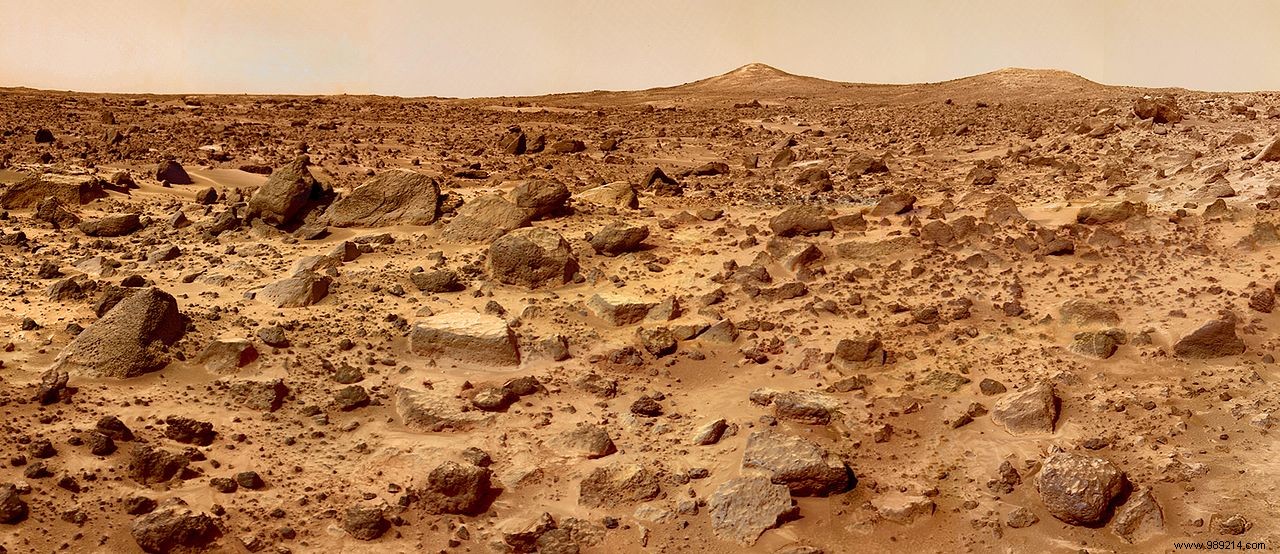
Pathfinder pioneered a novel descent: fearing parachutes and retrorockets alone wouldn't suffice—and engine heat might contaminate samples—engineers devised an airbag system.
The sequence included a heat shield for atmospheric entry, followed by parachutes and retrorockets. Wrapped in giant airbags, the lander and rover dropped from 20 meters, bouncing 15-20 times before unfurling like a flower to release Sojourner.
"This was the first airbag-assisted landing," notes Matt Shindell, space history curator at the Smithsonian. "Later missions adopted it, but 1997 was the debut."
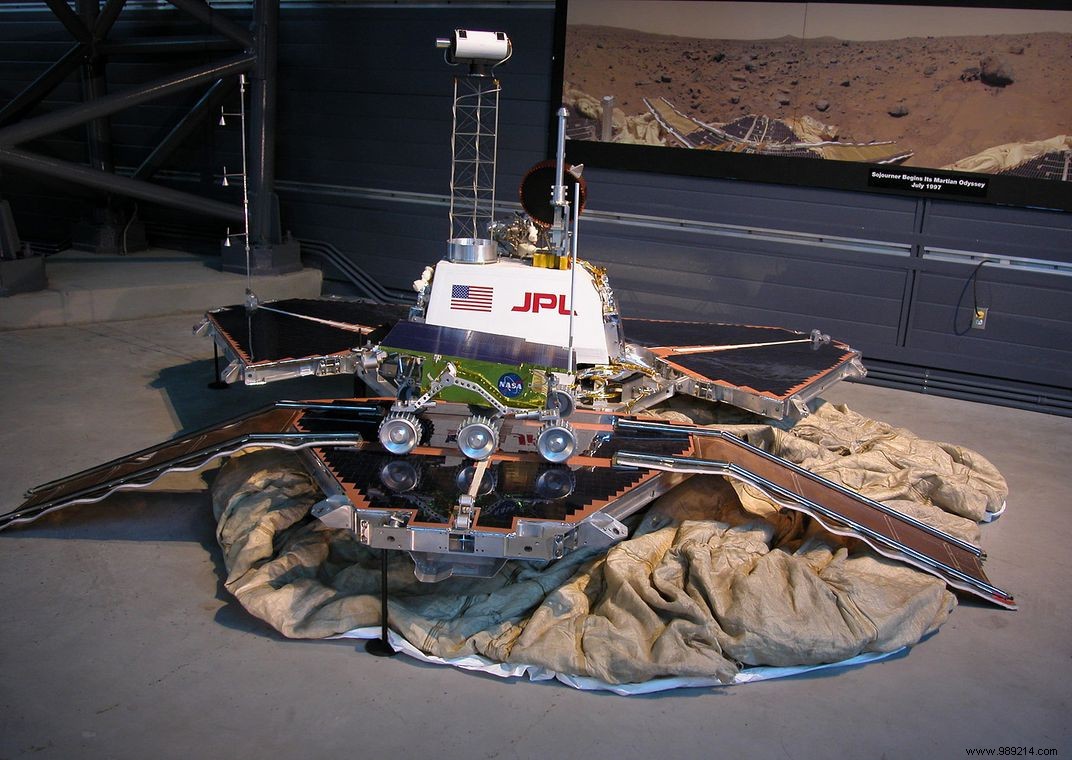
Aimed at proving "faster, cheaper" missions at $150 million over three years, Pathfinder analyzed Mars' rocks, magnetic properties, and atmosphere. Sojourner returned 1.2 gigabytes of data and 10,000 photos, outlasting its one-month goal by 70 sols (85 Earth days). Contact ended September 27, 1997.
