Astrophysical models show planets form from rotating circumstellar disks, passing angular momentum to the protoplanet via conservation laws. Every planet rotates, including Earth. But what if ours halted abruptly?
A sudden stop would unleash devastating angular momentum on surface objects, shredding the crust in catastrophe. As James Zimbelman, geologist at the Smithsonian’s National Air and Space Museum, explains, no natural force could halt Earth's spin—it's rotated steadily since formation.
Earth completes one rotation every 23 hours, 56 minutes, and 4.09053 seconds, with equatorial speeds reaching about 1770 km/h, tapering to zero at the poles, per Zimbelman. An instant halt would propel air, oceans, and rocks equatorward at that velocity, scouring and fracturing the surface, hurling debris into the atmosphere and beyond.
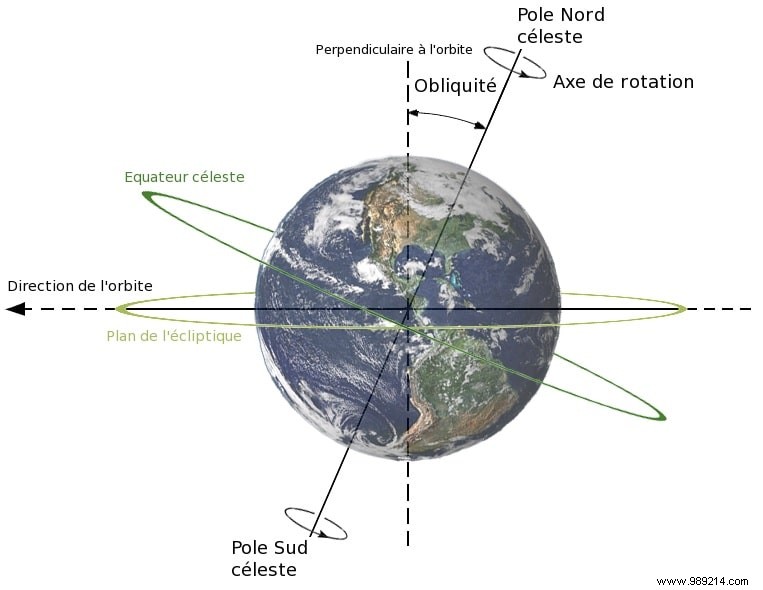
Linear momentum (mass times velocity) keeps a car passenger lurching forward on sudden braking. Angular momentum, its rotational counterpart, multiplies moment of inertia by angular velocity. Conservation demands equal opposite torque to stop rotation—a physics fundamental.
Zimbelman notes ejected fragments would partially resume rotation as Earth and debris orbit the Sun. Gravity would eventually reclaim them, yielding surprising results. “Newton's classical mechanics reveals colliding fragments release energy as heat,” he says.
High-altitude and orbital debris, drawn back by gravity, would slam into the surface, melting the crust into a molten rock ocean via relentless impacts, according to Zimbelman. Fragments would accrete into this searing mass over time.
This fury would vaporize surface water; much lost to space, some bound into new minerals like olivine. Not all debris accretes—the Moon's gravity would snag pieces, pummeling it with fresh craters.
