Orbiting Earth at an average distance of 384,000 kilometers, the Moon has been our planet's constant companion. But what would occur if it vanished tomorrow?
The Moon is gradually drifting away at about 3 cm per year. Sixty-six million years ago—on the day non-avian dinosaurs went extinct—it was roughly 1,950 km closer. Billions of years ago, it was even nearer, exerting a far stronger influence on Earth.
"If the Moon had disappeared back then, the changes would have been drastic," says Matthew Siegler, a lunar researcher at the Planetary Science Institute in Dallas, Texas. "Today, however, it's distant enough that most effects unfold over vast timescales."
A sudden disappearance would be subtle at first, beyond the obvious void in our night sky. Tides would shrink to about half their current size, though not vanish entirely—the Sun also drives tides, and it remains.
Altered tides could subtly shift ocean currents and weather patterns, but these changes might go unnoticed.
Nocturnal species, evolved alongside the Moon for eons, would face challenges. Moths navigate by moonlight and stars, as do hatchling sea turtles heading to the ocean.
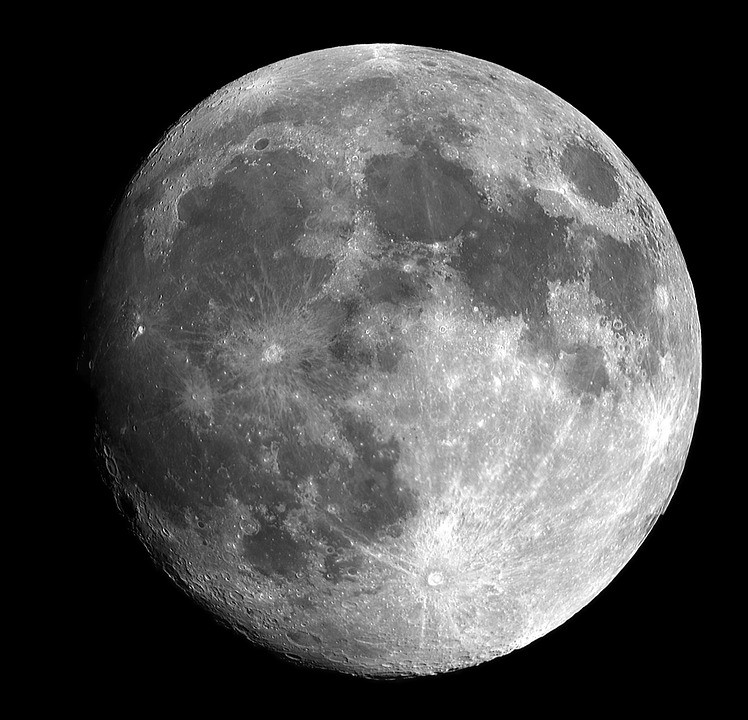
The Moon's gravity slows Earth's rotation, lengthening days by about two milliseconds per century. Its absence billions of years ago would have been catastrophic, but today, the shift would be imperceptible.
More critically, the Moon stabilizes Earth's axial tilt at 23.5 degrees. Without it, the planet would wobble wildly, disrupting seasons and climate. "Our familiar seasons would cease to exist," notes Paul Sutter, astrophysicist at the Flatiron Institute. "Some regions might endure endless night, others perpetual daylight for months."
These axial shifts would unfold gradually—we'd likely see no change in our lifetimes, but future generations, millennia from now, could face severe disruptions.
Source
Related articles:
