Often misunderstood as a massive explosion, the Big Bang marks the boundary where space and time emerged—not a true beginning, but the earliest epoch we can probe. As seasoned cosmologists, what have we learned about these primordial moments?
Edwin Hubble's 1929 discovery of the universe's expansion revolutionized cosmology. Rewinding the clock reveals a once ultra-dense state, though mathematical limits prevent reaching absolute zero time. Yet, we can approach it closely through rigorous models and observations.
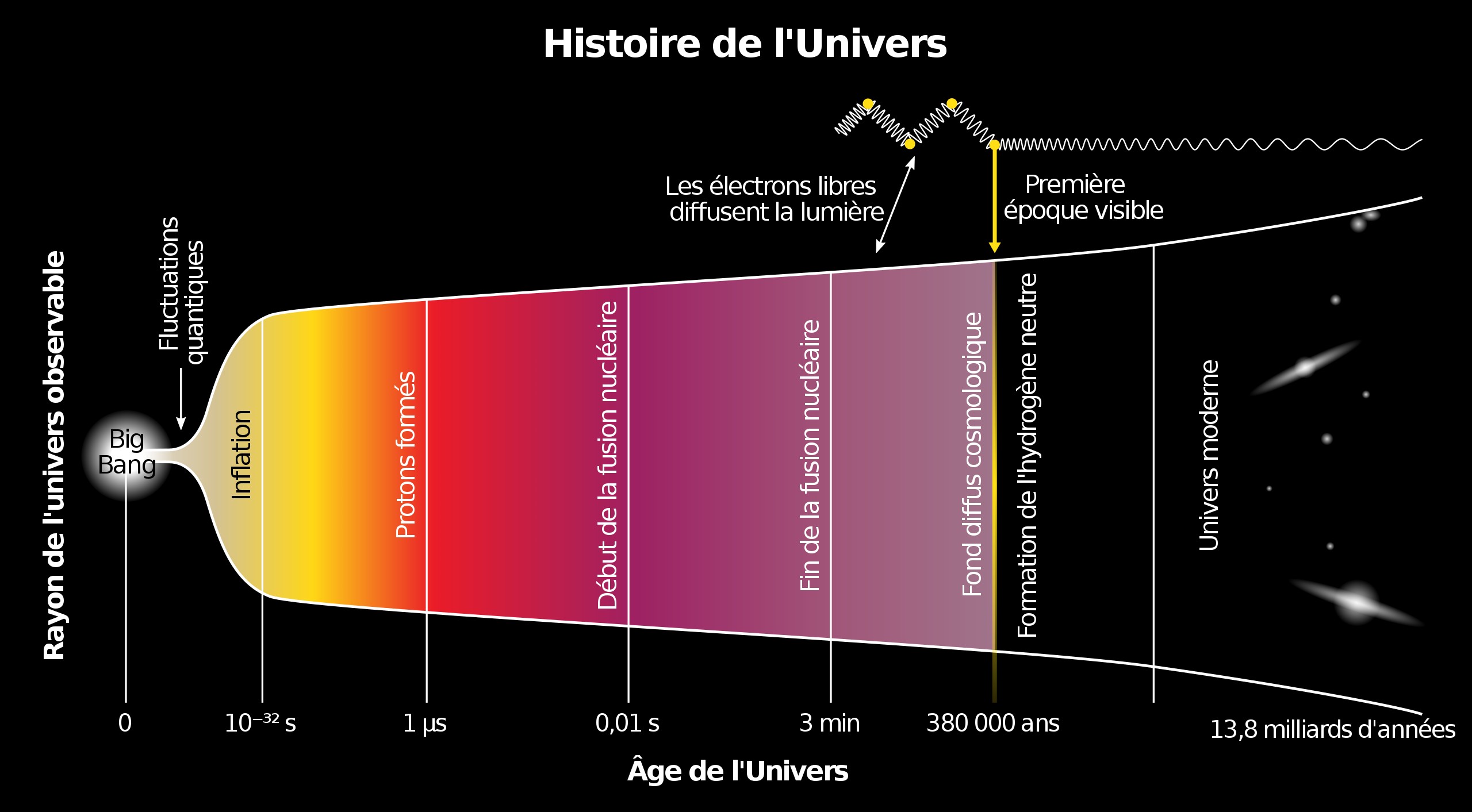
13.77 billion years ago, the universe was scorching hot—over a quadrillion degrees—and compressed to the size of an orange. Evidence points to an ultra-rapid expansion phase called inflation occurring in under a second, ballooning the cosmos by at least 10^52 times.
Once inflation ended, its mysterious driver decayed, filling space with matter and radiation.
Conditions were too extreme for stable structures: a seething plasma of quarks, antiquarks, electrons, positrons, neutrinos, and antineutrinos, where particles and antiparticles annihilated on contact.
Within the first second, the strong nuclear force bound quarks into protons and neutrons, laying the groundwork for hydrogen nuclei.
As expansion continued and temperatures dropped, protons and neutrons fused. By three minutes, the first light atomic nuclei beyond hydrogen formed.
Primordial nucleosynthesis persisted for minutes, but heavier elements awaited the ignition of the first stars through fusion.
These events are inferred from precise simulations, as direct observation is impossible—the universe remained opaque until 380,000 years old, when the first stars illuminated it.
While key details are well-established, vast uncertainties linger, especially pre-element formation.
Dark matter, comprising over 80% of the universe's mass, remains unidentified. Did it emerge in those initial seconds, influence early element formation, or arise later? These questions persist.
Inflation's energy source is unknown, as is the mechanism that halted it, despite knowing its brief duration.
Particle experiments show matter and antimatter are perfectly symmetric: equal production in reactions.
Yet, in that first second, matter dominated—a crucial imbalance enabling our existence. The cause eludes us still.
Cosmologists confront these gaps head-on, recreating early conditions in particle accelerators like the LHC and seeking primordial gravitational waves.
Though direct views are unattainable, advanced simulations and experiments illuminate this cosmic dawn.
