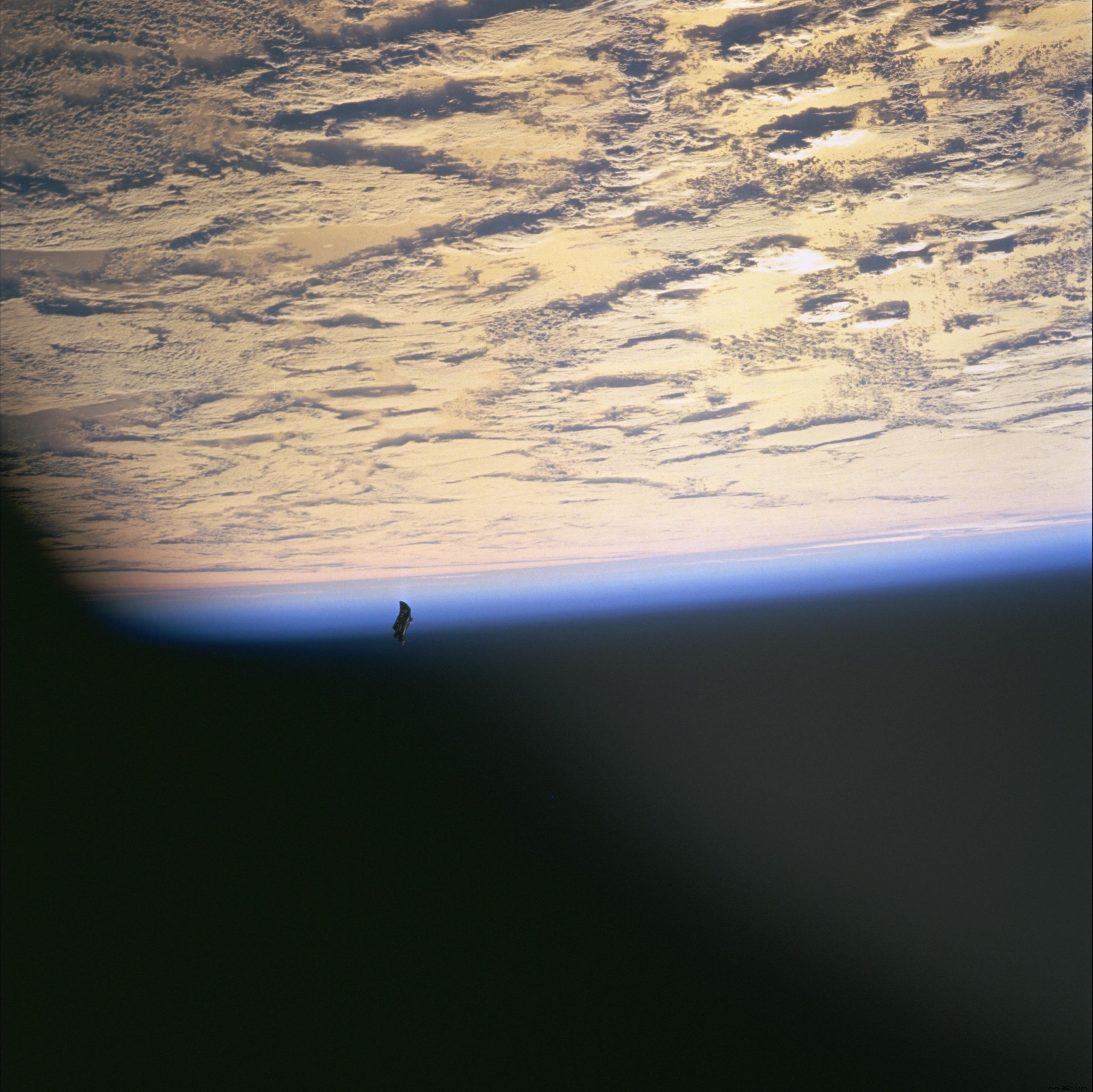
Two decades ago, NASA identified a piece of low-Earth orbit debris as a thermal blanket accidentally released by an astronaut during a spacewalk. Yet, UFO enthusiasts and conspiracy theorists insist it's a 13,000-year-old extraterrestrial artifact.
The story gained traction during NASA's STS-88 mission in 1998, the 13th flight of the space shuttle Endeavour. An astronaut dropped a thermal blanket meant for equipment assembly during an extravehicular activity. Before it burned up in Earth's atmosphere, the crew photographed it. NASA catalogs it as space debris STS088-724-66 in its database. However, ufologists dubbed it the "Black Knight Satellite," claiming it's an ancient extraterrestrial technology in a near-polar orbit.
The legend traces back further to Nikola Tesla (1856-1943), a pioneer in alternating current electricity. In 1899, during radio wave experiments, Tesla reported receiving regular, mathematical signals he believed came from Mars. Modern experts attribute these to natural emissions from pulsars or orbiting objects. Conspiracy proponents, however, argue Tesla contacted extraterrestrials.
In 1927, Norwegian engineer Jørgen Hals observed radio signals he sent echoing back moments later, which he attributed to extraterrestrial sources. Decades on, researcher Duncan Lunan linked this to the Black Knight.
Newspapers in 1954 cited a former military UFO investigator claiming the U.S. Air Force detected two satellites orbiting Earth—before such technology existed. In 1960, reports surfaced of the U.S. Navy tracking a dark object on a 79° inclined orbit with a 104.5-minute revolution period. This matched debris from the Discoverer VIII satellite's launch enclosure.
All these claims have been thoroughly debunked by scientific analysis. Yet, mysteries beyond current explanation continue to fuel speculation and elaborate theories.
