NASA has announced plans to test an advanced composite solar sail system in mid-2025, deploying it from a CubSat. This mission will refine key technologies for these sails, unlocking efficient, low-cost propulsion for future space exploration.
Solar sails harness the momentum of photons from sunlight to propel spacecraft—much like wind powers a sailboat. This innovative approach enables longer missions and greater distances without the fuel constraints of traditional chemical rockets.
Such systems have been proven in practice, including the Planetary Society's LightSail 2 mission. From an orbit of about 720 km, the compact CubSat (10 × 10 × 30 cm) successfully unfurled its 32-square-meter solar sail in July 2019.
NASA is now preparing to deploy another via the ACS3 mission, developed by NanoAvionics since 2018.
The ACS3 features lighter, more durable composite booms that cut mass and costs. Its square sail will measure about 36 square meters when fully deployed, held by four booms. Per NASA, the tech scales to sails the size of a basketball court (over 400 square meters).
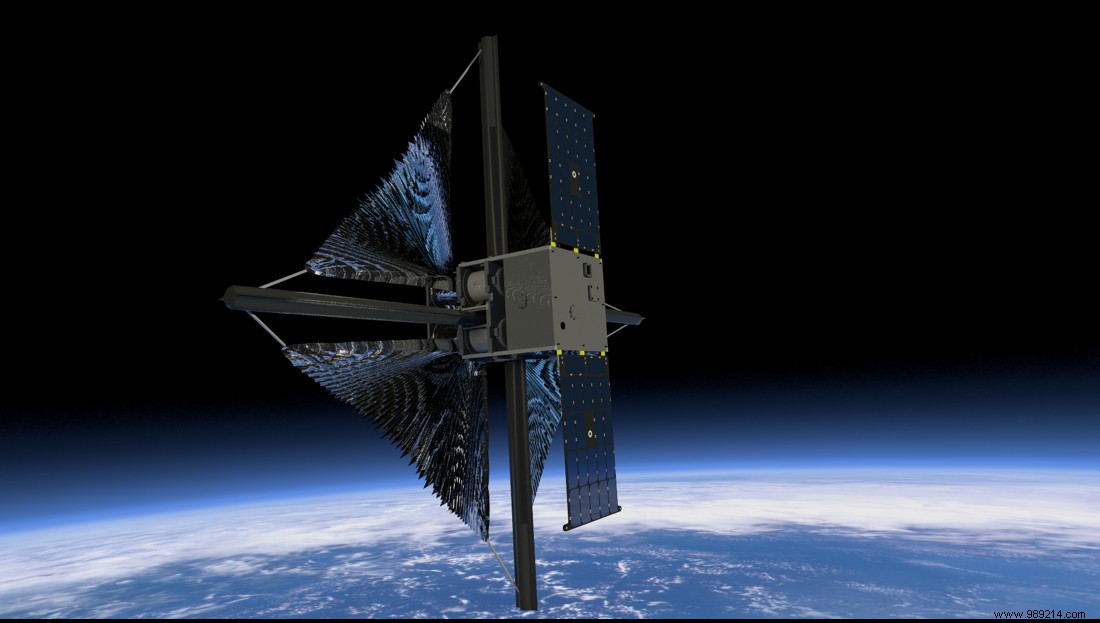
At NASA's Langley Research Center, teams are perfecting deployment for vast structures on toaster-sized CubSats.
These mission booms—like a sailboat's, keeping sails taut—use carbon fiber-reinforced polymer, making them 75% lighter than metal equivalents.
They roll compactly for launch, deploy rigidly, and resist heat-induced warping far better.
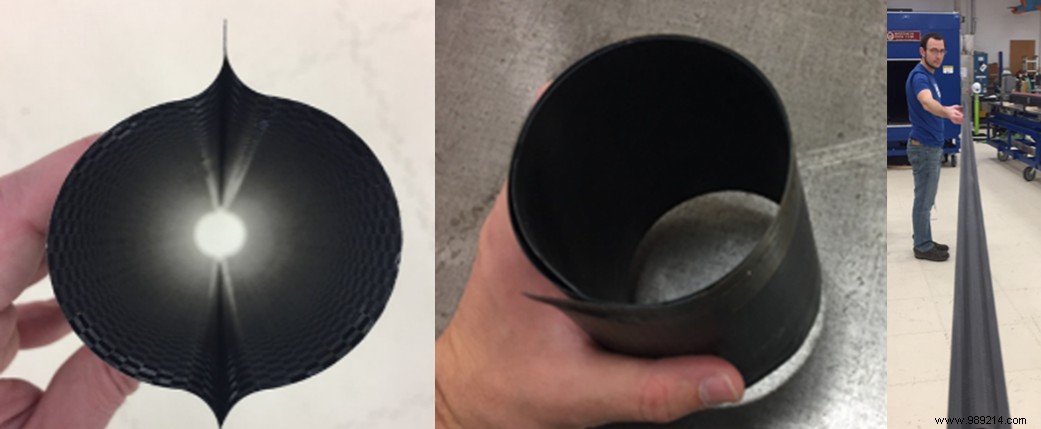
Objectives include successful boom and sail deployment in low orbit, evaluating design and shape performance, and analyzing thrust during orbital shifts. Insights will shape larger systems.
