A new study finds that none of the known potentially habitable rocky exoplanets receive sufficient radiation to sustain an Earth-like biosphere.
Astronomers have confirmed 4,422 exoplanets across 3,280 star systems. Among them, 165 are rocky and Earth-sized, with only about 10 orbiting in their star's habitable zone. But can they truly support life? For biospheres like Earth's, a recent study says no.
Led by researchers from the University of Naples and Italy's National Institute of Astrophysics (INAF), this research appears in Monthly Notices of the Royal Astronomical Society.
With billions of stars in our galaxy and trillions of galaxies in the universe, assuming life exists only on Earth might seem narrow-minded. Yet Earth remains our sole confirmed example of a thriving biosphere—one teeming with diverse life. Astrobiologists thus prioritize Earth-like exoplanets in the search for life elsewhere.
In this study, the team assessed conditions for oxygenic photosynthesis on those 10 promising worlds.
Earth's geological records, climate data, and fossils reveal that early life, emerging around 4 billion years ago, relied on photosynthesis to convert sunlight and CO2 into energy and oxygen. This oxygen gradually built up, enabling complex life. Photosynthesis demands optimal sunlight levels—and not all stars deliver.
The researchers quantified photosynthetically active radiation (PAR)—light in the 400-700 nanometer range usable by photosynthetic organisms—reaching each planet.
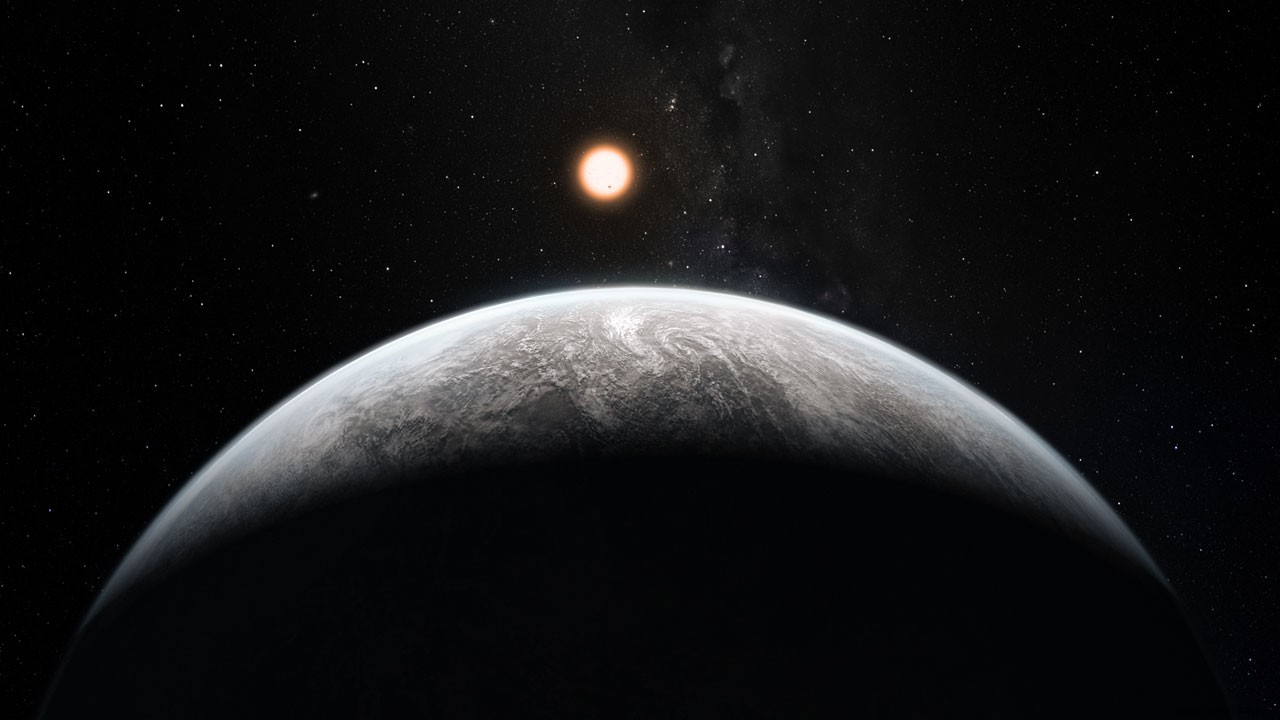
Most orbit cool red dwarfs, which provide too little PAR for an Earth-rich biosphere. While exotic photosynthesis can't be ruled out, it ventures into speculation.
Red dwarfs make up over 75% of Milky Way stars. "Since red dwarfs dominate our galaxy, Earth-like conditions on exoplanets may be rarer than hoped," notes lead author Giovanni Covone.
Hotter, Sun-like stars burn too quickly. Planets in their habitable zones might spark photosynthesis, but not sustain it long enough for complex life.
Alternative life forms remain possible elsewhere. But this research suggests life as we know it could be far rarer than once thought.
