A white dwarf that endured a partial supernova thousands of years ago now hurtles through the galaxy at over 900,000 km/h.
White dwarfs are the dense remnants of stars like our Sun after they shed their outer layers, leaving behind an Earth-sized stellar corpse that's cold and dark. Over 90% of Milky Way stars will one day become white dwarfs.
Research shows white dwarfs typically have layered interiors: carbon-oxygen cores surrounded by helium and hydrogen layers.
In 2015, astronomers identified SDSS J1240+6710, located about 1,430 light-years from Earth.
At first glance, unremarkable—until its peculiar atmosphere was revealed.
Instead of hydrogen or helium, its outer layer contains an unusual mix of oxygen, neon, magnesium, and silicon.
Hubble observations confirmed additional elements: carbon, sodium, and aluminum—previously unseen in such stars.
The white dwarf also moves at over 900,000 km/h, counter to the galaxy's rotation, and has just 40% of the Sun's mass.
Astrophysicist Boris Gänsicke from the University of Warwick, UK, proposes it survived an incomplete thermonuclear explosion—a partial supernova.
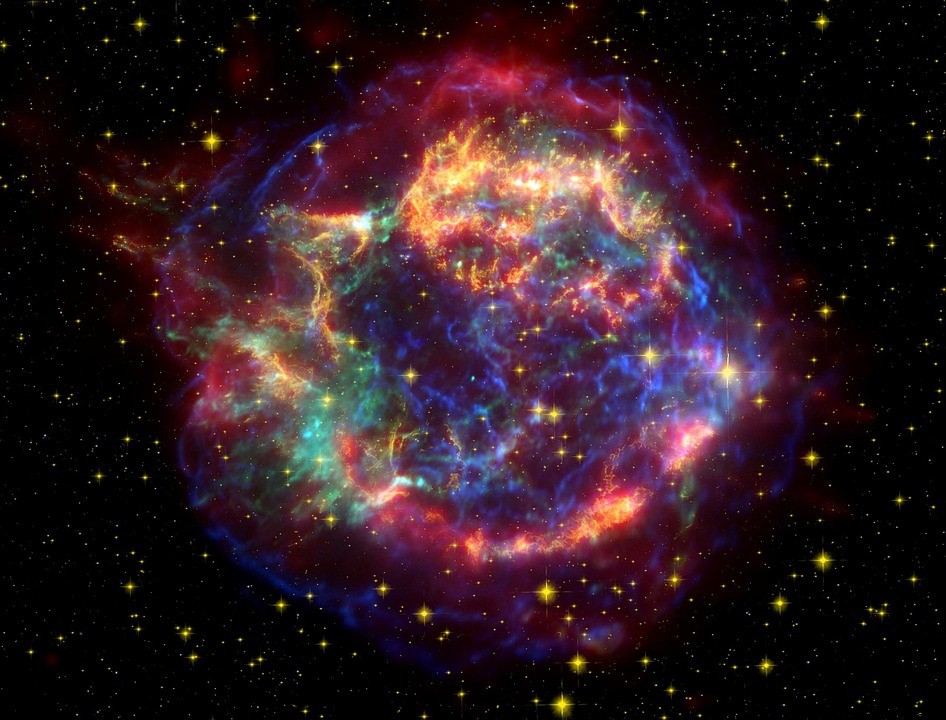
Supernovae, the universe's most energetic explosions, can ignite in binary systems when a white dwarf accretes mass from a companion, triggering a runaway thermonuclear reaction that typically destroys it.
Here, light elements from early fusion stages appear, but heavy ones like iron, nickel, chromium, and manganese are absent—indicating the explosion halted before full progression.
“This white dwarf experienced a nuclear burn that shut down prematurely,” says Gänsicke. “A brief event, likely just hours long.”
The blast may have slingshot the stars against their orbital motion, explaining the white dwarf's extreme speed and retrograde path.
