Astronomy enthusiasts, get ready for the Geminid meteor shower's peak on December 13-14, promising 60-75 meteors per hour. But what celestial body powers this dazzling display?
Though less renowned than the summer Perseids, the Geminids rank among the year's top meteor showers. They culminate when Gemini rides highest in the sky, delivering 60-75 visible shooting stars per hour on average—and potentially more. In 2017, observers witnessed up to 150 meteors in an hour. What fuels this spectacle?
Most meteor showers trace back to comets, like the Perseids from Comet 109P/Swift-Tuttle or the Lyrids from Comet Thatcher.
As comets heat up near the Sun, their ice vaporizes, releasing dust grains—meteoroids—that trail along their orbits. Earth plows through these streams, and the sand-grain-sized particles slam into our atmosphere at high speeds. This friction excites electrons in the meteoroids and air molecules, producing the glowing streak we call a shooting star as the electrons release energy.
Yet the Geminids' source defies this pattern: it's asteroid (3200) Phaethon, discovered in 1983. This object follows a highly elliptical orbit, swinging inside Mercury's path before retreating to the asteroid belt.
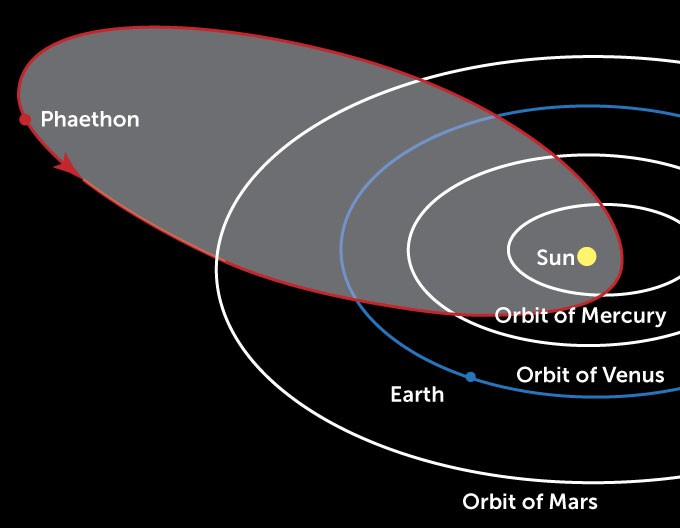
How can a rocky asteroid generate such a prolific shower? "It remains a mystery," notes UCLA astronomer David Jewitt. Unlike comets, asteroids aren't expected to shed material near the Sun—or so we believed.
For decades, Phaethon showed no signs of dust ejection sufficient for the Geminids. Researchers hypothesized that extreme solar heat might eject surface particles. Calculations supported this, but proof awaited a close solar approach.
NASA's STEREO A satellite captured Phaethon glowing in 2009 and 2012, revealing dust activity. In 2013, a faint dust tail appeared in data.
Scientists attribute this to intense solar heating, compounded by Phaethon's weak gravity allowing easy particle escape and its rapid 3-hour-36-minute rotation adding centrifugal stress.
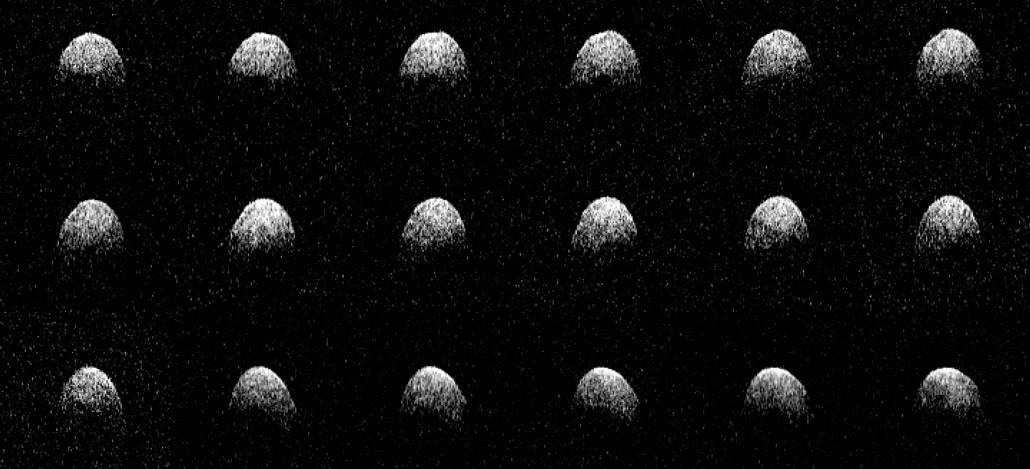
December 2017 observations via the now-defunct Arecibo Observatory revealed Phaethon's irregular, top-like shape—similar to Bennu and Ryugu—with a 6.25 km equatorial diameter and craters, including one over a kilometer wide.
These insights haven't fully explained Phaethon's prolific dust output. Answers may come soon.
Japan's DESTINY+ mission launches in 2024, set to rendezvous with Phaethon years later. High-resolution images will reveal its geological features, potentially capturing particle ejections live and spotting impact scars.
The probe may also clarify if Phaethon fragmented from a larger body—two smaller asteroids share its orbit, hinting at a common origin.
Ultimately, DESTINY+ could trace Phaethon's own beginnings, shedding light on the Geminids' true source.
