China's Yutu-2 rover, exploring the Moon's far side, has encountered a intriguing cube-shaped rock on the horizon. Detailed analysis by mission scientists will soon reveal its origins.
On January 3, 2019, China achieved a historic first by softly landing on the Moon's far side with its Chang'e-4 mission. The lander and Yutu-2 rover remain active in the Von Karman crater within the vast South Pole-Aitken Basin—the Solar System's largest known impact feature.
Traveling northwest from the landing site, the rover has covered nearly 800 meters. Weighing just 140 kilos, Yutu-2 employs panoramic cameras, Lunar Penetrating Radar (LPR), and a visible/near-infrared spectrometer to gather invaluable data.
Yutu-2 has identified distinct rock layers likely formed by ancient volcanism and asteroid strikes. Originally planned for 90 Earth days, the mission has yielded unexpected finds.
In February, the rover imaged a strangely elongated stone that captivated experts. Chinese scientists later identified it as breccia from a meteorite impact.
During the mission's 36th lunar day in November, Yutu-2 spotted another enigma: a cube-shaped object amid the crater terrain.
Shared by Our Space—a CNSA-affiliated outreach channel—this image shows the rock approximately 80 meters distant.
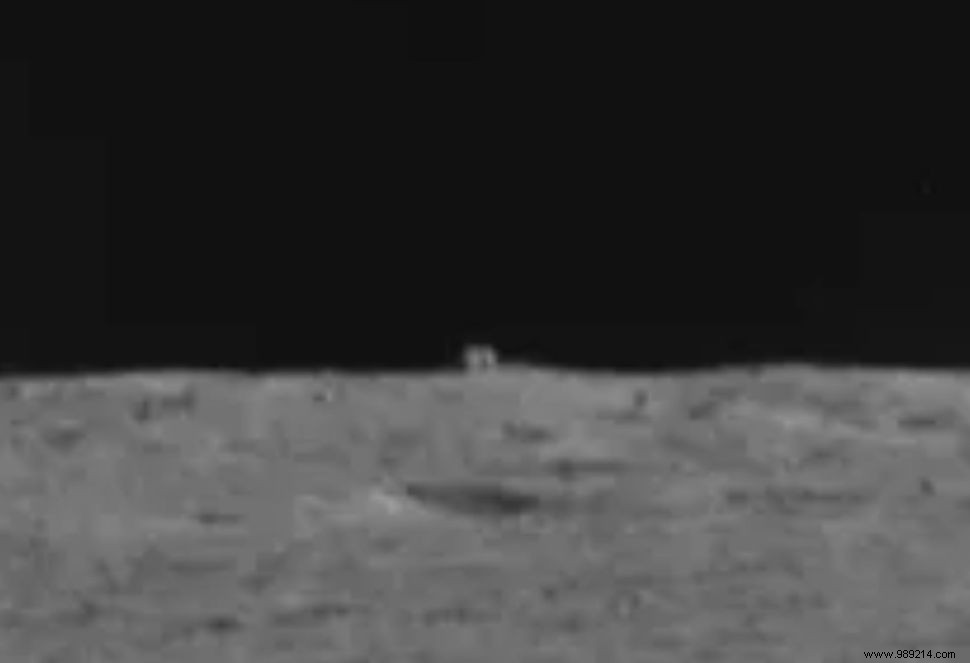
The science team is eager to investigate. Over the next three lunar days (roughly three Earth months), Yutu-2 will approach for detailed study, with updates forthcoming. Like the prior find, it's likely an impact-ejected rock.
Chang'e-4 marks China's fourth lunar mission and second rover deployment, following Chang'e-3. Since then, Chang'e-5 returned samples. Upcoming efforts, including a joint permanent research base with Russia, build on this progress.
