NASA's Ingenuity team executed a successful second test flight of the Mars helicopter on Thursday, reaching about five meters altitude during the maneuver.
On Monday, April 19, NASA achieved history with Ingenuity's first powered flight on another planet. The rotorcraft ascended just over three meters for 39.1 seconds before a safe landing, per altimeter data. The mission team celebrated the milestone.
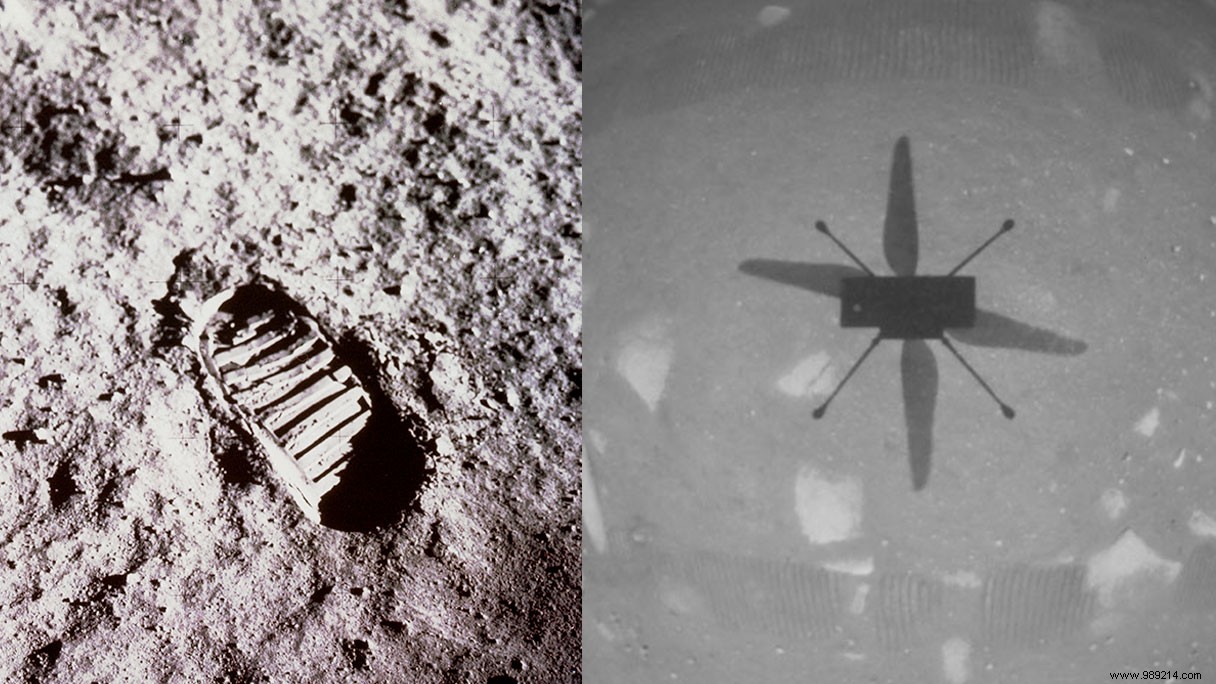
"Every image we get of the helicopter is special to me—after all, it's never been done before," said MiMi Aung, Ingenuity Mars Helicopter Project Manager at NASA’s Jet Propulsion Laboratory. "But I have to say that of all the images, the one that will stick with me the most is from the helicopter's navigation camera: taken while the rotorcraft was 1.2 meters in the air."
This black-and-white photo captures Ingenuity's projected shadow while hovering. "Everyone will decide what the historical significance of this image is, but when I first saw it, I immediately thought of Buzz Aldrin's footprint photographed on the lunar surface," Aung continued. "This iconic image of Apollo 11 said 'we walked on the Moon'; ours says 'we flew to another world.'"
On Thursday, the team conducted a more ambitious second test flight.
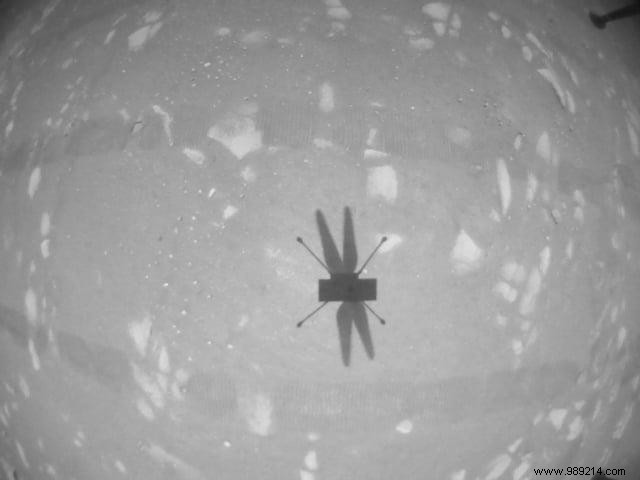
The flight plan called for Ingenuity to climb to five meters, shift laterally two meters, hover, rotate for color camera photos, then return to the airfield center for landing—all autonomously after receiving commands.
Everything executed flawlessly. Takeoff occurred at 12:30 p.m. French time. Data, relayed via Perseverance to an orbiting probe and then NASA antennas, confirmed success after a short delay. Here's one flight image; more to come:
This marked the 18th day of a 30-day demonstration window. Over the next two weeks, engineers will test limits, informing future rotorcraft missions.
