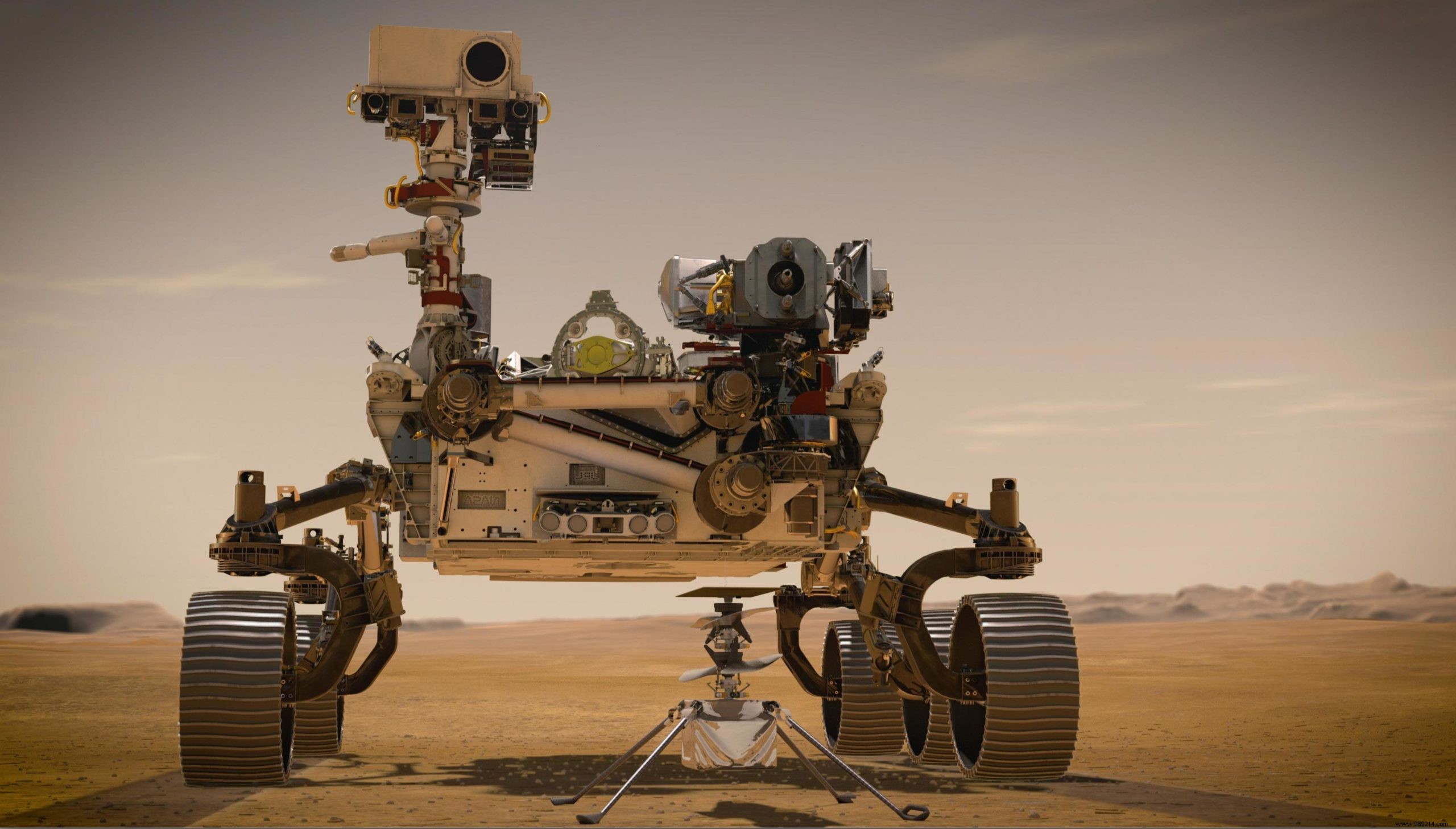
After surviving the mission's most perilous seven minutes, Ingenuity—the first helicopter to reach another planet—remains securely attached to Perseverance's underbelly and is primed for its groundbreaking debut flight.
NASA's Perseverance rover, part of the Mars 2020 mission, touched down on the Red Planet on February 18 after a seven-month journey. Its primary goals include seeking signs of ancient life and caching promising samples for potential return to Earth. Riding along is Ingenuity, a technology demonstration to test powered flight in Mars' thin atmosphere.
Nestled beneath Perseverance, Ingenuity has awakened and successfully communicated with NASA's Jet Propulsion Laboratory (JPL) controllers via the Mars Reconnaissance Orbiter (MRO) from Friday to Saturday night. JPL reports all systems nominal. The team charged Ingenuity's six lithium-ion batteries to about 30% capacity on Saturday to maintain warmth.
Previously powered by Perseverance, Ingenuity will rely on its solar panels once deployed. JPL plans to charge to 35% soon, followed by weekly sessions until surface deployment.
Deployment involves disabling the hold-down mechanism: a cable cutter releases a spring-loaded arm to rotate Ingenuity horizontal, then pyrotechnics deploy its four legs for a gentle touchdown on the Martian surface.
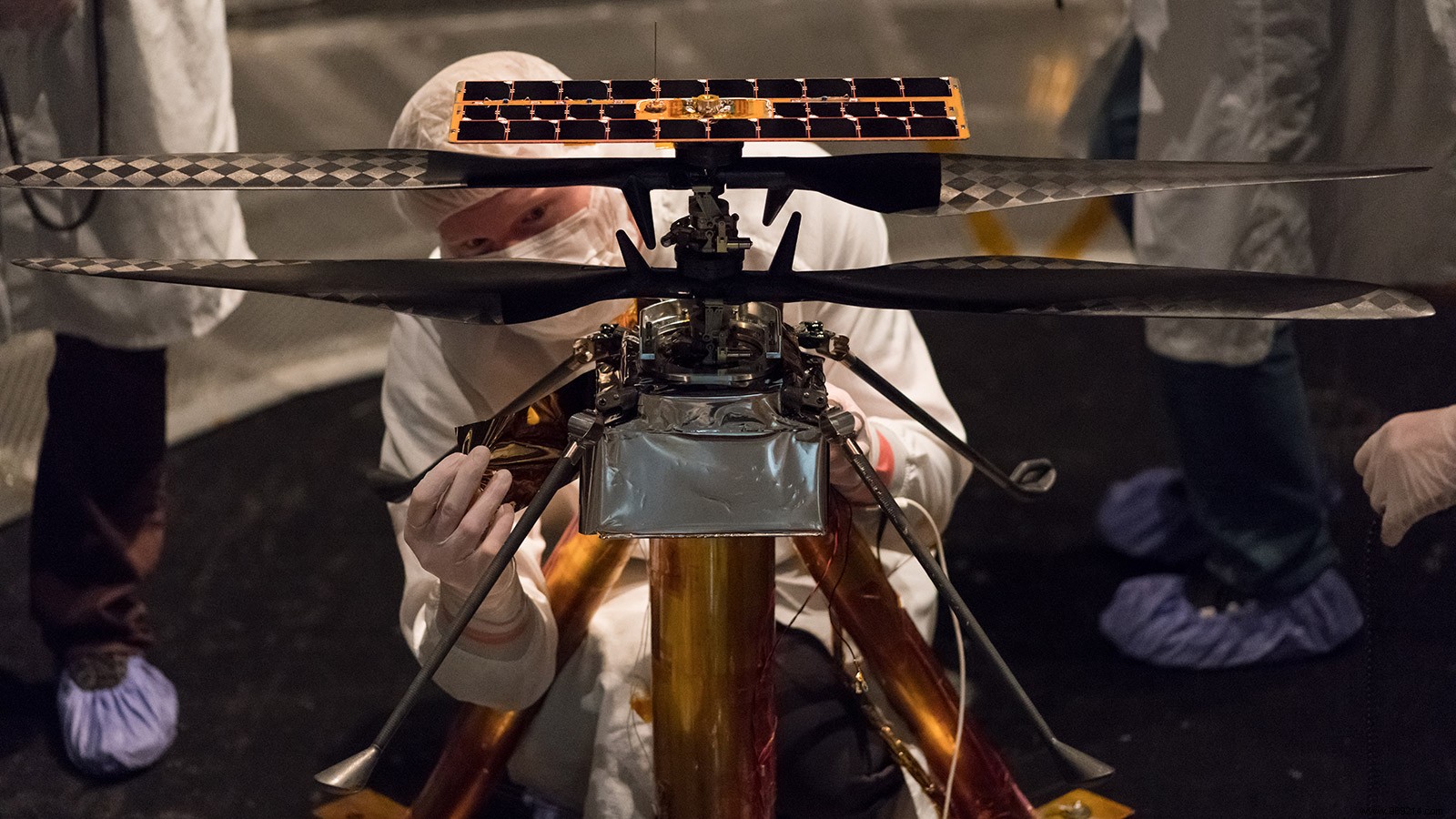
Post-landing, JPL has about 30 Martian sols (31 Earth days) for initial tests—contingent on surviving frigid nights dipping to minus 90°C.
This marks the first powered flight off Earth. Ingenuity's blades will spin at nearly 2,900 RPM—ten times Earth's helicopters due to Mars' sparse air—lifting to a maximum 3 meters for about 30 seconds.
Success could enable up to four additional flights, lasting around 90 seconds each, covering hundreds of meters to evaluate performance. Afterward, Ingenuity will remain on Mars.
Ingenuity's sole mission: prove flight is viable on Mars. Success could enable future rotorcraft to support explorers—transporting payloads, scouting routes, or assessing remote sites.
