A few months ago, astrophysicists observed the most powerful flare ever recorded on Proxima Centauri, our Sun's nearest stellar neighbor. The findings are detailed in The Astrophysical Journal Letters.
Just over four light-years from Earth, Proxima Centauri draws intense scientific interest. Five years ago, a team from the European Southern Observatory discovered Proxima Centauri b, an Earth-like planet in the star's habitable zone. Recent studies suggest a possible second planet, though unconfirmed.
Since Proxima b's discovery, researchers have investigated its potential for liquid water and life. However, the star itself poses significant challenges.
Proxima Centauri, a red dwarf one-eighth the mass of the Sun and much cooler, has its habitable zone close to the star. Red dwarfs, though compact, are notoriously active, frequently unleashing powerful stellar eruptions. Proxima Centauri is no exception.
In a 2019 study led by University of Colorado researcher Meredith MacGregor, nine instruments—including Hubble, the Atacama Large Millimeter/submillimeter Array (ALMA), and NASA's TESS exoplanet hunter—monitored the star for 40 hours over several months. Five instruments captured an extraordinary flare: "The star became 14,000 times brighter in ultraviolet wavelengths in mere seconds," MacGregor reported.
This event was roughly 100 times more powerful than the strongest solar flares observed on our Sun.
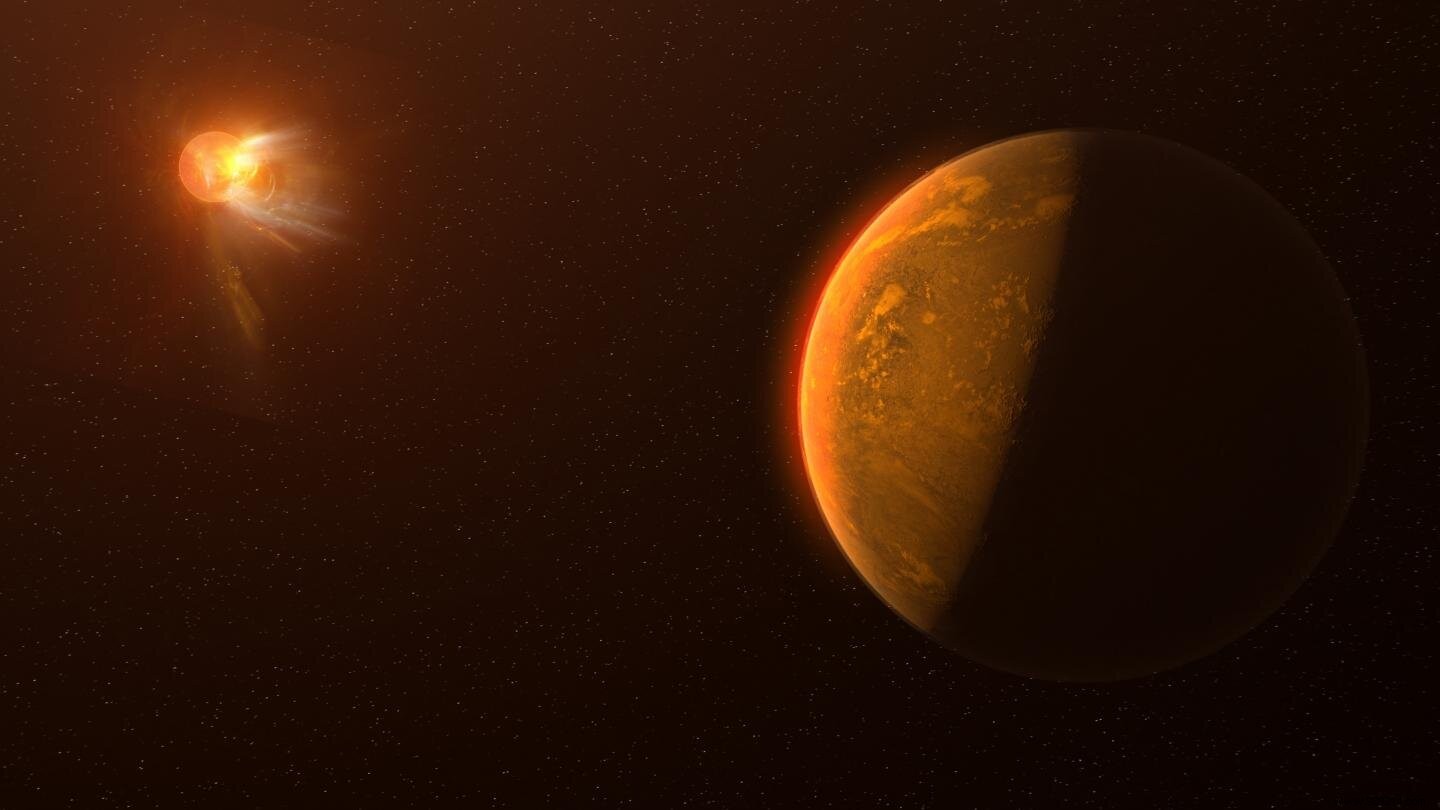
Detected on May 1, 2019, the flare lasted just seven seconds, producing intense ultraviolet and radio radiation with minimal visible light. "This marks the first detection of millimeter-wavelength flares," MacGregor noted, offering new insights into flare generation mechanisms.
Such events are routine for Proxima Centauri. Beyond the May 1 flare, numerous others were recorded during observations. For planets like Proxima b, these could occur almost daily, potentially eroding atmospheres and exposing surface life to lethal radiation.
"Any life on Proxima b would need to differ vastly from Earth's to survive," MacGregor concludes. "Otherwise, it just had a really bad time."
In 2017, astronomers detected another massive flare, powerful enough to render Earth-like life extinct.
