Breakthrough achieved! After a failed attempt last month, NASA's Perseverance rover has successfully drilled and retrieved a pristine Martian rock sample. This compact core, slated for return to Earth in the early 2030s, may preserve evidence of ancient microbial life.
The initial effort on Thursday, August 5, didn't go as planned. The targeted rock was far softer than expected, crumbling into powder during drilling.
Warning signs abounded: its brown hue signaled rust, it was riddled with holes, and laced with salts—indicating prolonged exposure to water. While such traits could reveal insights into ancient, wet Mars through mineralogical analysis, they also made the rock highly friable.
That said, the August 6 operation yielded value: the tube sealed uncontaminated Martian air, ripe for future study.
This time, Perseverance—affectionately "Percy" to the team—nailed its first viable sample from a rock named Rochette on an elevated ridge.
"We selected the hardest rock you can find up there," emphasized Dr. Kenneth A. Farley of the California Institute of Technology in a Times interview. "This block has survived the ages and has not been eroded by the winds, strong proof that it was not friable."
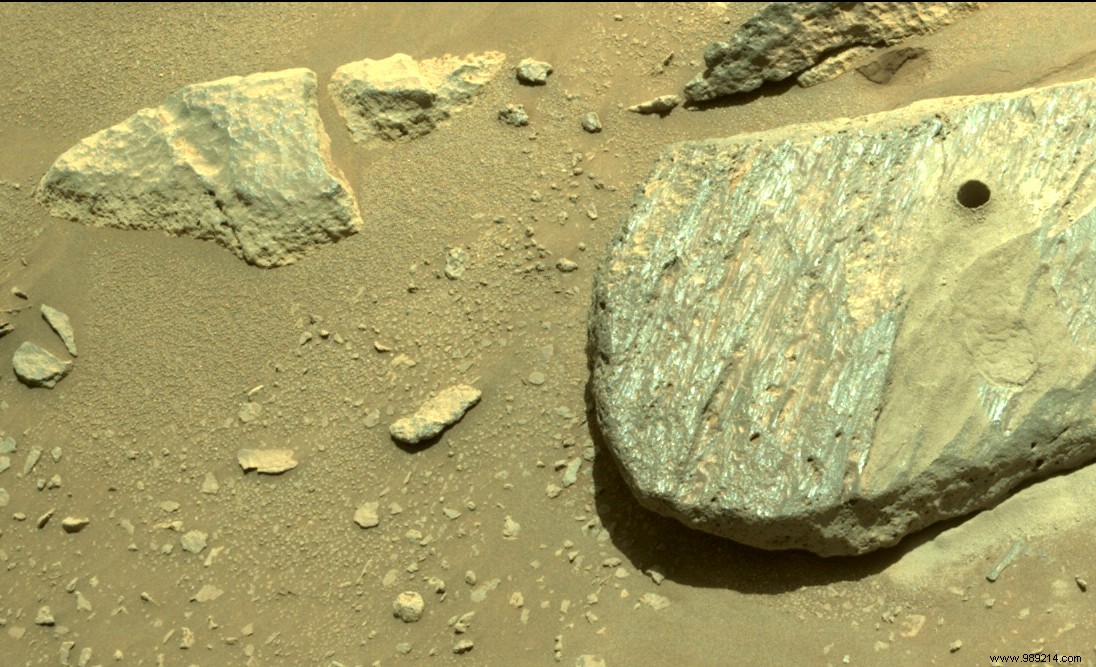
After imaging and measurements, the tube will be hermetically sealed and stored aboard Perseverance. In coming years, the rover will deposit it for retrieval by a dedicated NASA-ESA vehicle.
Along with others, this sample will return to Earth for in-depth analysis. Scientists anticipate microbial fossils within the lava-like rock, which can also be precisely dated.
