Astronomers using Hubble Space Telescope data have confirmed water vapor for the first time in the atmosphere of Ganymede, Jupiter's largest moon and the biggest in our solar system. This vapor arises as surface ice sublimates directly from solid to gas.
Ganymede harbors more water than all of Earth's oceans combined, with much locked in a subsurface ocean around 150 km deep. Its surface, enduring extreme cold, was long thought to be entirely frozen solid. However, reanalysis of Hubble's new and archival observations has revealed traces of water vapor there. The findings, led by experts from Sweden's Royal Institute of Technology, appear in Nature Astronomy.
In 1998, Hubble's Imaging Spectrograph captured the moon's first ultraviolet images, showing auroral bands—glowing ribbons of electrified gas—akin to Earth's auroras and those on other magnetized worlds.
These were attributed to molecular oxygen (O2) in the thin atmosphere, but certain features didn't match expectations for a pure O2 environment. Researchers initially blamed elevated atomic oxygen from the breakdown of O2 by sunlight.
Supporting NASA's Juno mission, the Swedish team revisited this three years ago, using Hubble to quantify atomic oxygen. Surprisingly, they found virtually none.
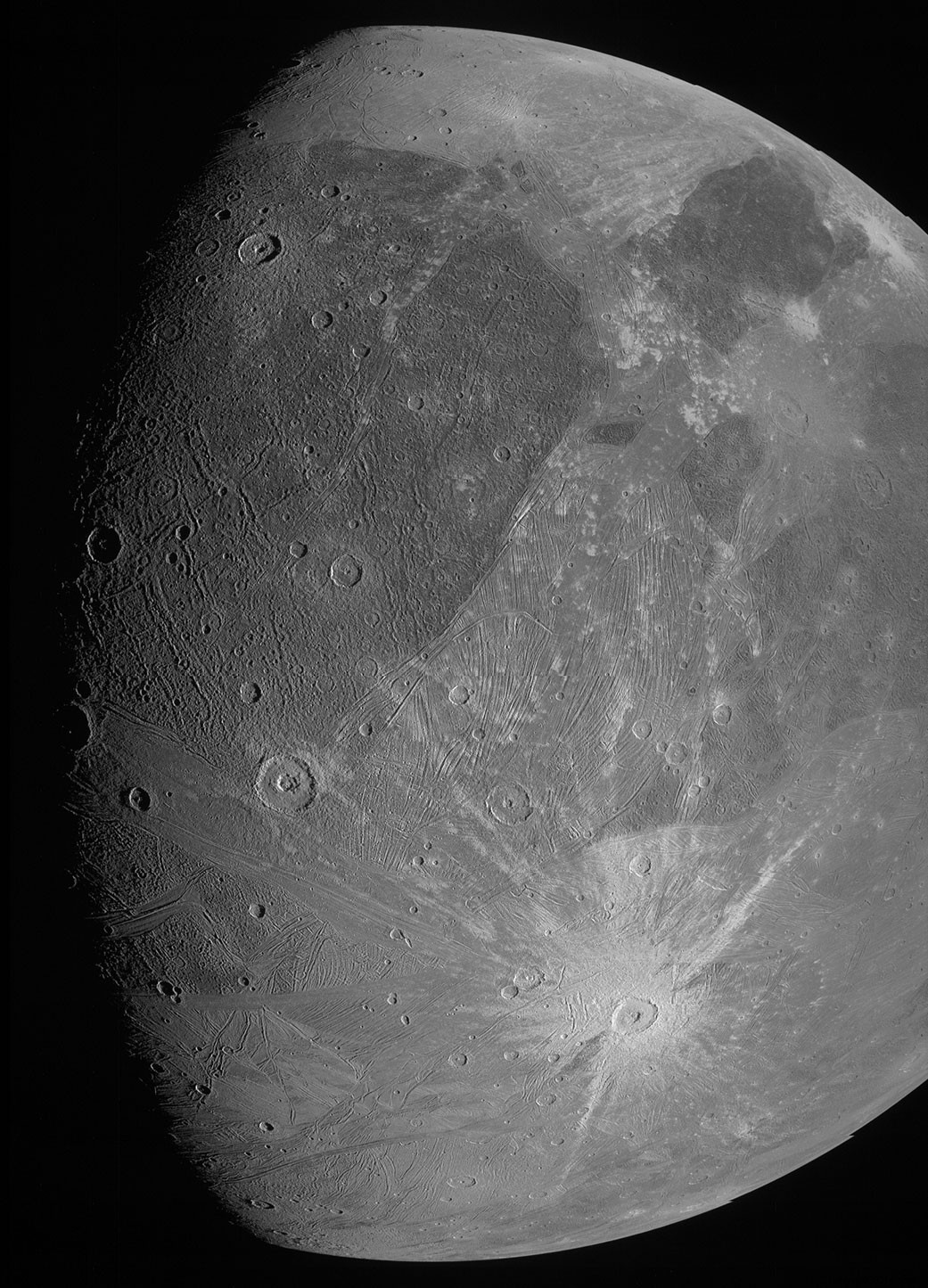
Recently, the team scrutinized the aurora distributions from 1998, hypothesizing that discrepancies stemmed from water vapor released by ice sublimation. Like Earth, Ganymede's surface warms slightly at midday near the equator, enough for ice to vaporize minimally.
The UV image variations indeed aligned with predicted water vapor locations.
"Until now, only molecular oxygen had been observed," explains lead author Lorenz Roth. "That's generated as charged particles bombard and erode the ice. The water vapor we've detected originates from thermal sublimation in warmer icy areas."
This discovery deepens our grasp of Ganymede's atmosphere and will inform ESA's JUICE mission, launching next year. JUICE will explore the Jovian system from 2029, devoting exclusive focus to Ganymede starting in 2032.
