SpaceX launched its latest cargo resupply mission to the International Space Station (ISS) on Saturday, deploying an upgraded Crew Dragon capsule. This marks the first time two SpaceX vessels have docked simultaneously at the ISS.
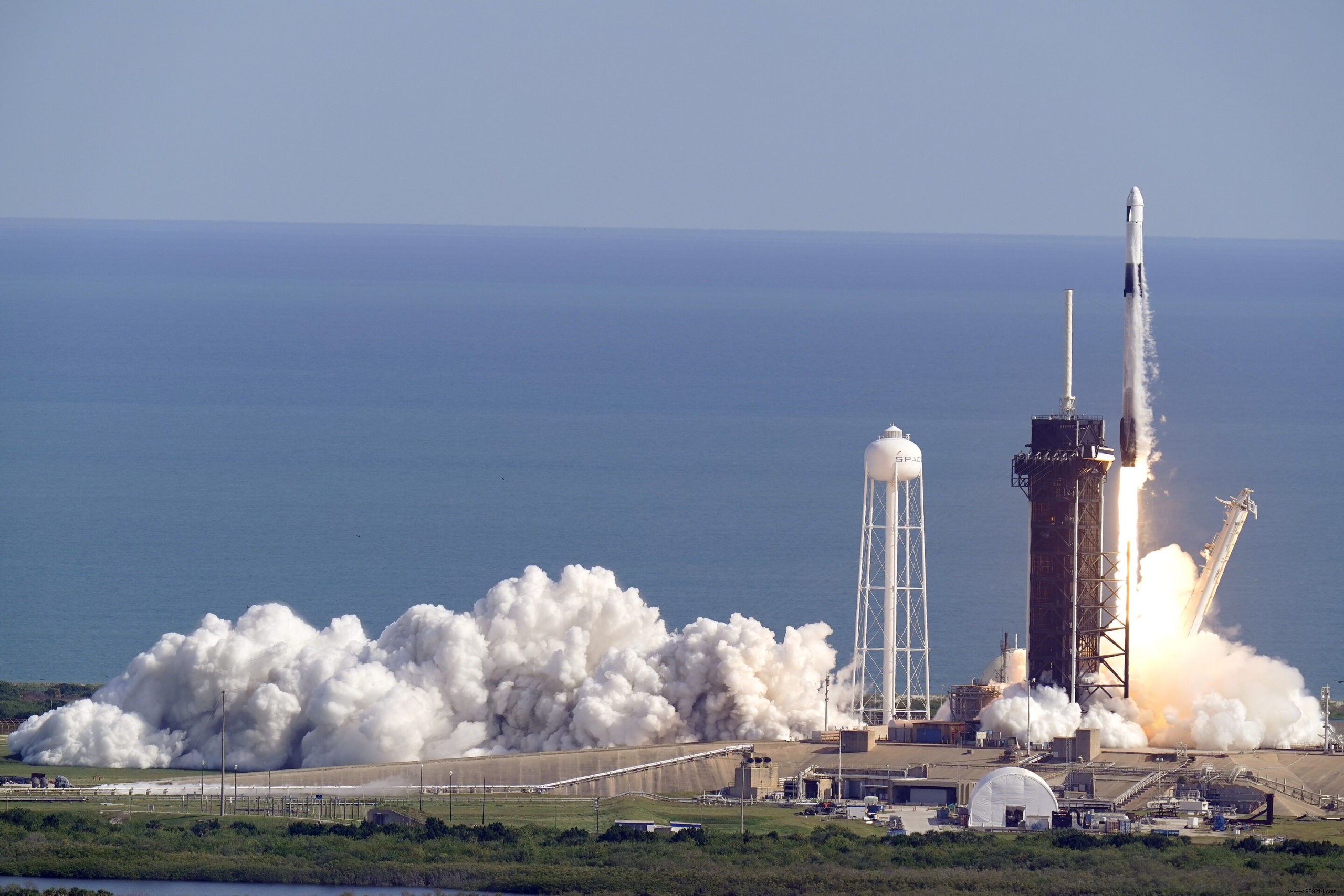
A Falcon 9 rocket lifted off from NASA's Kennedy Space Center at 5:17 p.m. French time, representing SpaceX's 21st cargo mission for NASA and its 24th launch of the year.
Nine minutes after liftoff, the first stage booster successfully landed on a SpaceX droneship in the Atlantic Ocean. This booster, B1058, had already flown three times prior, making it the first multi-flight booster used by NASA—a testament to growing confidence in SpaceX's reusable technology.
The CRS-21 mission featured the debut of SpaceX's enhanced Cargo Dragon 2, a modified version of the Crew Dragon designed for uncrewed cargo delivery. It carries food, water, scientific experiments, and supplies to the orbiting laboratory.
The 2.9-ton payload included asteroid samples for biomining research, a new medical device for rapid blood testing in space, and about 40 mice to study microgravity's effects on bone density and vision—key concerns for long-duration missions.
Adapted from the human-rated Crew Dragon, this version removes seats, cockpit controls, life support, and SuperDraco abort engines, replacing them with twice the storage capacity via motorized lockers.
The Cargo Dragon 2 enables faster turnaround for reuse and autonomous docking to the ISS, eliminating the need for robotic arm capture used in prior missions.
With the Cargo Dragon 2 now docked, two SpaceX Crew Dragon capsules are attached to the ISS: this cargo vessel and the crewed Resilience, which launched on November 15 with four astronauts.
The cargo capsule will undock in about a month, returning used equipment and splashing down in the Atlantic Ocean—a shift from previous Pacific landings to reduce turnaround time near Cape Canaveral.
Resilience will remain docked for another five months before returning its crew to Earth.
