During NASA's Apollo missions from 1969 to 1972, 12 astronauts walked on the Moon, but they stayed close to their landing module, deploying experiments and collecting rock samples. What if an astronaut aimed to circle the entire Moon on foot—how long would that take?
The timeline hinges on walking speed, daily activity hours, and route detours around hazardous terrain. Realistically, such a journey could exceed a year, facing immense challenges along the way.
These 12 Apollo astronauts navigated the Moon's low gravity—one-sixth of Earth's—with a characteristic bounce. Yet, subsequent NASA research indicates humans could move far faster on the lunar surface than observed during Apollo.
Theoretically, circling the Moon's 10,921 km circumference is feasible at higher speeds. Apollo astronauts averaged 2.2 km/h, limited by bulky, pressurized spacesuits not optimized for mobility. Sleeker suits could enable much quicker progress.
In a 2014 NASA study published in the Journal of Experimental Biology, researchers tested human locomotion in simulated lunar gravity. Eight participants, including three astronauts, used a treadmill on a DC-9 aircraft flying parabolic arcs to mimic Moon gravity for 20-second intervals.
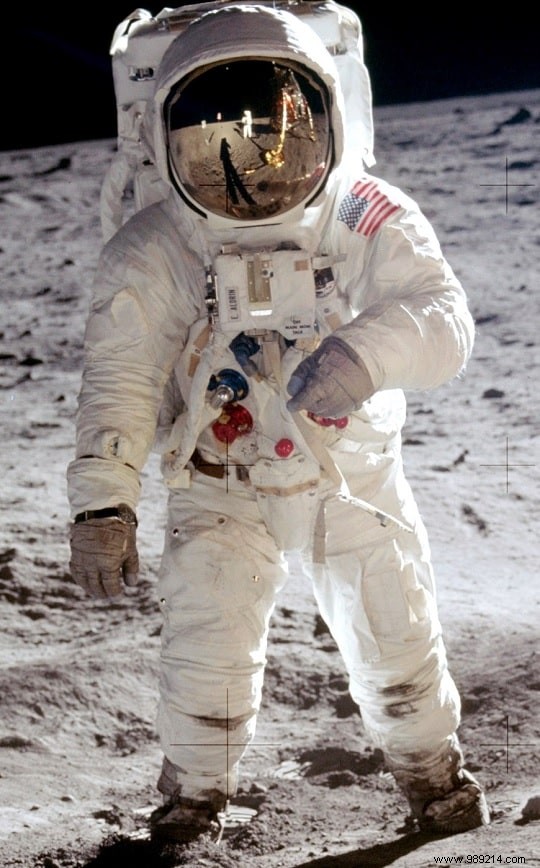
Results showed participants walking up to 5 km/h before transitioning to a run—over twice Apollo speeds and nearing Earth's max walking pace of 7.2 km/h. Free arm swinging mimicked Earth running, generating downward force to counter low gravity—impossible in Apollo suits due to their weight and stiffness. At 5 km/h, circling the Moon would take about 91 days nonstop.
For comparison, nonstop walking Earth's 40,075 km equator at 5 km/h would require 334 days, though oceans make it impossible. Nonstop lunar walking for 91 days is equally unrealistic.
Route planning is critical, requiring supplies like food, water, and oxygen—far beyond backpack capacity, necessitating a rover. The Moon's rugged terrain, with deep craters, demands careful avoidance.
Lighting and temperature extremes factor in: equatorial days hit 100°C, nights plummet to -180°C. The lunar day-night cycle means much of the trip in darkness, with regolith conditions varying by temperature and impacting speed.
Such a mission demands elite endurance, akin to top marathoners per ESA guidelines, as low gravity stresses muscles and the cardiovascular system. Peak speeds might sustain just 3-4 hours daily. At 5 km/h for 4 hours (20 km/day), it would take roughly 547 days—nearly 1.5 years—assuming minimal detours.
