Since the 1990s, physicist James F. Woodward has developed a theory rooted in the Mach principle, leading to a groundbreaking thruster prototype for space exploration. Is this the dawn of a propulsion revolution or a intriguing anomaly?
James F. Woodward, Professor of History and Adjunct Professor of Physics at California State University, Fullerton, USA, proposed the Woodward effect in 1990. This hypothesis suggests a body's mass can fluctuate with changes in its internal energy density during acceleration.
As detailed in a March 2020 Wired article, Woodward leads development of the Mach Effect Gravitational Assist (MEGA) thruster. This compact device, just centimeters long and composed of metal, wiring, and piezoelectric crystals, operates in a sealed transparent vacuum chamber, isolated from external influences. Yet, Woodward envisions it powering humanity's journey to the stars.
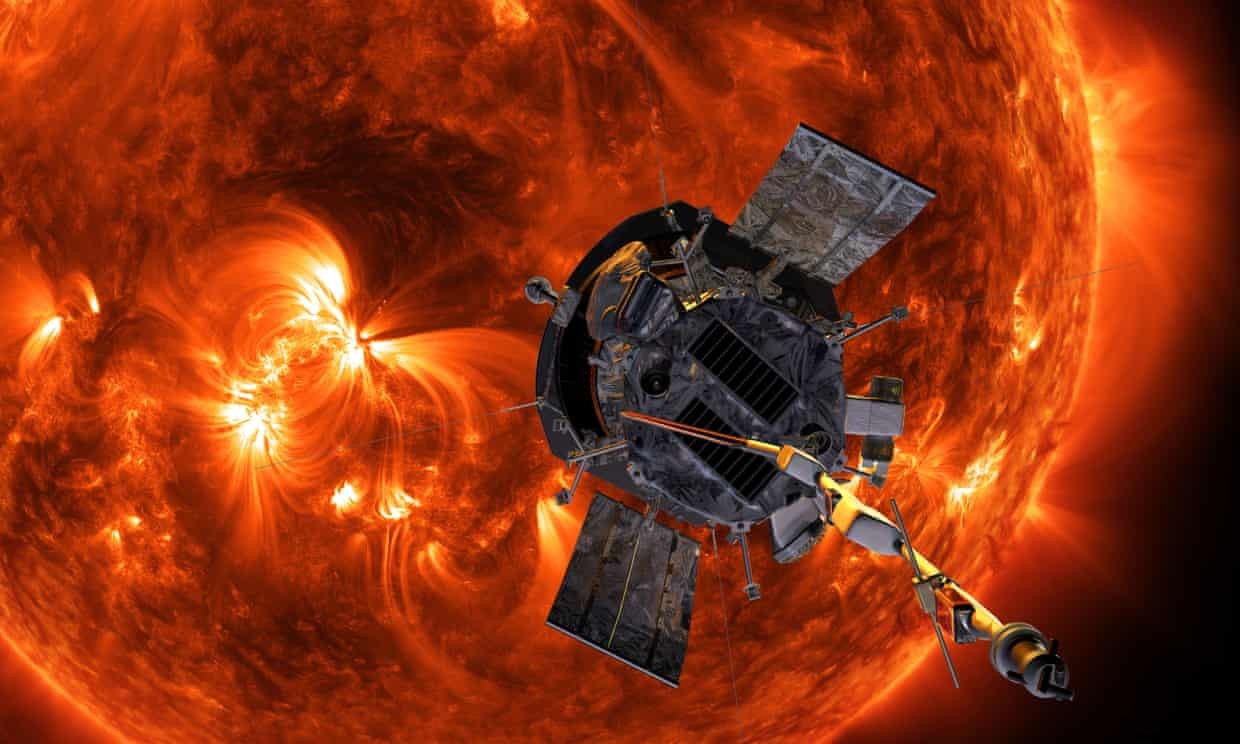
Traditional spacecraft rely on propellants for thrust, like NASA's Parker Solar Probe, which reaches approximately 650,000 km/h but would take millennia to reach Alpha Centauri, our nearest stellar neighbor. In contrast, Woodward's prototype uses electricity alone, potentially sourced from solar panels or a nuclear reactor in space.
Rather than explosive acceleration, it provides steady, continuous thrust. Woodward posits it could achieve unprecedented speeds, making a human-lifespan voyage to Alpha Centauri feasible—though the underlying physics face significant scrutiny.
Piezoelectric crystals in the device store minuscule energy amounts and vibrate tens of thousands of times per second under electric current. When vibrations synchronize perfectly across the thruster, it generates forward propulsion. Many experts, however, question the validity of this purported force.
Undeterred by skepticism, Woodward and collaborator Hal Fearn report recent advances: steady 100-micronewton thrusts via redesigned configurations—hundreds of times stronger than prior results. For the first time, the prototype visibly displaced by 0.5 mm. Past experiments had issues like calculation errors and false positives, but these findings offer cautious optimism.
Next steps include sharing the prototype with independent teams, such as engineer Mike McDonald at the U.S. Naval Research Laboratory in White Oak, Maryland. Though success odds are low, Woodward and Fearn remain hopeful for validation.
