Humanity's direct cosmic exploration has so far been confined to lunar and interplanetary missions. NASA's Starlight program offers a groundbreaking path forward, using directed-energy propulsion to send tiny spacecraft to other stars. These miniature probes could enable robotic exploration while carrying small organisms—prompting researchers to spotlight tardigrades.
Government agencies and private firms aim to establish permanent footholds on the Moon and Mars. Yet interstellar missions remain out of reach, with no concrete plans for human astronauts to nearby star systems. Robotic probes are proposed, but new research in the January issue of Acta Astronautica suggests tardigrades could embark on interstellar journeys sooner.
The study examines NASA's Starlight program for enabling interstellar biology experiments with radiation-tolerant microorganisms.
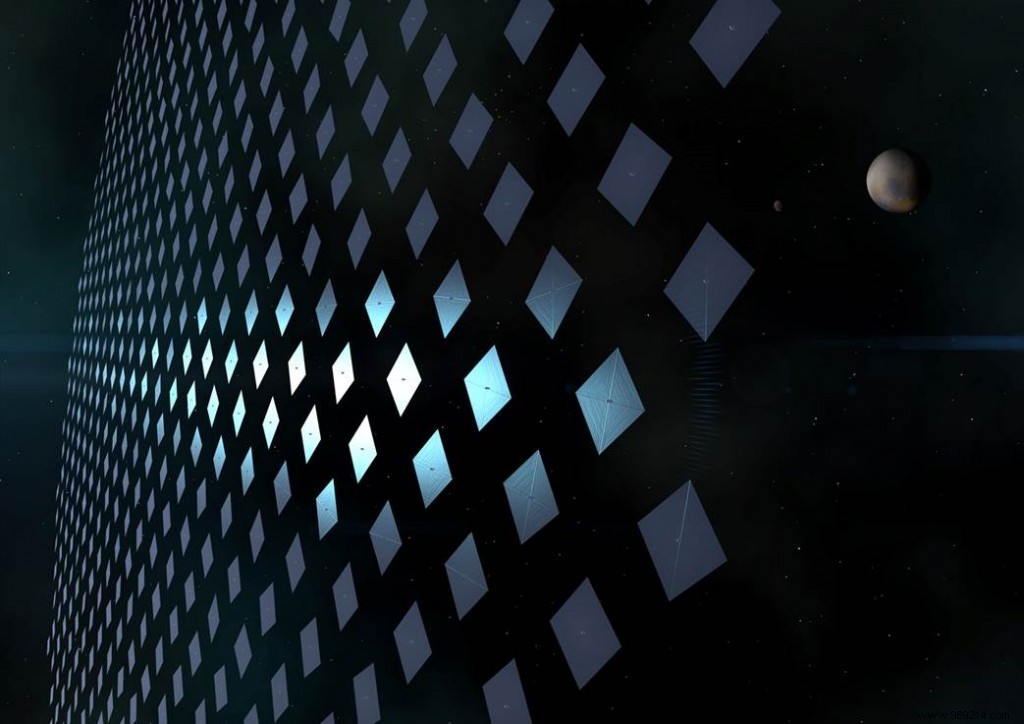
Launched by NASA in 2009, Starlight explores laser-directed energy to accelerate small spacecraft to relativistic speeds—near the speed of light. Initiatives like Breakthrough Starshot aim to reach Alpha Centauri, our nearest star system, in just 20 years. Light sails' key advantage: no onboard propellant, allowing extreme lightness and rapid acceleration.
Previous concepts focused solely on instruments for data collection upon arrival. However, University of Florida researcher Stephen Lantin and colleagues show these missions could also test radiation and interstellar medium effects on living organisms.
Tardigrades, or water bears, thrive amid extremes: freezing temperatures, crushing pressures, radiation, dehydration, starvation, and the vacuum of space.
Space exposure tests have confirmed their survival where other life forms perish—some even reproducing successfully post-vacuum.
These traits make tardigrades perfect for deep-space biology trials, informing human missions and testing panspermia theories.
Technical hurdles remain, but progress is accelerating.
