Japan is teaming up with private companies to pioneer intercontinental spacecraft that could link major global cities in under two hours. A recent government report outlines this groundbreaking initiative.
On May 12, Japan's Ministry of Education, Culture, Sports, Science and Technology revealed an ambitious roadmap. The plan aims to deploy ships or rockets capable of transporting passengers anywhere on Earth in less than two hours by the early 2040s, assuming suitable landing infrastructure is in place.
As reported by The Mainichi, the ministry forecasts a potential market for these intercontinental vessels worth around 5 trillion yen (approximately 38 billion euros) within two decades.
A decade ago, rocket landings seemed like science fiction. Today, with reusable spacecraft becoming reality, point-to-point space travel feels increasingly feasible. A U.S. Air Force document suggests using SpaceX's Starship for rapid cargo delivery worldwide, while Elon Musk in 2017 envisioned intercontinental trips at economy-class fares.
The ministry's report (available here in Japanese) provides a clear timeline for this vision.
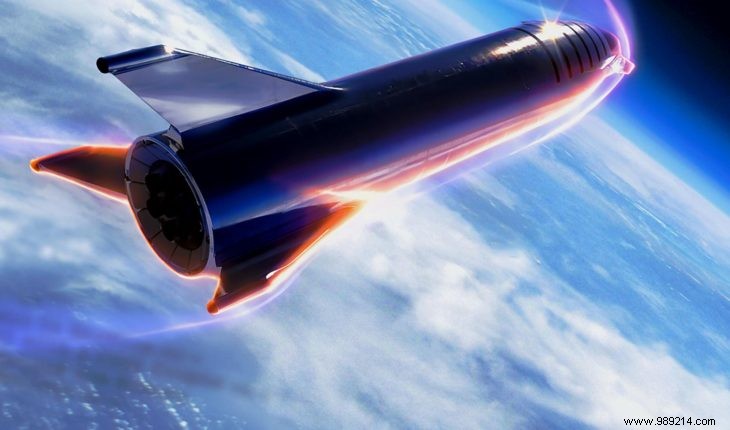
The strategy encompasses two spacecraft types: one launching and landing like a traditional airplane on runways (similar to early U.S. shuttles), and another using vertical takeoff and landing like a rocket (reminiscent of Starship).
To advance this, Japan plans to halve the costs of its H3 rocket (currently about 37 million euros), developed by JAXA, with its debut flight this year. Reusability will be key, boosting Japan's global competitiveness and paving the way for a fully reusable H3 successor from the early 2030s.
This technology would then transfer to private firms, enabling commercial intercontinental space transport development.
Approval for inclusion in Japan's national space policy is pending, with a decision expected soon. As space experts track these developments, this could redefine global travel.
