In 2020, a meteor skimmed Earth's atmosphere, 'bounced' off it, and streaked back into space. The Global Meteor Network's cameras captured this extraordinary event.
As Earth orbits the Sun, it frequently encounters space rocks. Some pass harmlessly by, others burn up on entry, and a few impact the surface. Rarely, meteors 'ricochet' off the atmosphere and escape back to space.
Such cosmic bounces have been documented before. The earliest recorded case is the Great Meteor of 1860, which crossed the United States on July 20. Other instances include the 1913 event over Canada and Bermuda, and the October 13, 1990, sighting over Czechoslovakia and Poland, all noted in scientific literature.
More recently, on July 7, 2017, a meteor raced across the Australian sky at over 56,000 km/h, lighting it up for 90 seconds. Calculations suggest this asteroid belt fragment is now en route to Jupiter.
On September 22, 2020, another was spotted on the northern horizon over Germany and the Netherlands. Detected by the Global Meteor Network, this meteoroid 'bounced' at around 91 kilometers altitude—lower than orbiting satellites—before heading back to space. See the footage below:
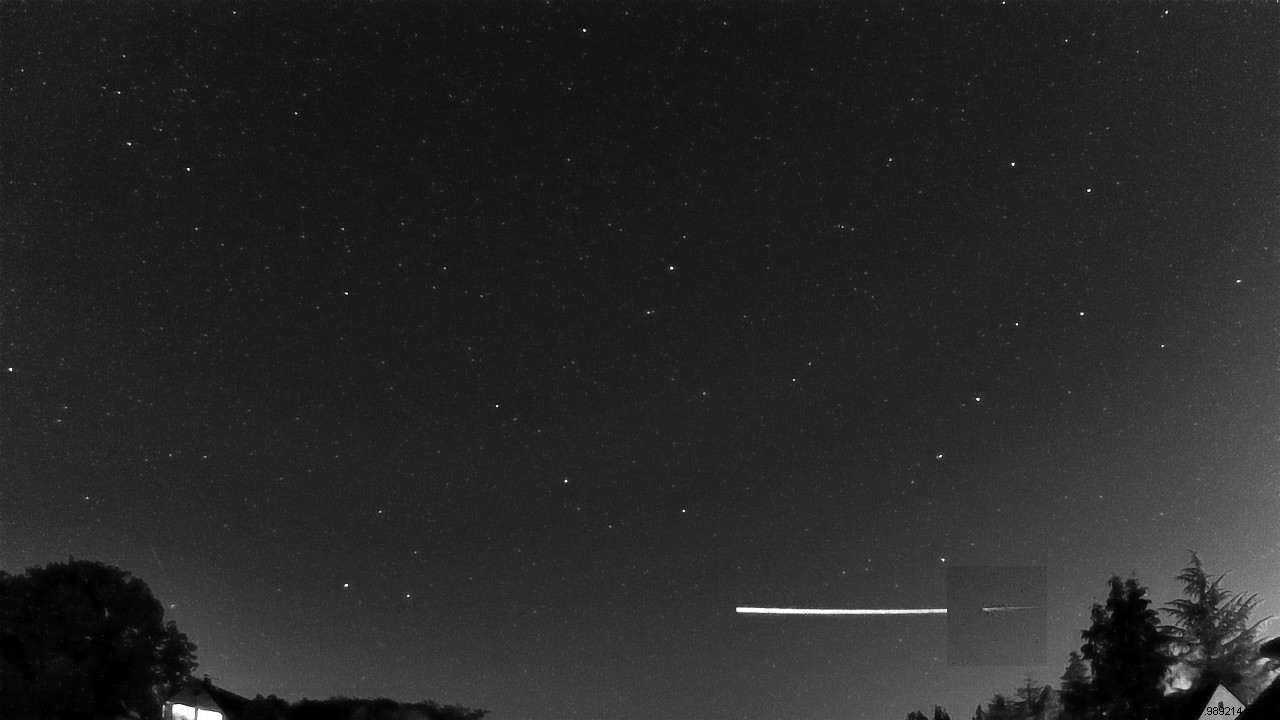
It didn't penetrate deeply enough to burn up. Its shallow entry angle relative to the horizon played a key role. Researchers calculated its speed at over 34.1 km/s, exceeding Earth's escape velocity of 11.2 km/s. This allowed it to overcome our planet's gravity and return to space.
Dennis Vida, head of the Global Meteor Network, identifies it as a fragment of a Trojan asteroid—rocks sharing Jupiter's orbit at the Sun-Jupiter system's L4 and L5 Lagrange points, 60 degrees ahead or behind the gas giant. The exact parent body remains unidentified.
