Boeing's Starliner capsule has successfully completed its final parachute drop tests. With this milestone achieved, the company is targeting a new orbital test flight to the ISS as early as next year.
In 2014, NASA selected SpaceX and Boeing as private partners to provide commercial crew transportation to the International Space Station (ISS), alternating missions for cargo and astronauts.
SpaceX's Crew Dragon capsule is now a proven workhorse, having ferried astronauts to the ISS twice (May and November) and with two capsules currently docked at the station—a historic first. Boeing's Starliner, however, has faced setbacks.
About a year ago, Boeing conducted an uncrewed test flight for Starliner, aiming to dock with the ISS. A software error shortly after launch led to an off-nominal orbit insertion. The capsule entered the wrong orbit, consuming excess fuel and preventing it from reaching the station.
Subsequent issues included communication failures between ground control and the capsule, plus another software flaw that risked a collision during separation from the launch vehicle in the upper atmosphere.
In March, a comprehensive review identified a list of 80 fixes, which Boeing has diligently addressed since.
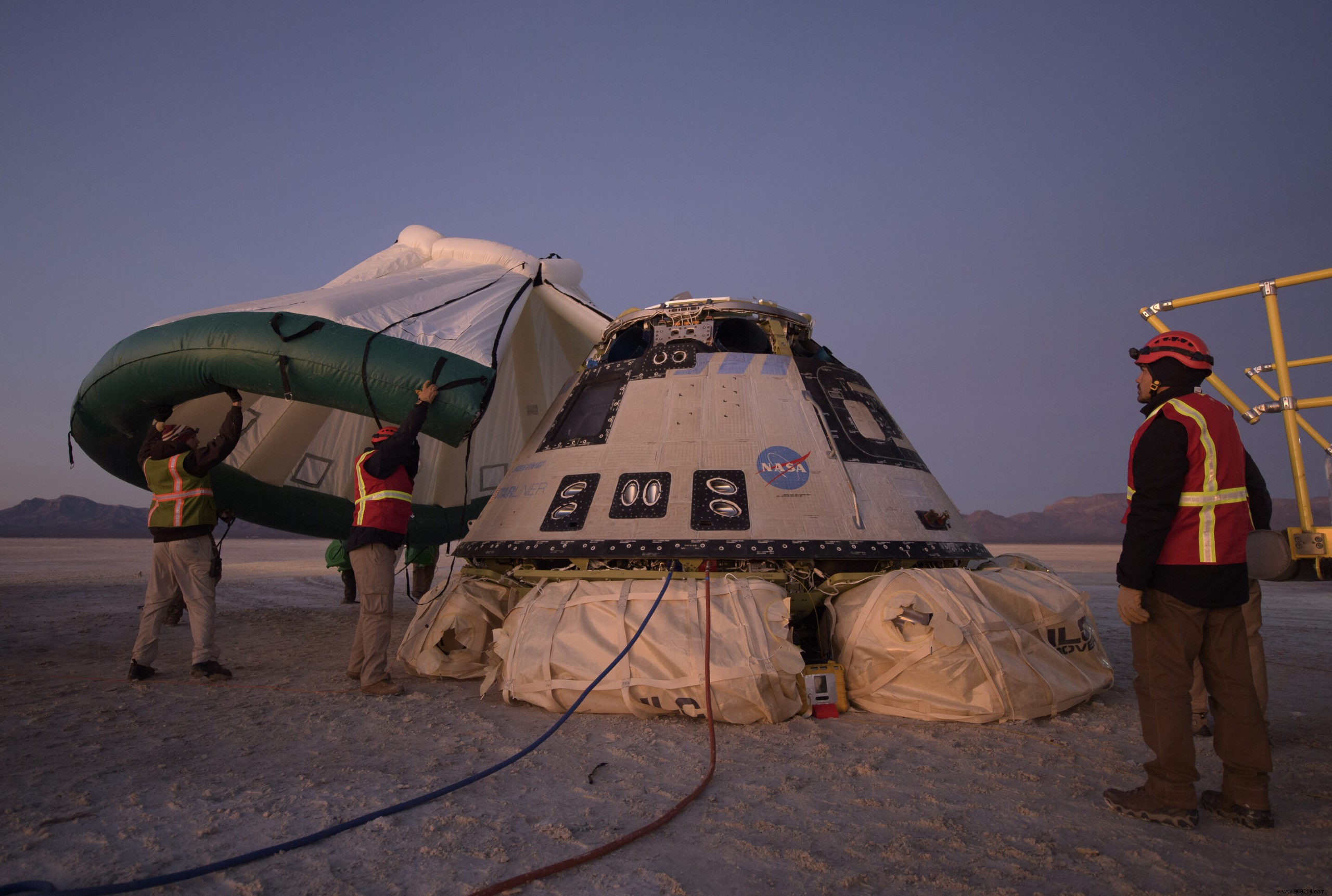
Building momentum, Boeing recently aced the final parachute qualification tests. The data gathered supports an upcoming second orbital flight test, followed by crewed ISS missions potentially starting next March.
The landing system features initial drogue parachutes deployed alongside the heat shield during reentry. Two stabilizer parachutes then steady the capsule, with three main parachutes providing the final deceleration before touchdown.
Six tests unfolded in the New Mexico desert, culminating in a drop from 10,700 meters that confirmed the system's performance.
