Details of SpaceX's ambitious spaceport plans in South Texas surfaced last week during a federal review process. As experts in space exploration infrastructure, here's a clear breakdown based on official documents.
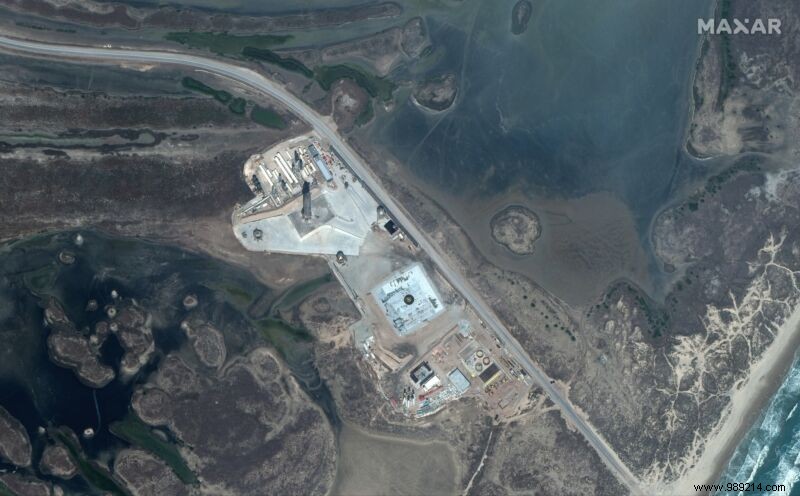
The tiny Boca Chica area in Texas, home to fewer than 20 residents, already hosts SpaceX's Starship development site aimed at lunar and Mars missions. With prototype test flights accelerating, expansion is essential. Elon Musk recently announced a full-scale "spaceport" here—but what does that entail?
Recent public documents from the U.S. Army Corps of Engineers provide architectural blueprints. Key additions to existing facilities include:
– Two Orbital Launch Pads
– Two Suborbital Launch Pads, one operational
– Two Landing Platforms, one operational
– Two Structural Test Stands for Starship and Super Heavy boosters to simulate real-world stresses
– A Large Tank Farm for orbital mission ground support
– Permanent Starhopper Display at the site entrance, now functioning as a weather station, antenna relay, and launch camera
These features will span just a few dozen acres, with stormwater retention ponds to manage flood risks.
Together with two repurposed oil platforms renamed Phobos and Deimos (after Mars' moons), the four launch pads signal SpaceX's growing operational might. Texas is poised to become the epicenter for Starship and deep-space human exploration.
Musk recently proposed incorporating Boca Chica into a new city called Starbase, announced on X (formerly Twitter). However, this vision faces hurdles.
“If SpaceX and Elon Musk want to take such steps, they will have to follow all the rules in force in the State,” warned local magistrate Eddie Treviño. Speaking to Bloomberg, he added that SpaceX "will have to overcome many obstacles" before any city-building proceeds.
