Clear skies ahead: Neither clouds nor Martian dust storms will hinder NASA's Perseverance rover landing tonight—a critical window that can't be postponed.
After a seven-month journey, NASA's Perseverance rover braces for the seven most perilous minutes of its mission. Entry begins around 9:48 p.m. French time, as the capsule pierces Mars' atmosphere at nearly 20,000 km/h, followed by a massive parachute deployment to brake its descent.
The descent stage then separates near the surface. At about 20 meters altitude, Perseverance lowers via three cables, which detach upon wheel touchdown—expected around 9:55 p.m. French time.
Follow the event live via these French-language channels: CNES YouTube channel - Astro Alex YouTube channel - the space and aero channel
Mission leaders confirm weather won't interfere. "The weather conditions are looking pretty good to us at the moment," notes Allen Chen, head of NASA's Jet Propulsion Laboratory team in California. "There will be clouds and some storms at the edge of the polar cap, but nothing near our landing site (Jezero crater)."
Jezero Crater, thought to have hosted water 3-4 billion years ago, sits at 18° north—right as Mars enters spring on February 7.
This timing is ideal for NASA, which locked in this precise landing slot before launch on July 30. 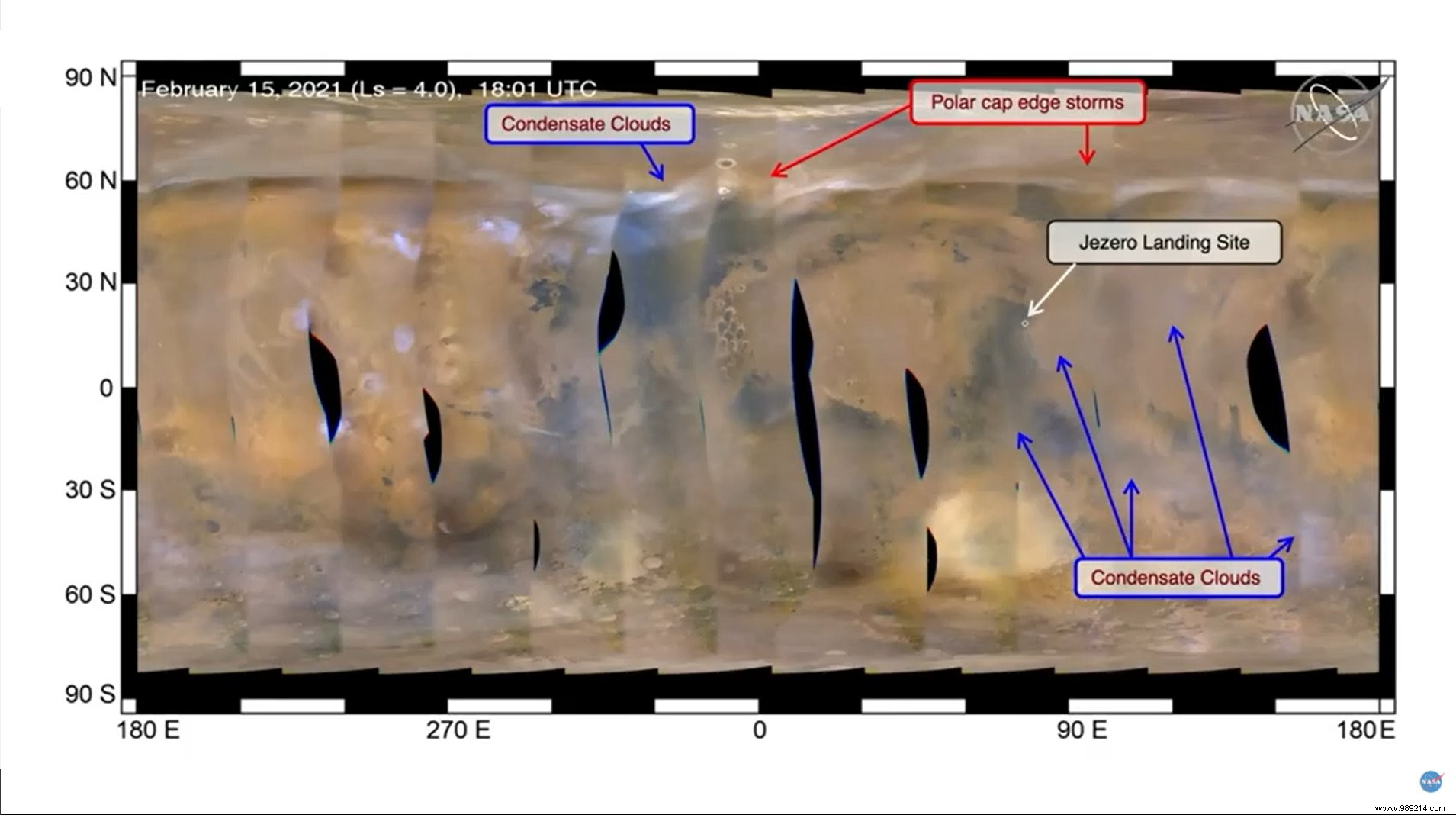
Even with perfect weather, the descent remains daunting. "Even with clear skies, landing is the most critical and dangerous part of the mission," Chen emphasizes. "We just can't guarantee its success." Historically, only 40% of Mars landing missions have succeeded since the 1960s.
Multiple orbiting probes will capture every moment. Success would mark Perseverance as NASA's fifth Mars rover, following Sojourner (1997), Spirit and Opportunity (2004), and Curiosity (2012).
