Recent research from experts at Los Alamos National Laboratory has precisely measured the heliosphere's shape—the vast magnetic bubble shielding our solar system. This breakthrough enhances our understanding of solar-interstellar interactions.
The heliosphere is a protective magnetic bubble created by the solar wind—a stream of protons, electrons, and alpha particles emanating from the Sun. It extends far into space, safeguarding our solar system from galactic cosmic radiation. But what does this bubble actually look like?
Earlier models, informed by Voyager probe data, predicted its form by tracking electrically neutral hydrogen atoms from interstellar space. Upon entering the heliosphere, some become charged, allowing scientists to trace the boundary and reveal a "deflated crescent" shape.
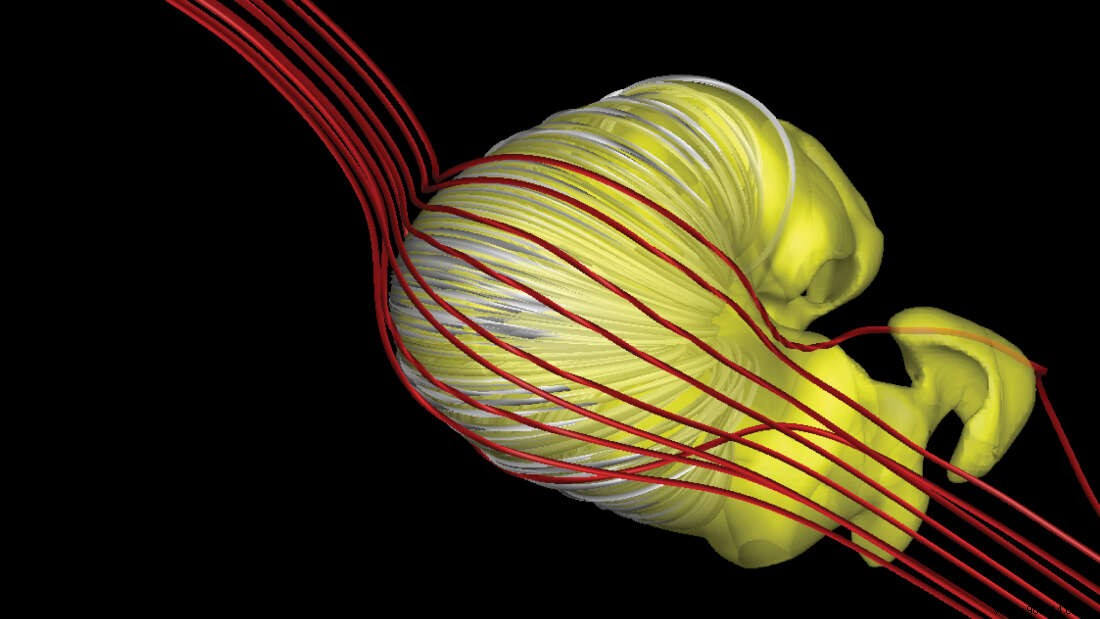
In groundbreaking new research, Dan Reisenfeld and his team at Los Alamos National Laboratory analyzed data from NASA's Interstellar Boundary Explorer (IBEX) mission. IBEX detects particles from the heliosheath, the outermost layer of the heliosphere. The focus was the heliopause—the dynamic frontier where solar wind meets interstellar wind.
The team employed a technique akin to echolocation, used by bats to navigate. Just as bats emit sound waves that bounce back as echoes to map surroundings, researchers used energetic neutral atoms (ENAs) from particle collisions to "image" the heliopause.
ENAs arise from collisions between solar wind and interstellar particles in the heliosheath. "By analyzing these, we can see the heliosphere's edge much like a bat uses sonar to 'see' cave walls," explains Dr. Reisenfeld.
Accounting for solar variability, the team gathered IBEX data across a full solar cycle, from 2009 to 2019. This enabled them to construct a detailed three-dimensional map of the heliosphere.
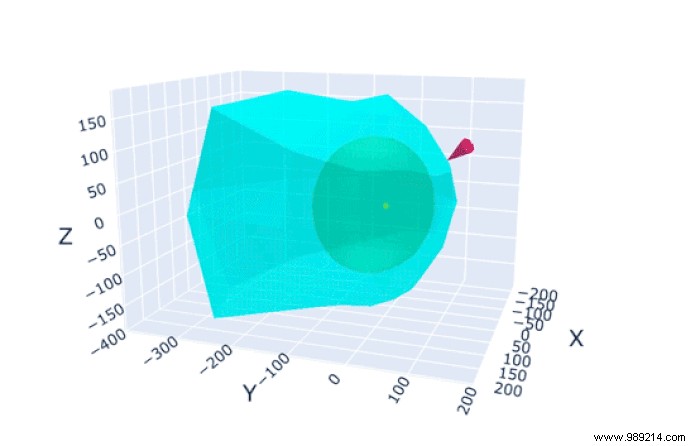
The map shows the heliopause's closest point to the Sun—at the "nose" facing interstellar wind—is about 120 astronomical units (AU) away. In the opposite "tail" direction, it stretches at least 350 AU. For context, 1 AU equals the Earth-Sun distance of roughly 150 million kilometers.
