Experts from NASA and collaborators have identified three strains of beneficial bacteria from a newly discovered species aboard the International Space Station (ISS). These microbes hold promise for enabling plant cultivation on Mars. Findings are detailed in Frontiers in Microbiology.
A joint U.S.-Indian research team, working with NASA, isolated four strains from the Methylobacteriaceae family on the ISS. One strain, Methylorubrum rhodesianum, was previously identified in a 2011 HEPA filter. The remaining three, collected in 2015 and 2016, represent a new species to science.
These strains—IF7SW-B2T from a research station panel, IIF1SW-B5 from the observation cupola, and IIF4SW-B5 from the dining table surface—are closely related to Methylobacterium indicum based on genetic analysis.
Confirming their status as a distinct species, lead geneticist Swati Bijlani and the team propose the name Methylobacterium ajmalii.
This find aligns with ongoing ISS experiments where astronauts cultivate small food crops, making microbial presence expected.
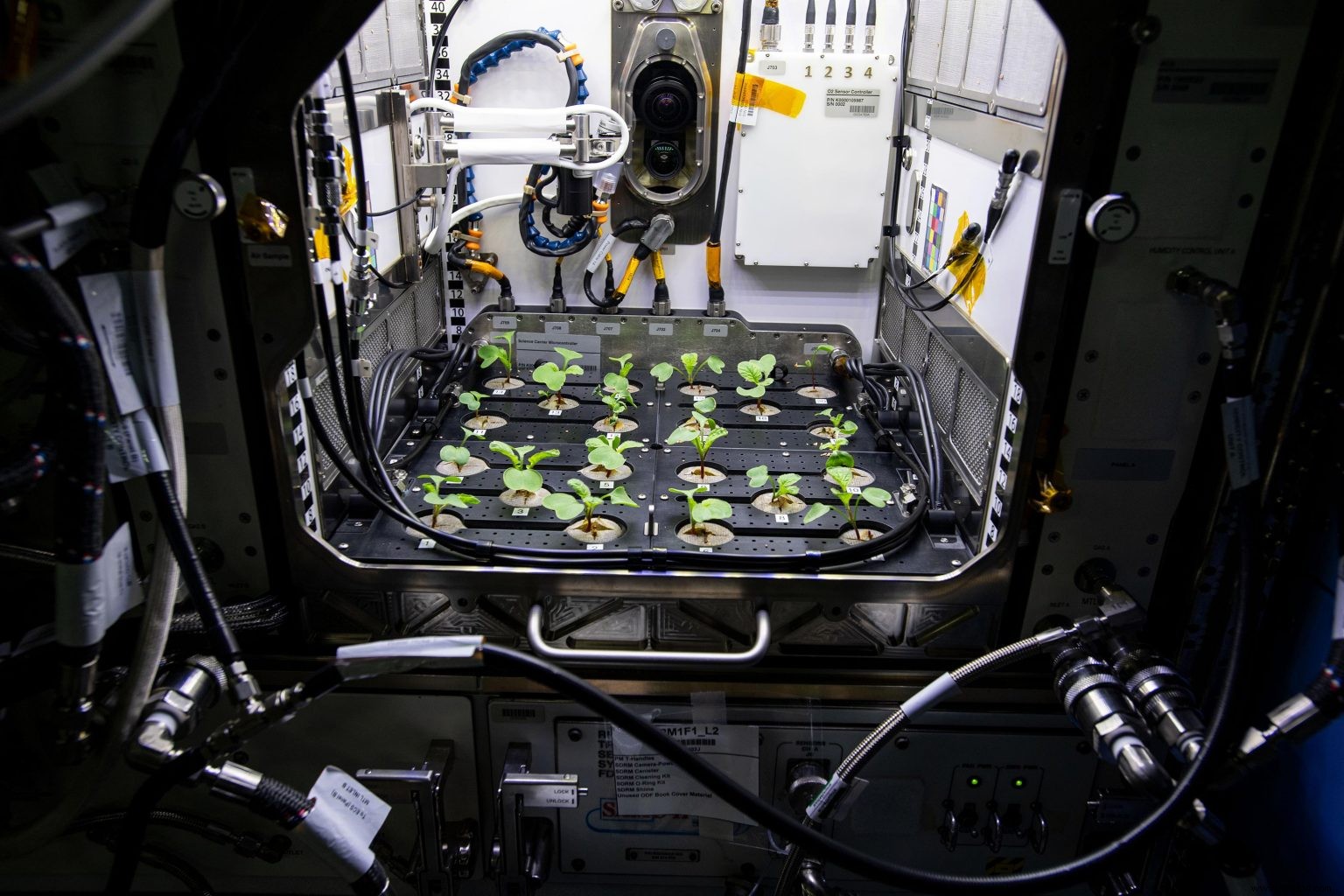
These bacteria, typically found in soil and freshwater, support nitrogen fixation, phosphate solubilization, stress tolerance, plant growth promotion, and pathogen control.
In essence, they are Earth's "beneficial" microbes adapted to space.
With NASA's plans for a sustained Mars presence, such microbes could be key allies for food production.
"To cultivate plants in resource-scarce, extreme environments, isolating novel growth-promoting microbes under stress is crucial," note NASA's JPL researchers Kasthuri Venkateswaran and Nitin Kumar Singh.
Genetic studies of the strains revealed survival mechanisms suited to ISS rigors. Notably, strain IF7SW-B2T carries genes for an essential cytokinin enzyme that drives root and shoot cell division.
This breakthrough is just the beginning; over 1,000 unanalyzed ISS samples hint at further microbial diversity awaiting exploration.
