The United Arab Emirates (UAE) is gearing up for an ambitious space mission to explore the asteroid belt in the early 2030s, with a soft landing on an asteroid targeted for 2033. To date, only two nations—the United States and Japan—have accomplished this feat.
The UAE has established itself as a leader in space innovation. In September 2019, astronaut Hazzaa Ali Almansoori became the first Emirati to visit the International Space Station aboard a Soyuz rocket. The nation's Emirates Mars Mission (Hope), orbiting the Red Planet since 2021, continues to provide invaluable data on Mars' atmosphere. Looking ahead, the UAE plans to deploy its first lunar rover as early as 2024.
Building on this momentum, the UAE's next venture is a probe to the asteroid belt between Mars and Jupiter, launching in 2028—marking its second interplanetary mission.
The spacecraft will leverage gravity assists from Venus in mid-2028 and Earth in mid-2029 to arrive at the asteroid belt by 2030. It will conduct close-up studies of seven asteroids before attempting a soft landing on an eighth in 2033. Only four missions have previously succeeded: NASA's NEAR Shoemaker and OSIRIS-REx, and Japan's Hayabusa1 and Hayabusa2.
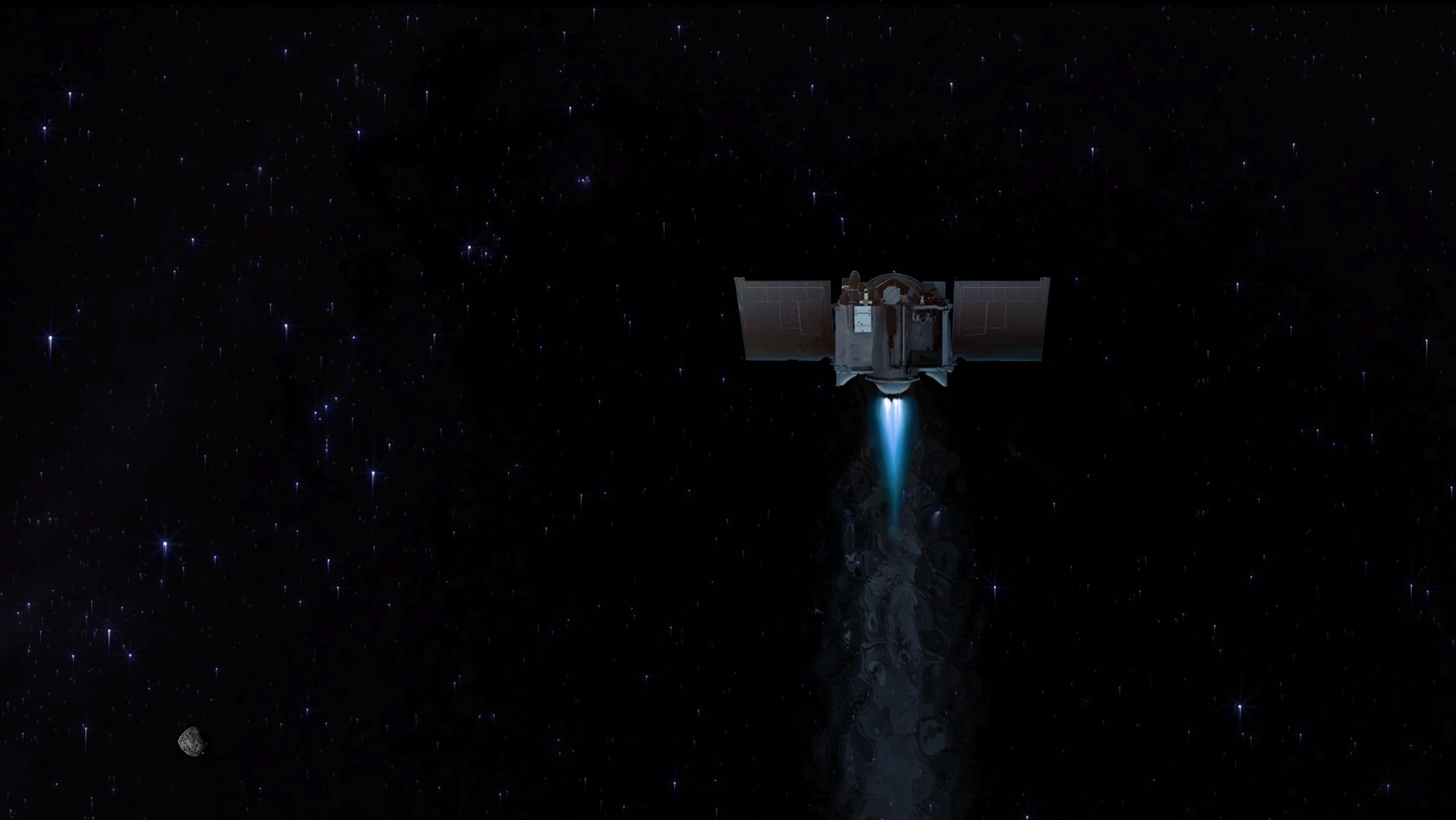
This endeavor positions the UAE among the world's space elite. Sarah Al Amiri, President of the UAE Space Agency, emphasized: "Our goal is clear: to accelerate the development of innovation and knowledge-based businesses in the Emirates. It requires leaps of imagination, faith, and the pursuit of goals that go beyond prudence or method."
As with the Hope mission, the UAE is collaborating with the Laboratory for Atmospheric and Space Physics at the University of Colorado Boulder.
These initiatives also aim to inspire the Arab world's youth. Omran Sharaf, Hope mission manager, noted: "showing them a future beyond oil, which cannot carry the country's economy forever." He added, "Failure [on Mars] is an option. But the failure of progress is not."
