Could life exist in Venus's clouds? Rocket Lab Founder and CEO Peter Beck aims to answer that by launching a spacecraft to the planet in 2023.
Days ago, researchers announced detecting phosphine in Venus's clouds at altitudes mimicking Earth's sea-level conditions. On our planet, anaerobic bacteria produce this gas, fueling speculation about microbial life.
Phosphine alone doesn't prove extraterrestrial life—it could arise from unidentified chemical reactions. The definitive check? Send a probe. That's Rocket Lab's plan.
Rocket Lab excels in small satellite launches. After a 2017 Electron rocket failure, it scored its first success in January 2018, orbiting three CubeSats.
Electron has since flown missions for NASA, DARPA, and the U.S. Air Force. Rocket Lab is advancing reusability with first-stage recovery techniques, much like SpaceX.
After a July setback, August brought a milestone: deploying its homebuilt Photon satellite. Photon serves low-Earth orbit clients and supports deep-space ventures.
Next up: a NASA contract for the CAPSTONE mission, lofting a microwave-sized CubeSat to lunar orbit.
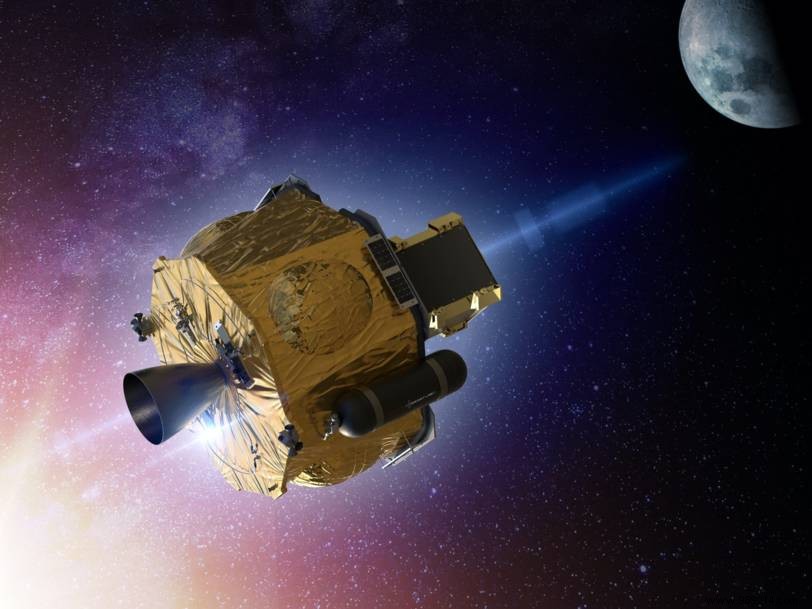
Lunar trips are stepping stones. Beck has eyed Venus for years, targeting a probe to hunt atmospheric life signs and decode the planet's transformation from Earth twin to inferno.
Rocket Lab's Venus effort, underway for months, teams with MIT's Sara Seager from the phosphine detection team.
Photon will orbit Venus, releasing a probe hurtling through clouds at 38,000+ km/h—no parachute. It grabs atmosphere samples, beams data to Photon, then perishes near the surface.
Success would mark the first private interplanetary mission.
Data could illuminate Venus's atmosphere, but experts like North Carolina State planetary scientist Paul Byrne caution: "Small probes like Rocket Lab's likely lack mass for advanced life-detection gear." More to come.

NASA eyes Venus too, beyond Mars. This year, DAVINCI+ emerged as a Discovery finalist with a probe to assay rare gases like krypton and neon, revealing Venus's history.
Phosphine buzz could tweak it for biosignatures. If greenlit, launch targets 2026.
