Astronomers from the LIGO-Virgo collaboration have announced the detection of 35 new gravitational wave events—subtle ripples in spacetime. Among them, one continues to puzzle experts.
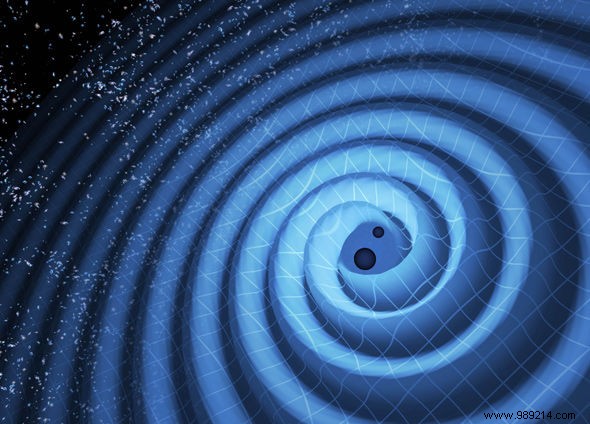
These waves arise when massive black holes spiral toward each other and merge, sending distortions traveling at light speed across the universe. Upon reaching Earth, they alternately compress and stretch spacetime itself.
Detectors like LIGO and Virgo use sophisticated laser interferometry: a laser beam splits via a semi-reflective mirror, bounces off perpendicular mirrors, and recombines at a detector. Gravitational waves cause path length differences, shifting the interference pattern.
The network includes two LIGO sites in the U.S. (Louisiana and Washington) and Virgo in Italy.
Prior to this, 55 events had been confirmed. During the latter half of the third observing run (November 2019–March 2020), the team identified 35 more, 33 involving black hole pairs, bringing the total to 90.
These span the full range of previously observed masses—from neutron stars slightly heavier than the Sun, compressed to city-sized spheres, to black holes over 100 times the Sun's mass.
"We're only now grasping the remarkable variety of black holes and neutron stars in different sizes and pairings," says Christopher Berry of the LIGO Scientific Collaboration. "We've resolved some mysteries but uncovered new ones."
One signal features a 24-solar-mass black hole paired with an object of about 2.8 solar masses—likely a black hole, but possibly a very massive neutron star.
"Each data release reveals surprises. Future runs will uncover even more," notes Hannah Middleton from the University of Melbourne. Gravitational wave astronomy, pioneered in 2015, is still young.
LIGO and Virgo are upgrading for their fourth run, soon joined by Japan's KAGRA. All four aim to be online by year's end.
