Northrop Grumman, AVL, Intuitive Machines, Lunar Outpost, and Michelin have united to design and build NASA's new lunar rover, set to transport Artemis astronauts across the Moon's surface.
During Apollo 15, 16, and 17, astronauts explored lunar terrain using Lunar Roving Vehicles (LRVs). These lightweight 260 kg electric two-seaters reached speeds of around 18 km/h and ventured up to 7.6 km from landing sites, expanding our understanding of the Moon. For the Artemis program, aiming for human return in the late 2020s, NASA is advancing this technology with a modern unpressurized Lunar Terrain Vehicle (LTV).
Months ago, NASA solicited industry proposals for an LTV to explore the lunar south pole, site of initial bases. Northrop Grumman has now partnered with AVL, Intuitive Machines, Lunar Outpost, and Michelin to deliver this critical vehicle.
Details on the rover's design and specs remain under wraps following this recent announcement. However, each partner was chosen for their proven strengths, collaborating on a fully integrated system.
As prime contractor, Northrop Grumman oversees systems integration, cargo storage, energy management, avionics, navigation, sensors, controls, and mission planning. AVL focuses on electric propulsion, Intuitive Machines on lunar delivery systems, Lunar Outpost on dust mitigation and thermal tech, and Michelin on airless tires.
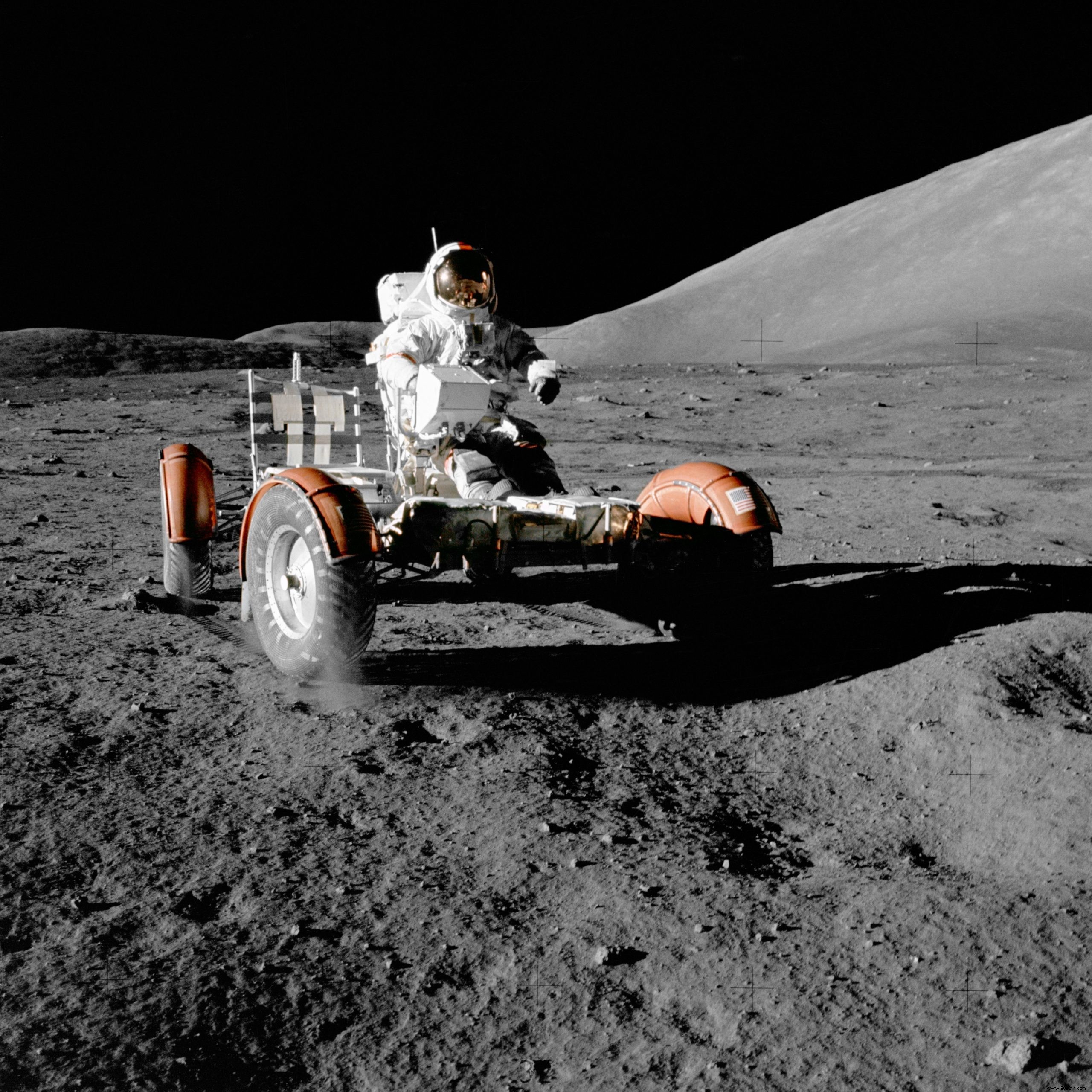
Apollo 17 astronaut Harrison (Jack) Schmitt and Apollo 16's Charles Duke will provide invaluable insights from their lunar driving experience to refine the design.
“Together with our teammates, we will provide NASA with an agile and affordable vehicle design to dramatically improve human and robotic exploration of the lunar surface—enabling lasting human presence on the Moon and eventually Mars,” said Steve Krein of Northrop Grumman.
NASA is also collaborating with JAXA on a pressurized rover for 2-4 astronauts, developed with Toyota using hydrogen fuel cell technology.
