Researchers from MIT, collaborating with NASA, have developed a groundbreaking hovering rover for lunar exploration. This electrostatic levitation technology could extend to asteroids and airless worlds. A small-scale prototype has already demonstrated feasibility.
Imagine deploying flying saucers on the Moon and beyond. On December 21, 2021, MIT announced progress on this vision: a levitating lunar rover, distinct from traditional wheeled designs.
The Moon's surface charges from constant solar exposure and no atmosphere create a powerful electric field, lifting dust over a meter high. To counter this and enable levitation, the team coats the rover in mylar—a polyester film reflecting 95% of sunlight. This creates a positive charge insulator, repelling the rover from the negatively charged surface for stable hover.
This approach holds promise for asteroids and other airless bodies.
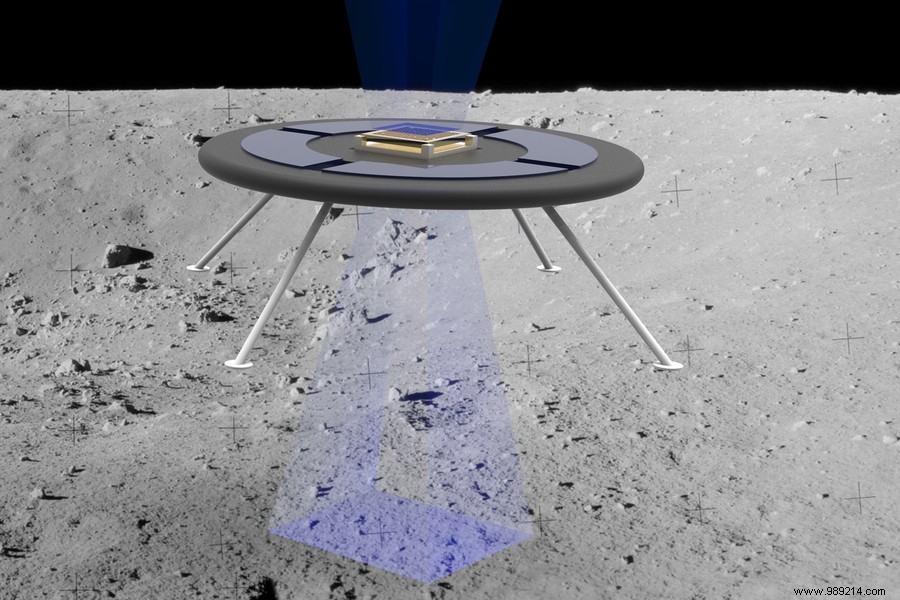
The Moon's gravity may limit sustained levitation, but engineers propose ion beams from thrusters with ionic liquid to boost charges on both rover and surface, generating the needed repulsive force.
A 1-kg prototype already achieves 1 cm levitation. Future iterations aim for greater heights, unlocking access to lunar caves and terrains inaccessible to wheeled rovers.
