Pioneering U.S. startup SpinLaunch has successfully tested a scaled-down prototype of its revolutionary giant centrifugal launcher, designed to hurl satellites into space and slash launch costs dramatically.
Founded in 2014 by entrepreneur Jonathan Laney, SpinLaunch aims to reduce space launch costs from tens of millions to $500,000 per mission. The company first revealed its innovative centrifuge concept in 2018, capable of propelling payloads into space. As reported by CNBC on November 9, 2021, SpinLaunch conducted its inaugural tests in New Mexico's desert.
The prototype, a one-third scale model measuring 50 meters in diameter, launched a three-meter projectile at thousands of km/h—reaching suborbital altitudes. Remarkably, founder Jonathan Laney noted this was achieved at only 20% of the machine's maximum speed.
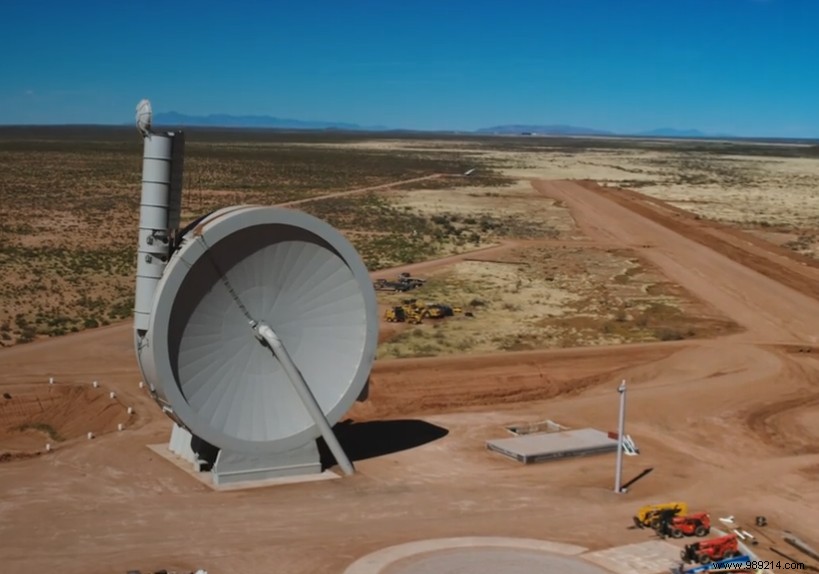
After years of quiet development, these successful trials mark a milestone. Laney states that 90% of technical risks have been mitigated, positioning the full-scale version for imminent operation. SpinLaunch plans about 30 suborbital tests by summer 2022, followed by orbital launches.
Targeting small satellites up to 180 kg, the system competes with conventional rockets by eliminating much of the fuel mass. This kinetic launch method requires far less hydrogen and oxygen—up to four times less fuel—potentially dividing launch costs by ten. The U.S. military has shown interest for deploying mini-satellites and missiles.
