Asteroid 4660 Nereus will safely pass Earth in days, crossing its orbit without threat. Closely monitored by space agencies, it holds vast mineral deposits worth billions.
Recently, we've highlighted near-Earth asteroid 4660 Nereus, measuring 330 meters across—comparable to the Eiffel Tower. On Saturday, December 11, it will pass at a distance of about four million kilometers. While vast in cosmic terms, this is relatively close.
Nereus regularly approaches our planet. Its next flyby is set for March 2, 2031, at 17 million kilometers. After a farther pass in November 2050, it will come closest on February 14, 2060, at just 1.2 million kilometers.
Each approach offers a prime chance for observation and study. Though posing no risk, space agencies take keen interest in this asteroid for its unique potential.
Beyond scientific value, 4660 Nereus boasts an estimated worth of five billion dollars, driven by rich deposits of iron, nickel, and cobalt. In 2018, electric vehicle makers raised alarms over cobalt shortages; this asteroid could provide a critical new supply.
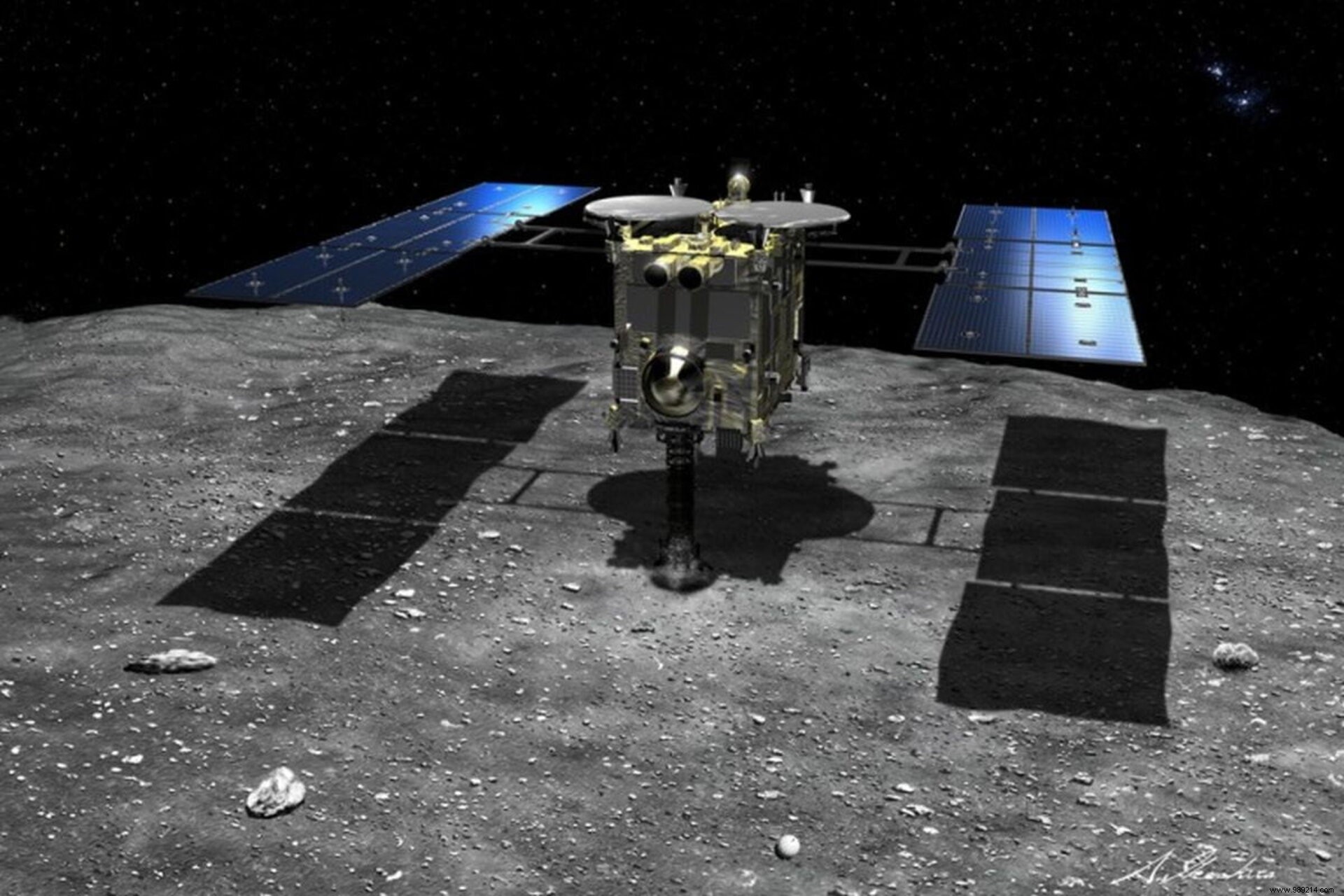
Discovered in 1982 by astronomer Eleanor F. Helin, Nereus was once targeted for Japan's JAXA Hayabusa mission. Delays shifted focus to 25143 Itokawa. In 2020, Hayabusa2 returned samples from 162173 Ryugu.
Though that mission was shelved, Nereus remains a priority for space agencies, potentially paving the way for future visits and resource extraction.
