Weekend media buzz in the U.S. sparked concerns over an asteroid potentially entering Earth's atmosphere on November 2, 2020—just before the presidential election. As astronomers with decades tracking near-Earth objects, here's what the data really shows.
On August 16, 2020, a car-sized asteroid, 2020 HQ, passed Earth undetected at about 3,000 kilometers away. Measuring 5.5 meters wide by 2 meters long, it zipped over the Southern Hemisphere at over 44,000 km/h. Detected just six hours after closest approach by California's Palomar Observatory, experts noted that even if it had grazed the atmosphere, it would have disintegrated harmlessly, exploding at around 4 km altitude with the force of tens of kilotons of TNT.
Separately, Click2Houston (KPRC-TV) reported on August 21, 2020, about asteroid 2018 VP1, citing a 0.41% chance of Earth impact on November 2.
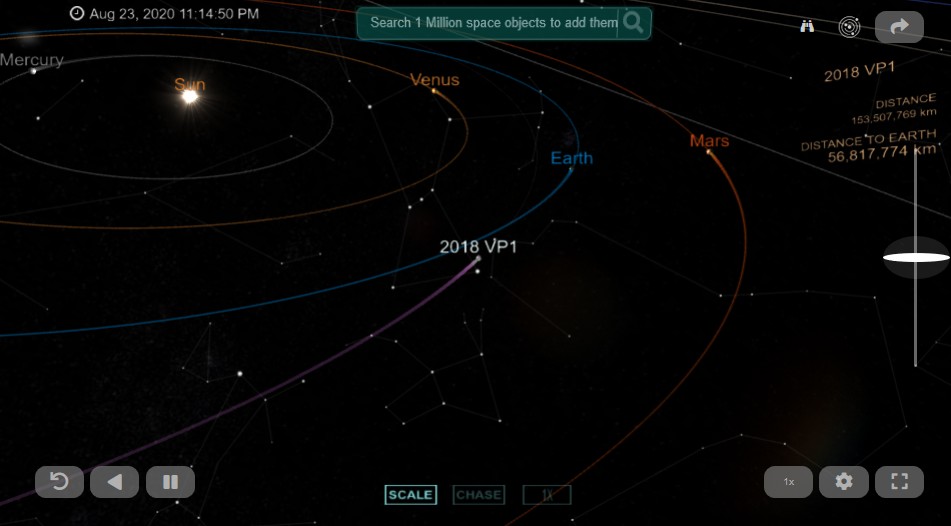
Traveling at 35 km/s (125,899 km/h), 2018 VP1 was over 56 million kilometers from Earth, closing in at 6.2 km per second. Though headlines alarmed some, its true scale reassures: just 2 meters by 0.91 meters, weighing only 15 kilograms—nearly three times smaller than 2020 HQ. Experts from observatories worldwide confirm it poses no threat.
U.S. media and celebrities amplified the story due to the election eve timing between Donald Trump and Joe Biden, fueling speculation. Track 2018 VP1's real-time path on the Space In 3D platform for verified data.
