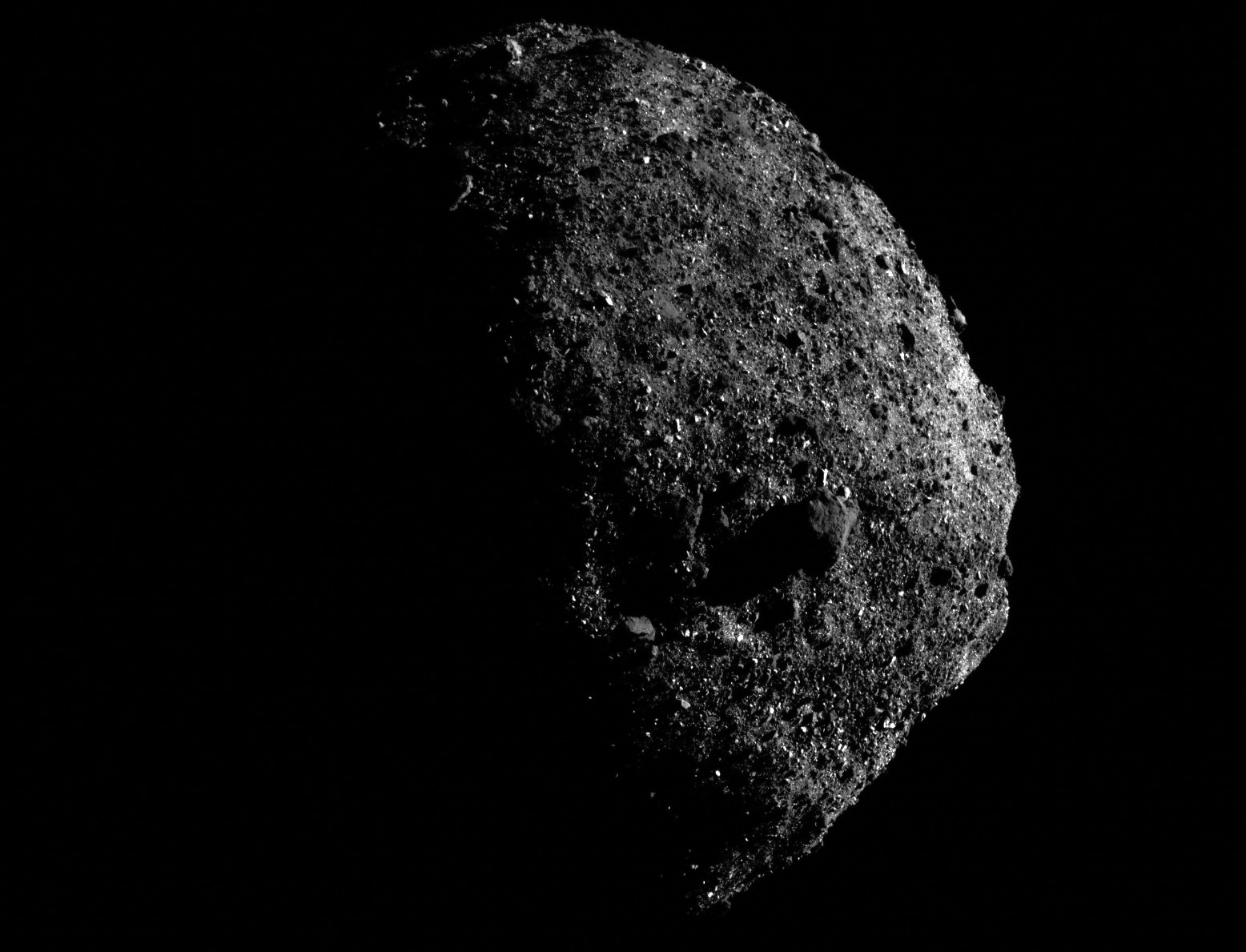
NASA's OSIRIS-REx mission has provided critical data refining the trajectory of asteroid Bennu, a top contender on the agency's Sentry risk table, assessing its potential to impact Earth one day.
Seven months after touching down on Bennu to gather samples, the OSIRIS-REx spacecraft began its return trip last May, carrying invaluable material that sheds light on Solar System formation. Yet Bennu captivates for another reason: this Empire State Building-sized asteroid's path could one day intersect Earth's. An impact would unleash 1,200 megatons of energy—roughly 80,000 times the Hiroshima bomb.
Discovered in 1999, experts quickly flagged its potential threat. But what's the real probability?
NASA analyzed over two years of OSIRIS-REx observations from more than 330 million kilometers away, refining Bennu's orbit accuracy by a factor of 20.
At a recent press conference, NASA scientists reported a 1 in 1,750 chance of collision before 2300 (longer-term forecasts grow uncertain). The risk remains minimal.
Key moment: 2135, when Bennu will pass Earth at about 200,000 km—half the Earth-Moon distance. This flyby could alter its path via gravitational assist, possibly aligning it with Earth around 2185.
NASA isn't alone; China's National Space Science Center is studying Bennu too. Even with slim odds, they propose proactive deflection: launching 23 rockets, each weighing 992 tons, to strike simultaneously and shift Bennu by nearly 9,000 km—averting any threat.
