Mechanical engineering professor Jake Abbott from the University of Utah warns that Earth could soon form its own rings—but made of space debris rather than ice and rock like Saturn's. He also proposes an innovative way to tackle orbital waste.
In an interview with the Salt Lake Tribune on November 13, 2021, University of Utah mechanical engineering professor Jake Abbott predicted that Earth might develop rings composed of space junk. For context, Saturn's iconic rings consist primarily of water ice and dust particles.
Orbital debris poses serious risks to satellites, spacecraft, and space exploration efforts. The European Space Agency (ESA) reports that since Sputnik's launch in 1957, around 5,000 rockets have deployed approximately 8,000 satellites. Current debris includes 170 million fragments larger than one millimeter, 670,000 smaller than three centimeters, and 29,000 pieces over 10 cm actively tracked.
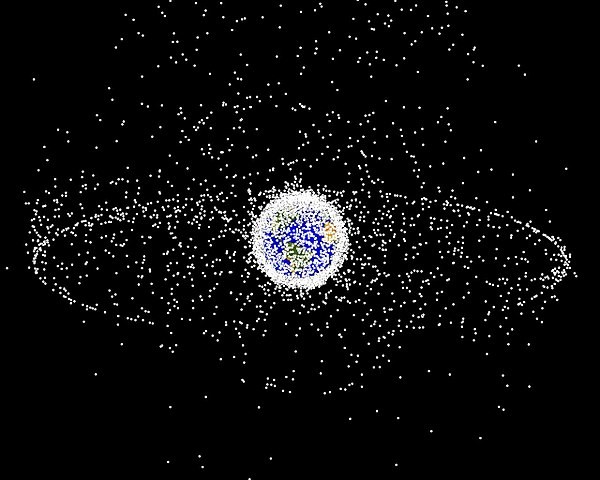
The issue is escalating with private ventures like SpaceX's Starlink constellation, which has already launched about 2,800 satellites, with plans for 12,000 total and a recent decision to add 30,000 more. SpaceX may even deploy similar networks around Mars in the future.
Collision risks are mounting low-Earth orbit. Just weeks ago, the International Space Station (ISS) maneuvered to avoid debris from a 2007 Chinese missile test. Meanwhile, promising cleanup initiatives are underway, including ESA's RemoveDebris satellite and the ELSA-d spacecraft.
In a Nature journal article published October 20, 2021, Abbott advocates for a robotic arm equipped with a spinning magnet. This device could generate eddy currents—or "whirlpools"—to slow down debris, enabling safer deorbiting.
