A groundbreaking study indicates that Enceladus' global subsurface ocean is far from uniform, with potential currents akin to Earth's circulating beneath roughly 20 kilometers of ice.
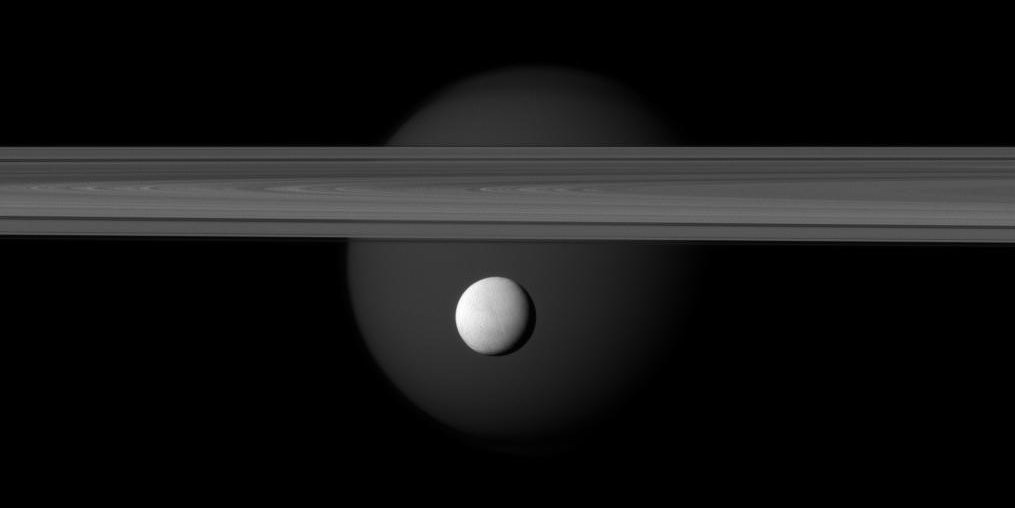
Saturn's sixth-largest moon, Enceladus, spans just 500 kilometers in diameter—a modest icy world that has captivated scientists since NASA's Cassini mission detected water vapor plumes in 2014, hinting at a vast ocean lurking beneath its frozen surface.
Earth's oceans differ markedly: averaging 3.6 kilometers deep, they blanket three-quarters of our planet, warmed at the surface by sunlight and chilling toward the abyss.
In contrast, Enceladus harbors a global ocean approximately 30 kilometers deep, tucked under several kilometers of ice. Here, waters cool near the ice shell above and heat from the moon's rocky core below.
Yet intriguing parallels exist. Both are salty, with recent research confirming comparable pH levels. Now, fresh analysis suggests Enceladus' ocean could host currents mirroring those on Earth.
Led by Caltech graduate student Ana Lobo and drawing on expertise from environmental science professor Andrew Thompson—who has extensively studied ice-water interactions driving Antarctic ocean mixing—this work leverages Cassini data for robust insights.
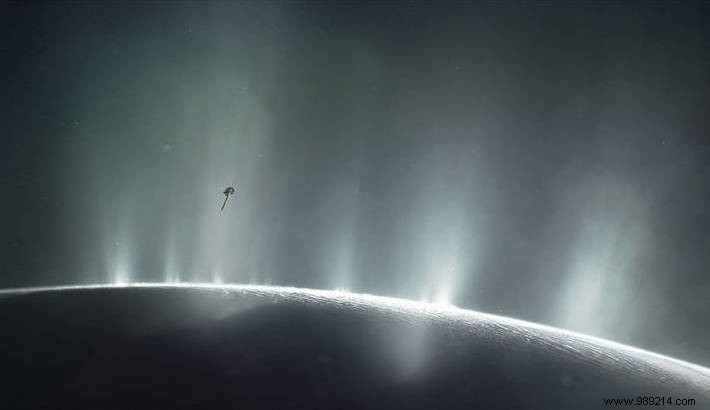
As detailed in Nature Geoscience, salinity variations could propel circulation in Enceladus' ocean, much like in Earth's Southern Ocean. Cassini's gravity and heat data show the ice shell is thinner at the poles than the equator, fostering polar melting and equatorial freezing.
Freezing saltwater expels salts, densifying nearby waters and prompting them to sink, while polar melting has the opposite effect.
"Mapping ice distribution lets us pinpoint circulation patterns," Lobo explains. "Our models show freezing and melting zones linked by robust ocean currents, forming a pole-to-equator flow that distributes heat and nutrients."
Recent findings detected ammonia—a possible energy source for life—in this ocean, which appears ancient enough for biological evolution but young enough to support it.
Hydrothermal vents thrive near the core-mantle boundary, environments where Earth's deep-sea microbes flourish.
Coupled with nutrient-transporting currents, these factors position Enceladus as a prime astrobiology target.
