Two groundbreaking heliophysics missions, recently approved by NASA, will deepen our understanding of the dynamic interactions between Earth and the Sun—helping us better forecast space weather events that endanger our planet and technologies.
By probing the physics behind solar wind, flares, and coronal mass ejections, these missions aim to predict disruptions to human technology and astronaut safety. Here's what you need to know about them.
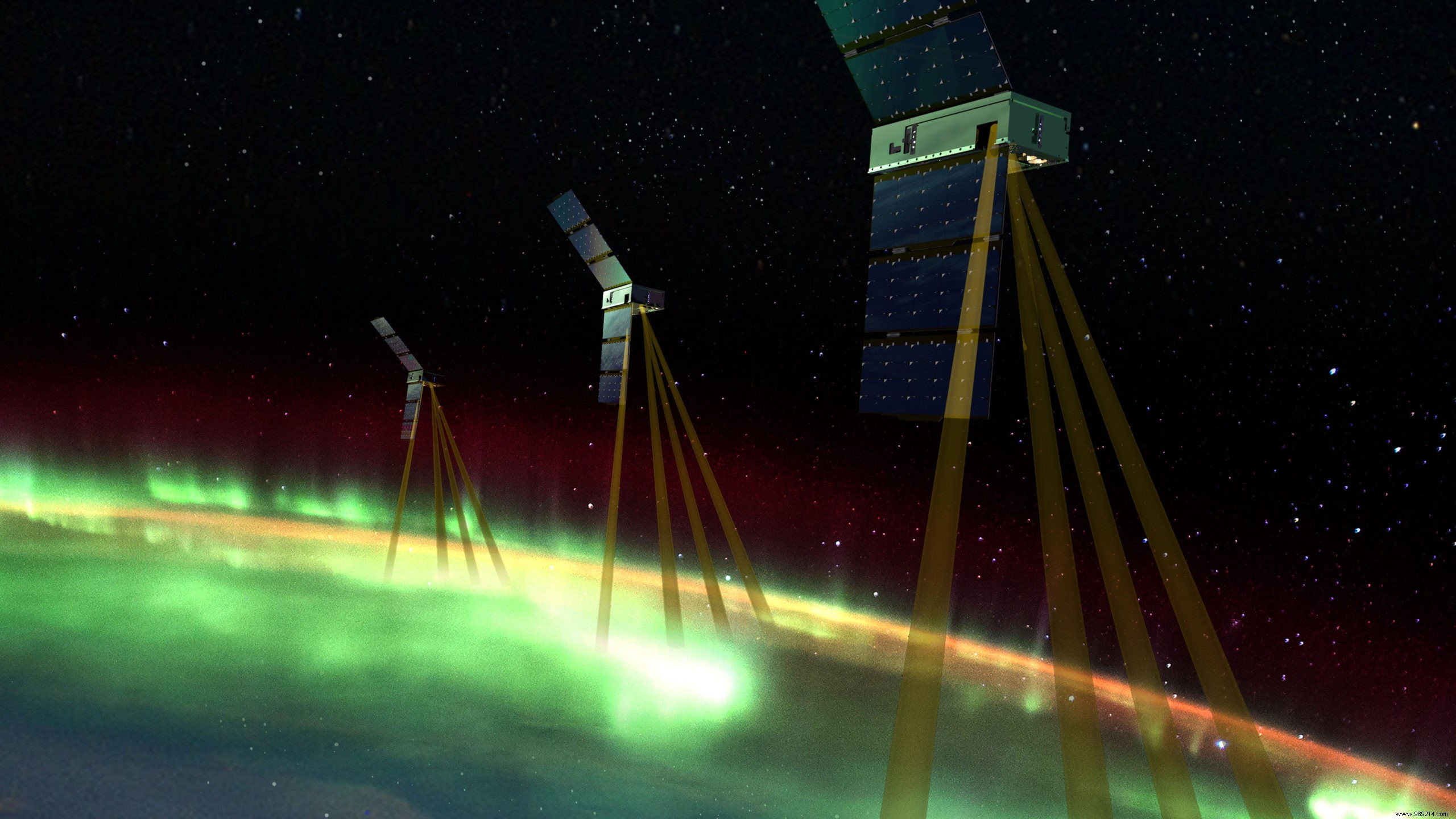
The Electrojet Zeeman Imaging Explorer (EZIE) mission will deploy three CubeSats into Earth orbit to map electrical currents linked to auroral activity and Earth's magnetosphere. The focus: the Auroral Electrojet, a powerful current flowing between 97 and 145 km altitude, and its time-varying behavior.
“Despite decades of research, we still don’t fully grasp the fundamental configuration of these electrical currents driving Earth-space interactions,” explains Jeng-Hwa Yee from Johns Hopkins University Applied Physics Laboratory. “This knowledge is universally vital for magnetized bodies like Mercury, Saturn, and Jupiter—and practically essential, as these currents profoundly impact space and ground-based technologies.”
EZIE is slated for launch in June 2024.
The Extreme Ultraviolet High-Throughput Spectroscopic Telescope (EUVST) mission will launch a satellite to analyze extreme ultraviolet radiation from the Sun. Onboard instruments will track how solar wind originates in the corona and influences Earth's atmosphere.
As NASA notes, this next-generation solar observatory boasts unprecedented resolution and sensitivity in UV spectroscopy.
Led by JAXA, the mission receives $55 million from NASA for a UV detector, spectrograph components, guide telescope, software, and contextual imaging. Launch is planned for 2026.
