Low Earth orbit teems with satellites and space debris, posing constant collision risks for spacecraft. Even minuscule fragments can wreak havoc upon impact—a growing concern as these events become more frequent.
In 2016, ESA astronaut Tim Peake photographed a millimeter-sized crater on an ISS window, caused by a speck of space junk—likely a fleck of paint or metal fragment, just a few thousandths of a millimeter across, comparable to an E. coli bacterium.
How does something so small create such destruction? As University of Arizona astronomer Vishnu Reddy explains, velocity is the critical factor. At ISS altitudes around 400 km, objects orbit Earth every 90 minutes at over 25,200 km/h—ten times faster than a typical bullet, per NASA instructor Robert Frost.
Impact energy depends on both mass and speed. A high-velocity small-caliber bullet proves lethal for this reason; in space, even tiny objects become deadly at orbital speeds. Relative velocity amplifies this: colliding objects from opposing trajectories multiply the force, akin to a head-on highway crash versus a sideswipe.
Satellites and debris follow diverse paths—equatorial, polar, or retrograde—turning low Earth orbit into a chaotic rush-hour freeway as clutter accumulates.
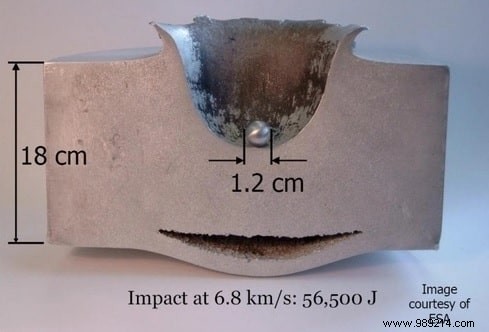
The ISS crew was fortunate; a microbe-sized hit merely dents, but a pea-sized fragment could cripple systems, warns the ESA. A ping-pong-ball-sized piece, per Reddy, risks catastrophic depressurization and endangers astronauts.
Orbit harbors at least 128 million debris pieces, with 34,000 over 10 cm trackable, reports London's Natural History Museum. Smaller fragments arise from UV degradation, collisions, or deliberate satellite destructions.
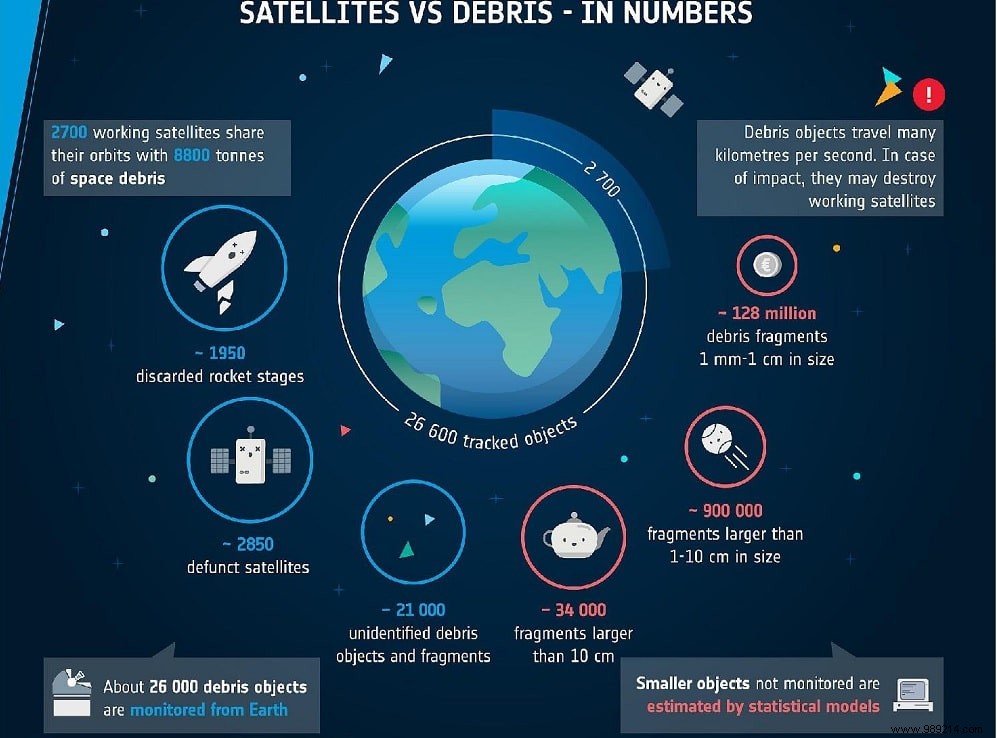
Larger items include 3,000 defunct satellites and launch ejecta. Tracking enables evasion maneuvers; the ISS has executed 25 since 1999, per the museum. Innovations like hooks, nets, and magnets aim to deorbit waste safely.
