Space debris recently struck and damaged the Canadarm2 robotic arm on the International Space Station (ISS). Though still fully operational, this incident highlights the dangers posed by untrackable objects crowding low Earth orbit.
Over 23,000 pieces of debris larger than a softball are tracked in low Earth orbit to protect satellites, spacecraft, and the ISS from collisions. Yet countless smaller fragments—estimated at 130 million pieces under one millimeter by a recent ESA report—remain undetectable. Traveling at thousands of kilometers per hour, even these tiny objects can inflict serious damage upon impact.
A small debris particle recently punctured the thermal blanket on Canadarm2. The damage was discovered on May 12 during a routine inspection by NASA and the Canadian Space Agency (CSA).
Engineered by Canadian experts, Canadarm2 has been a cornerstone of ISS operations since 2001.
This multi-jointed titanium robotic arm features identical "hands" at both ends for handling objects outside the ISS. It supports maintenance tasks and can anchor at either end—one fixed while the other operates—positioning flexibly around the station.
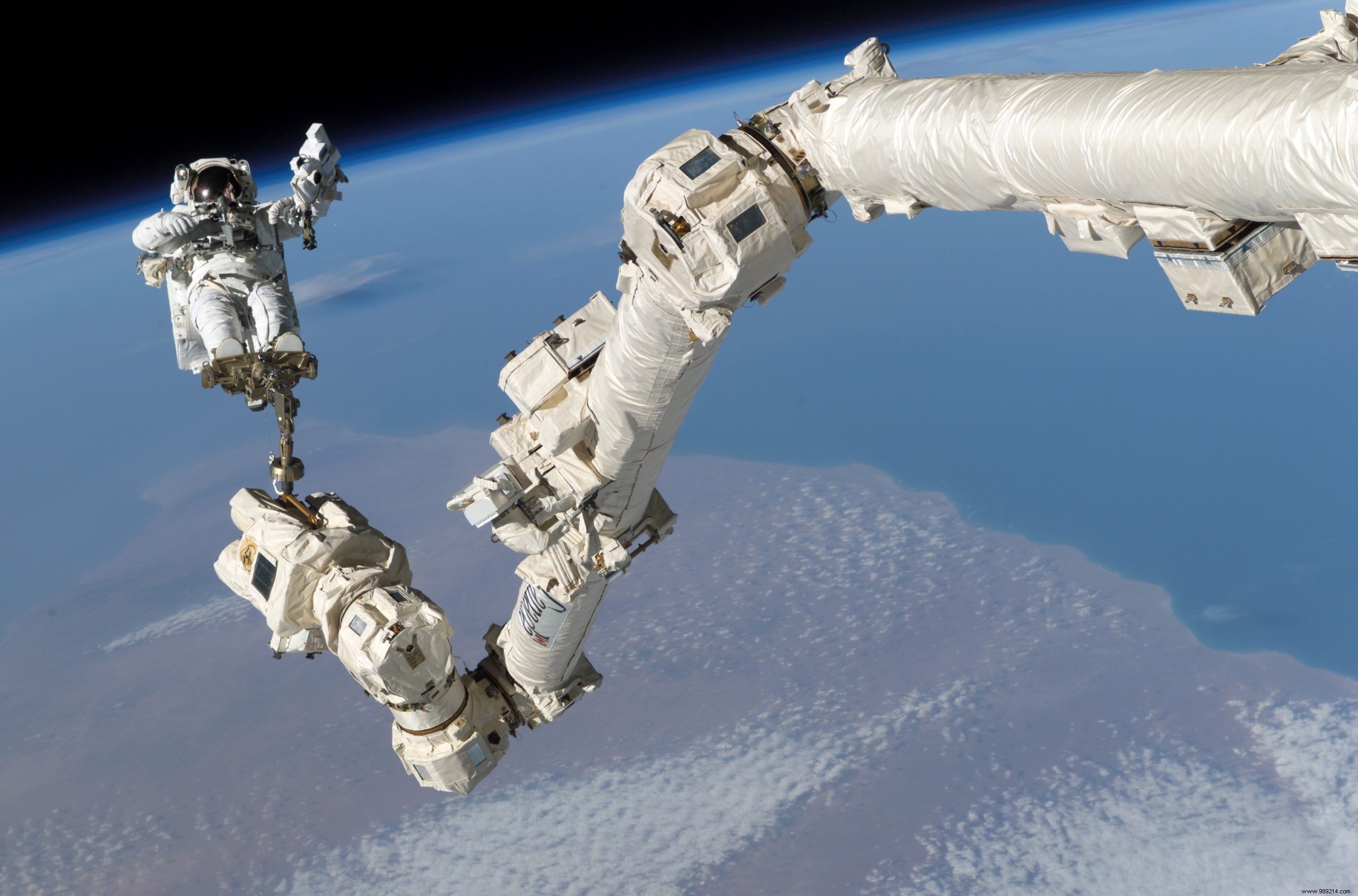
Thankfully, Canadarm2's functionality is unimpaired. As the CSA notes in a recent blog post: "Despite the impact, ongoing analysis shows the arm's performance remains unchanged. Damage is limited to a small section of the arm boom and thermal blanket. Canadarm2 will continue its scheduled operations."
While this incident caused no major issues, it serves as a stark reminder. Last year alone, the ISS conducted three emergency maneuvers to dodge larger debris.
Tim Florer, head of ESA's space debris office, emphasized: "To sustain the benefits of space operations in science, technology, and data, we must improve compliance with space debris mitigation guidelines in spacecraft design and operations. It is essential for the sustainable use of space."
