ESA's CHEOPS space telescope has captured unprecedented details of WASP-189b, one of the most extreme exoplanets known—an ultra-hot Jupiter.
Missions like NASA's TESS and Kepler have uncovered thousands of exoplanets across the Milky Way. Now, astronomers are delving deeper into these worlds. Launched by ESA in December 2019, the CHEOPS (CHaracterising ExOPlanet Satellite) mission targets stars with confirmed exoplanets, measuring subtle dips in starlight to reveal planetary size, density, orbital periods, and surface temperatures.
Just over a year and a half into operations, CHEOPS delivered its first key results on WASP-189b, a hot Jupiter first spotted in 2018 by the ground-based WASP-South telescope in South Africa. Hot Jupiters are massive worlds, often surpassing Jupiter's mass, yet orbiting perilously close to their stars.
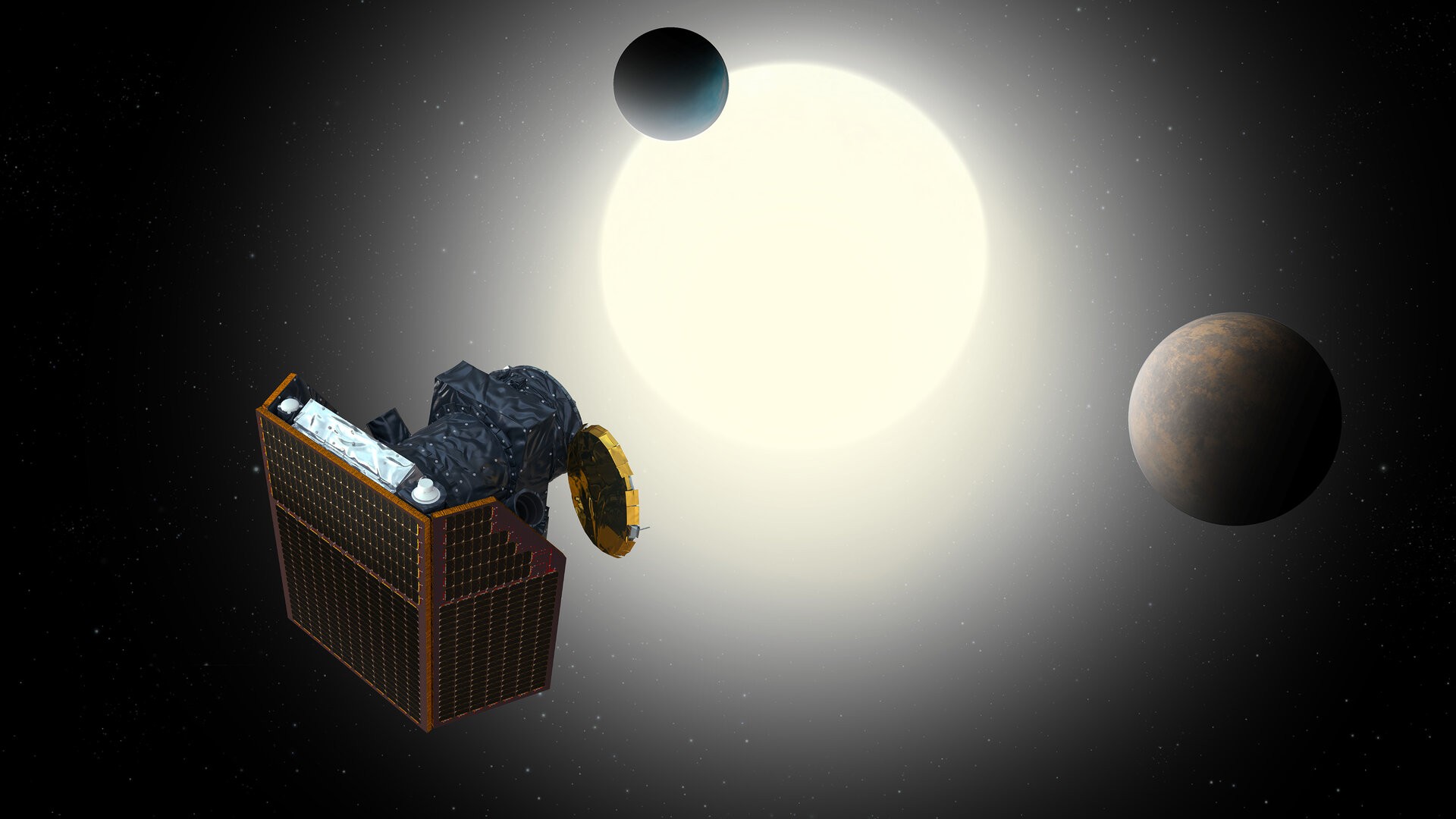
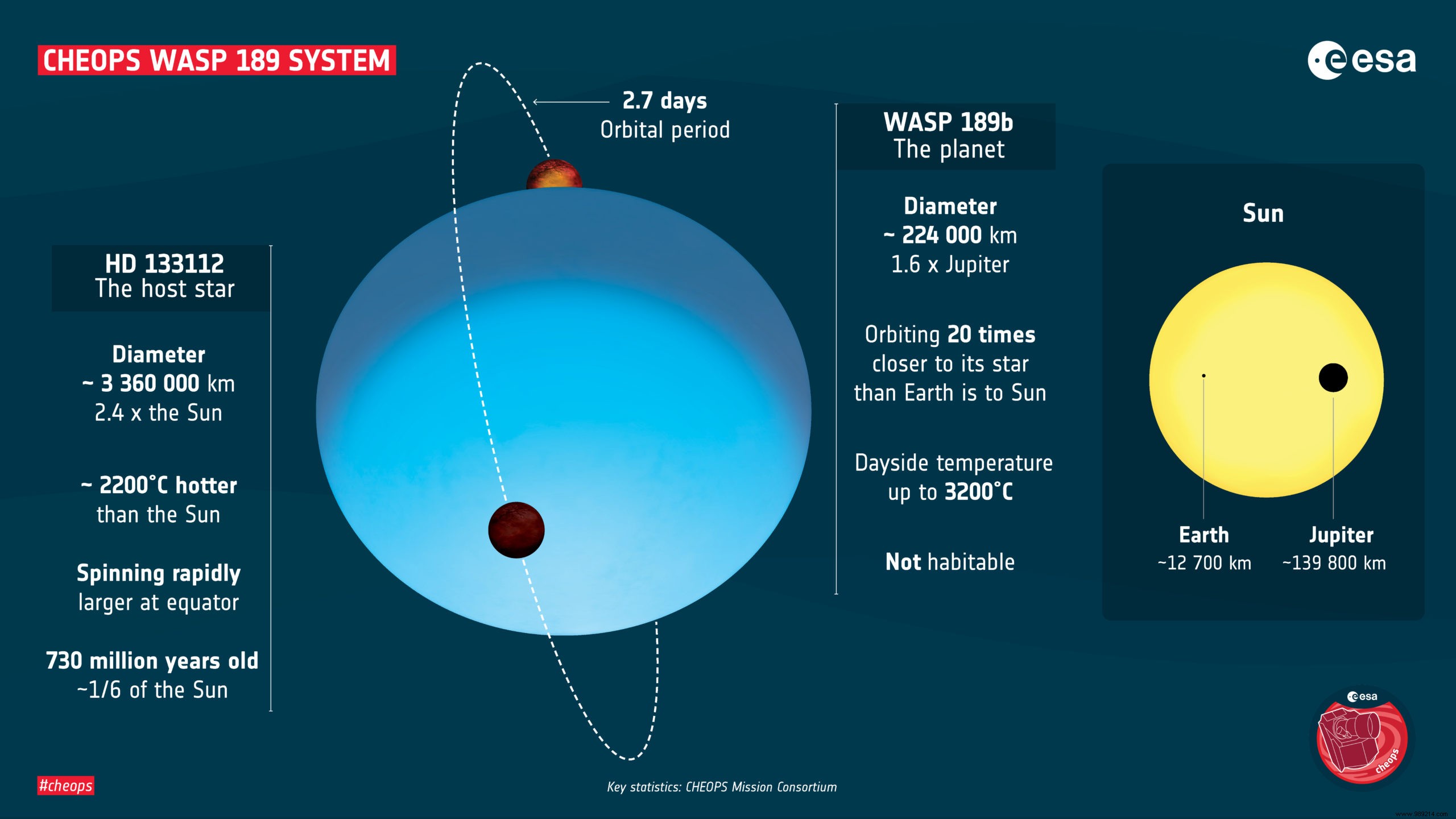
Located 322 light-years away in the constellation Libra, WASP-189b orbits a blue giant star, HD 133112, at a distance of just 7.5 million kilometers—completing a lap every 2.7 days.
This proximity scorches the planet, with CHEOPS measurements estimating a dayside surface temperature of around 3,200°C. "WASP-189b is one of the hottest gas giants known," says lead study author Monika Lendl from the University of Geneva.
For context, that's hotter than the Sun's surface by 2,000°C and rivals some red dwarf stars. Life is impossible here—even iron vaporizes.
CHEOPS refined the planet's mass to nearly twice Jupiter's and its diameter to 224,000 km, slightly larger than prior estimates.
WASP-189b's orbit is inclined relative to its star's equator, suggesting it formed farther out before migrating inward. Researchers propose gravitational tugs from sibling planets or a companion star as drivers.
The host star HD 133112 isn't perfectly spherical—it's oblate, bulging at the equator where it's cooler than the poles, due to its rapid rotation.
