NASA is gearing up for a critical hot-firing test of the Space Launch System (SLS) core stage—the super-heavy booster designed to carry crews back to the Moon—scheduled for January 17. In this test, the stage's four RS-25 engines will fire for about eight minutes, simulating launch conditions.
Developed by NASA since 2011, the SLS stands at 98 meters tall, slightly shorter than the 110-meter Saturn V rockets that powered Apollo missions in the 1960s and 1970s. Yet, it delivers significantly more power, generating 15% greater thrust at liftoff and ascent.
The rocket's debut flight, Artemis I, is slated for November. This uncrewed mission will launch an Orion capsule into lunar orbit before its return to Earth, paving the way for future human exploration.
NASA and prime contractor Boeing have rigorously tested the 64-meter-tall core stage for months at NASA's Stennis Space Center in Mississippi as part of the "Green Run" campaign. These eight tests ensure reliability for the November launch.
Recently, engineers completed the seventh test—a "wet dress rehearsal"—successfully loading the stage with cryogenic liquid hydrogen and oxygen, holding for two hours, and draining without leaks.
"In our wet dress rehearsal test, the main stage, stage controller, and Green Run software all performed flawlessly. There were no leaks when the tanks were fully charged and filled for approximately two hours," said Julie Bassler, SLS stages manager at NASA's Marshall Space Flight Center in Alabama. "The data from all the tests to date has given us the confidence to go forward."
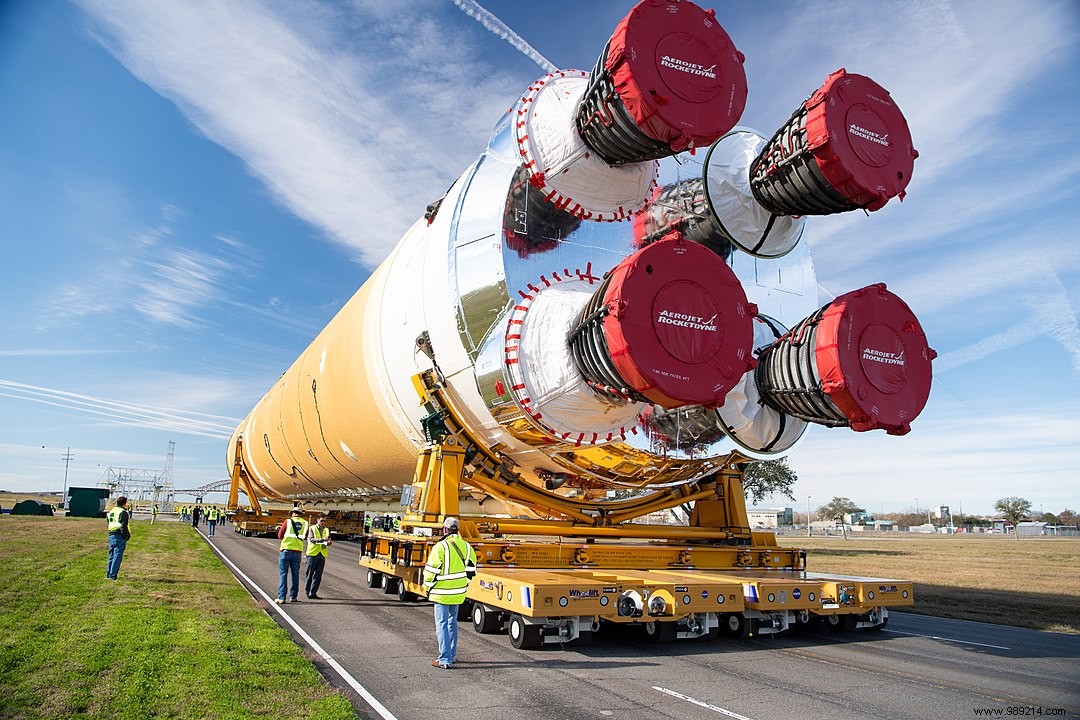
Now, the eighth and final Green Run test will ignite the four RS-25 engines—upgraded versions of the Space Shuttle Main Engines—for over eight minutes on January 17, as confirmed by NASA. This firing will make the SLS the most powerful rocket ever ignited on Earth.
Post-test, the core stage will undergo refurbishment and ship to Kennedy Space Center in Florida for integration with the full SLS stack and Orion spacecraft, readying for Artemis I.
