Groundbreaking ISS experiments demonstrate that bacteria can leach rare earth elements in microgravity, a vital step for sustainable space habitation. Findings published in Nature Communications.
Launching materials from Earth is prohibitively costly—over €1,500 per kilogram even with SpaceX's most affordable options. For long-term human space exploration, success hinges on sourcing essential resources in situ, such as rare earths from asteroids and the Moon. The challenge lies in extracting them effectively.
Terrestrial mining equipment relies on Earth's gravity, rendering it unsuitable for the Moon's low gravity or asteroids' microgravity. Innovative alternatives are essential for exploiting extraterrestrial resources.
Researchers hypothesized that bacteria, which naturally bioleach metals from rocks on Earth—a process already used in biomining—could adapt to space conditions.
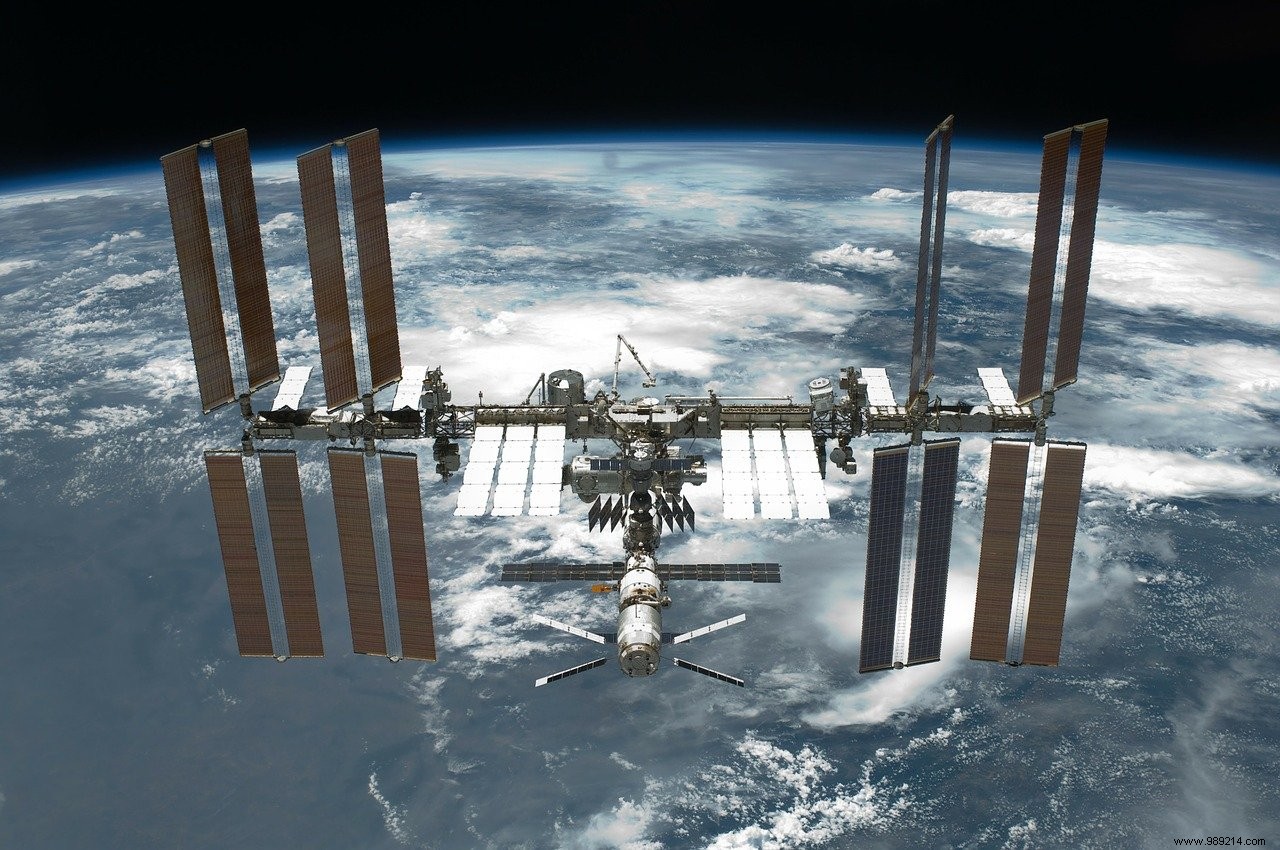
A decade ago, a University of Edinburgh-led team engineered compact "biomining reactors," matchbox-sized devices designed for the International Space Station (ISS). In July 2019, 18 reactors launched to the ISS to investigate bacterial leaching in space.
Over three weeks, each reactor housed a bacterial solution submerging basalt—a lunar-abundant volcanic rock. Tests simulated Mars and Earth gravity, plus true microgravity, using three species: Sphingomonas desiccabilis, Bacillus subtilis, and Cupriavidus metallidurans. Bacteria-free controls provided baselines.
No notable differences emerged for B. subtilis or C. metallidurans. However, S. desiccabilis excelled, releasing 111.9% to 429.2% more cerium and neodymium from basalt than controls, varying by gravity level.
Astrobiologist Charles Cockell of the University of Edinburgh states: "Our experiments support the scientific and technical feasibility of biologically enhanced elemental mining across the Solar System." He adds: "While not viable for Earth return, space biomining could enable self-sufficient human presence in space."
