NASA and the European Space Agency's joint Mars Sample Return mission will bring back rocks collected on Mars in the early 2030s to hunt for signs of ancient life. Here's how NASA guaranteed these samples arrive uncontaminated.
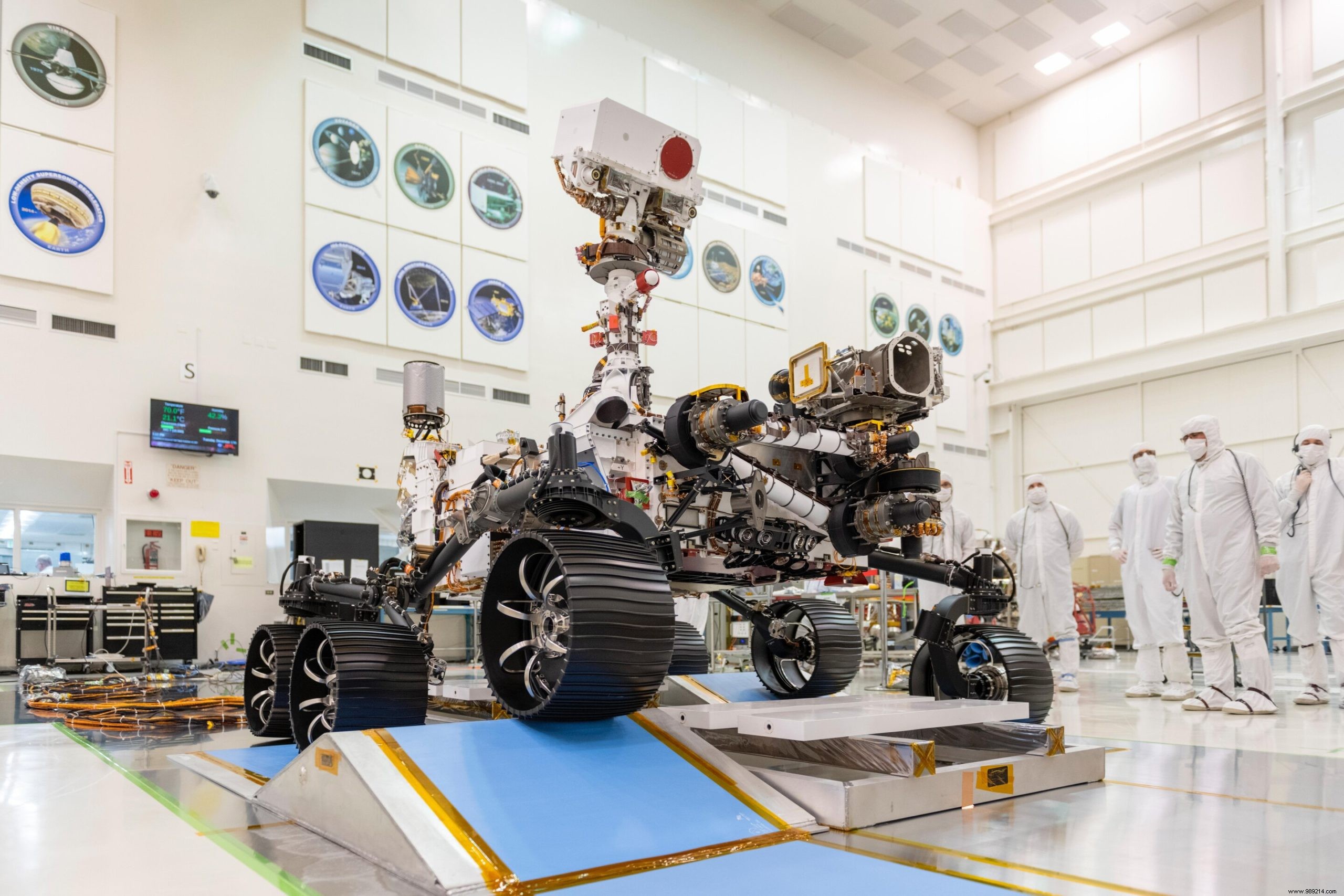
The Perseverance rover, launched July 30, 2020, as part of the Mars 2020 mission, landed February 18, 2021. It seeks to map Mars' geology and ancient climate while probing for biosignatures preserved underground.
Perseverance targets sites rich in water-altered rocks, extracting 5-centimeter-deep core samples. Select cores will be cached in tubes for Earth return and advanced lab analysis.
Earth labs offer instruments too large for spacecraft, enabling deeper insights. NASA partners with ESA on Mars Sample Return to retrieve and deliver these samples safely.
Engineers faced a critical challenge: crafting 43 lightweight, rugged tubes that withstand the decade-long journey while staying impeccably clean for 100% Martian content.
"Earth teems with life compared to Mars," notes Ken Farley, Mars 2020 Project Scientist at Caltech. "We eliminated all terrestrial traces to confidently detect any Martian evidence."
NASA drew on Apollo 11 experience from 1969, when 21.8 kilograms of Moon rocks from Tranquility Base arrived in sterilized aluminum boxes after a 10-day trip. Perseverance tubes must protect samples for over 10 years.
Titanium tubes, 15.2 centimeters long and weighing less than 57 grams each, feature a white coating to block solar heat that could alter chemistry. Laser-etched serial numbers track contents.
Standards exceeded typical planetary protection. For potential life evidence, contamination risks were minimized further.
"Total terrestrial organics per sample capped at under 150 nanograms; life-indicative ones at less than 15 nanograms," says JPL's Ian Clark, who led cleaning.
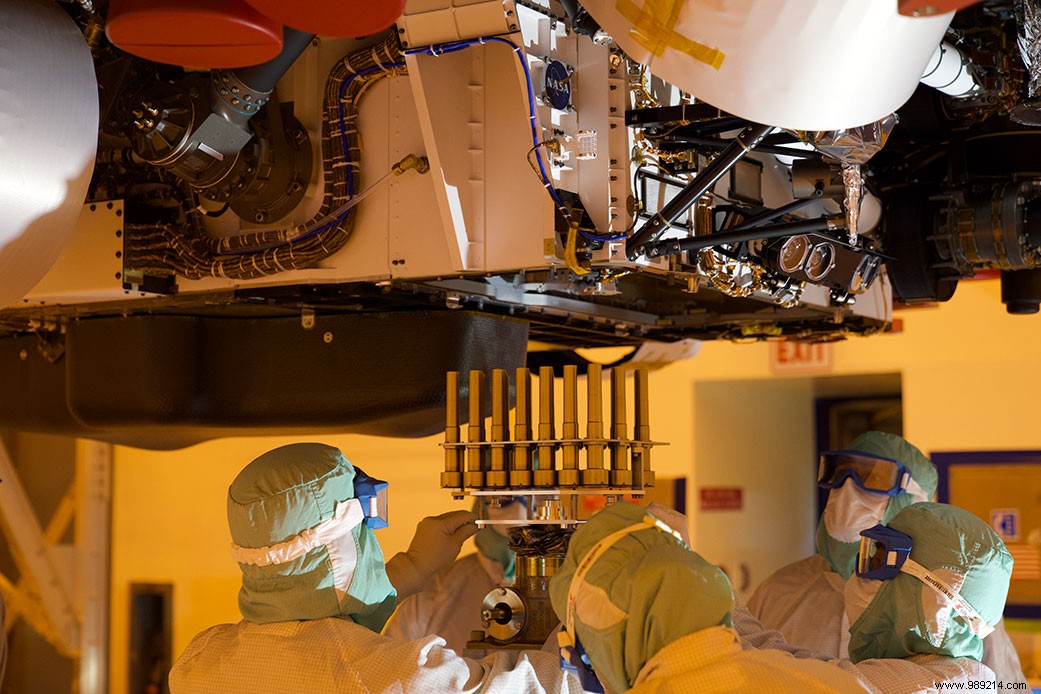
A nanogram is one billionth of a gram. Assembly happened in a hyper-cleanroom—a cleanroom within one. Tubes got filtered air blasts, deionized water rinses, and ultrasonic baths in acetone, isopropyl alcohol, and specialty agents between steps.
Each of the 43 tubes amassed over 250 pages of documentation plus three gigabytes of images and video.
Timeline: Sample Retrieval Lander launches 2026, lands summer 2028, deploys Sample Fetch Rover to gather tubes. Mars Ascent Vehicle launches spring 2029 to orbit.
ESA's probe arrives summer 2028 for orbital rendezvous, returning samples to Earth in 2032.
