SpaceX's Starship integrates seamlessly into NASA's lunar strategy, enabling confident plans for sustained human presence on the Moon—and eventually Mars.
The past decade has been challenging for NASA since retiring the space shuttle in 2011, leaving no independent means to launch astronauts. Ambitious goals under the Trump Administration to establish a lasting U.S. presence on the Moon intensified the pressure, but momentum is building.
NASA has advanced its SLS super-heavy launcher and Orion capsule significantly. After years of development and substantial investment, these systems are slated for a test flight in the coming months via the Artemis I mission. Crucially, NASA has selected SpaceX as its primary provider for future lunar landers.
NASA's contract with SpaceX totals just $2.89 billion. It covers Starship development, an uncrewed demonstration, and a crewed landing potentially as early as 2024.
The contract is currently on hold pending complaints from competitors Blue Origin and Dynetics. The U.S. Government Accountability Office (GAO) is expected to rule by early August 2021.
Shortly after the contract's announcement, NASA's Inspector General reported that the agency's original human landing system costs would have reached $17.3 billion.
Partnering with SpaceX allows NASA to save more than $14 billion. This fiscal efficiency frees resources to prioritize lunar achievements, targeting a 2024 landing and building a sustainable program without repeated congressional approvals.
Progress is nascent: Starship remains in testing at SpaceX's Texas site, with no guarantees for 2023-2024 readiness. Yet, resolving transportation challenges unlocks boundless lunar possibilities.
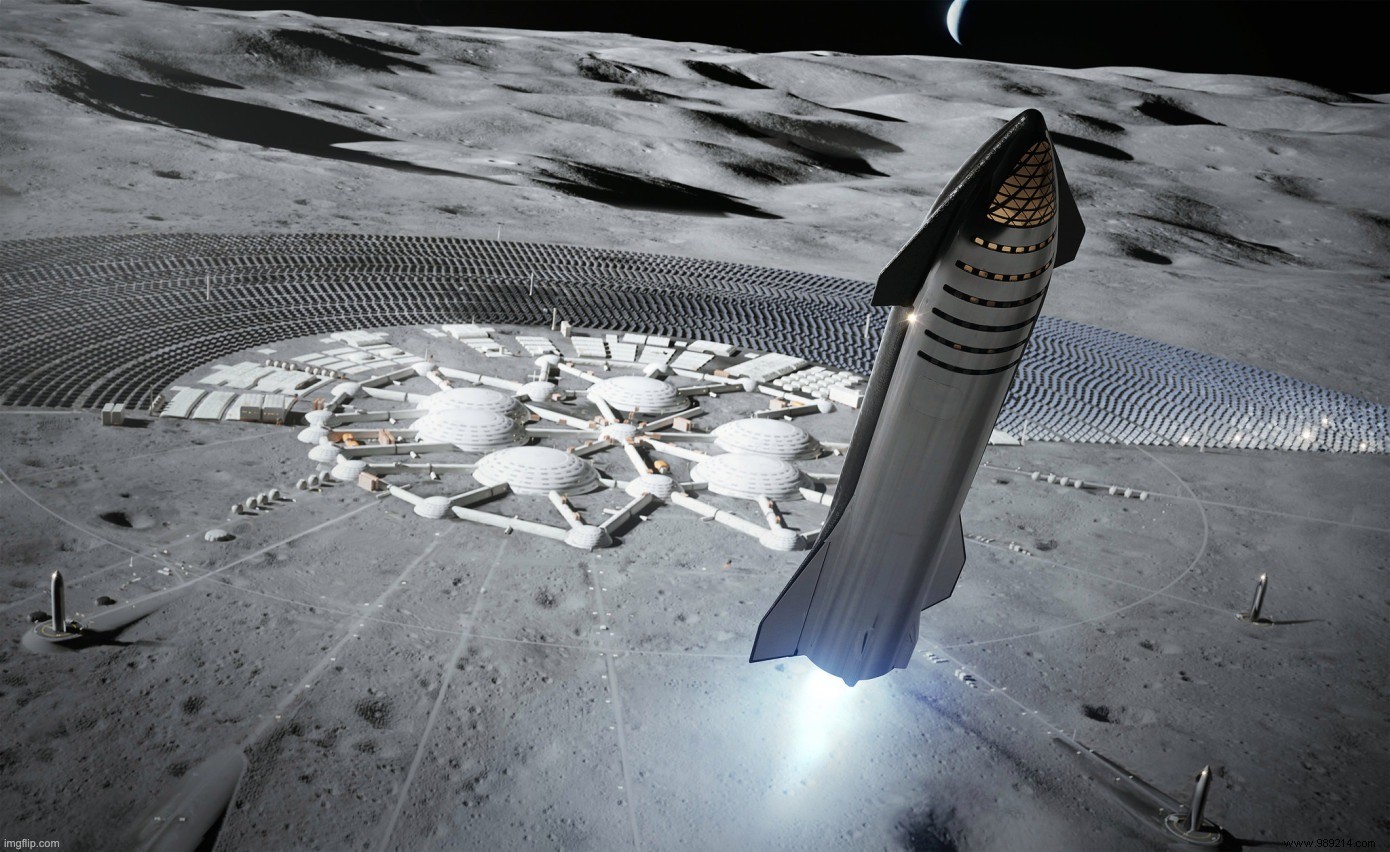
Beyond cost savings, Starship's massive capacity transforms lunar logistics. Post-refueling in low Earth orbit, a cargo variant could deliver over 50 tons to the surface in a round-trip mission, per physicist Casey Handmer's analysis. A version that remains on the Moon could transport more than 200 tons.
To contextualize, the Apollo lunar module in cargo-only mode carried about five tons. Starship could thus deliver over 40 times more material per mission—the foundation for enduring presence.
If Starship meets expectations, NASA can shift from short visits to rapidly constructing cost-effective bases, fostering permanent human settlements on the Moon.
