SpaceX has filed an application with the Federal Communications Commission (FCC) to enable its Starlink satellite network to provide internet connectivity to trucks, boats, and aircraft. The filing was submitted on March 5.
Since October 2020, thousands of North American users have been testing SpaceX's Starlink service in its public beta phase, primarily targeting rural areas with limited or no broadband access. Prior to public rollout, SpaceX employees used the terminals for weeks to gather latency data and conduct speed tests.
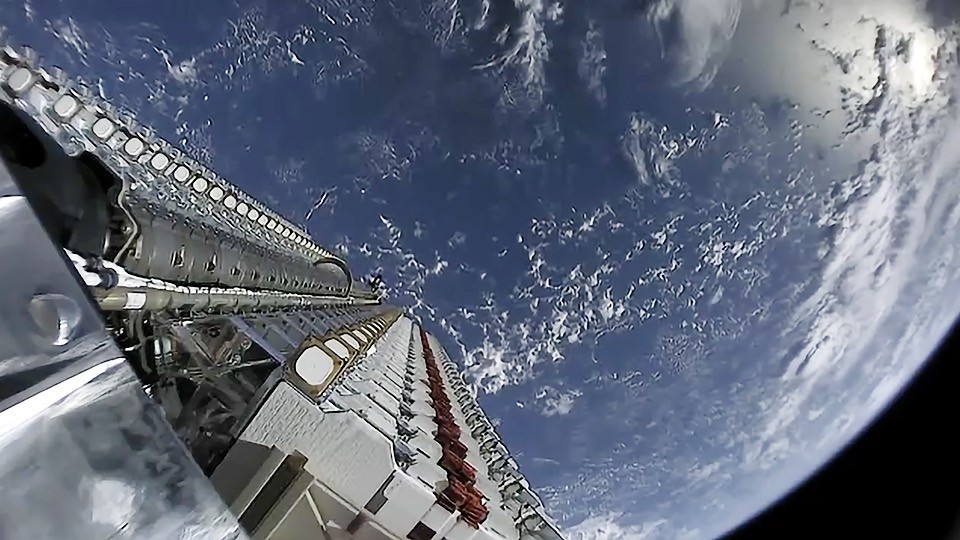
With over 1,000 satellites now operational, SpaceX aims to expand further. On March 5, the company requested an FCC license to authorize Starlink terminals as "earth stations in motion," encompassing trucks, ships, and planes.
"Users increasingly expect seamless connectivity on the move—whether hauling freight across the country, shipping cargo from Europe to U.S. ports, or flying domestically or internationally," the filing states.
Small passenger vehicles like Tesla cars may need to wait longer. As SpaceX CEO Elon Musk noted on Twitter, "the Starlink terminal is much too big" for immediate integration.
While the FCC filing provides limited technical details, Musk explained that the new antennas will be "electrically identical to previously authorized user terminals, but equipped with mounting brackets for vehicles, ships, and aircraft." These are designed to attach to "ship masts or truck roofs," he added.
Unlike standard consumer-installed terminals, these mobile units must be installed by "qualified professionals."
In the current beta, download speeds range from 50 Mbps to 150 Mbps, with latency between 20 ms and 40 ms. Access requires a $499 terminal (about €430) plus a $99 monthly fee (about €85).
Though still in testing with premium pricing, performance is set to improve as more satellites launch. SpaceX targets 1 Gbps speeds with 16-19 ms latency. Future hardware could cost $100-$300, paired with around $80 monthly subscriptions, per Musk.
