Researchers in China and the U.S. have explored the EmDrive—a concept for fuel-free space propulsion that could revolutionize interstellar travel. However, mounting evidence suggests this innovation won't materialize.
The EmDrive (Electromagnetic Drive) is an asymmetric electromagnetic resonant cavity thruster designed to generate thrust without propellant. Proposed in 2001 by British engineer Roger Shawyer, it promises unprecedented speeds in space. Yet, it challenges core principles of physics as understood today.
Proponents, including Chinese teams and NASA engineers, see it as a breakthrough to overcome interstellar barriers. They envision missions to the outer solar system or even Proxima Centauri (4.24 light-years away) in just 90 human years.
This optimism was echoed by Mike McCulloch, who leads EmDrive research at DARPA—the U.S. Department of Defense's R&D arm—in a March 31, 2021, Popular Mechanics interview. DARPA even allocated $1 million to assess its feasibility.
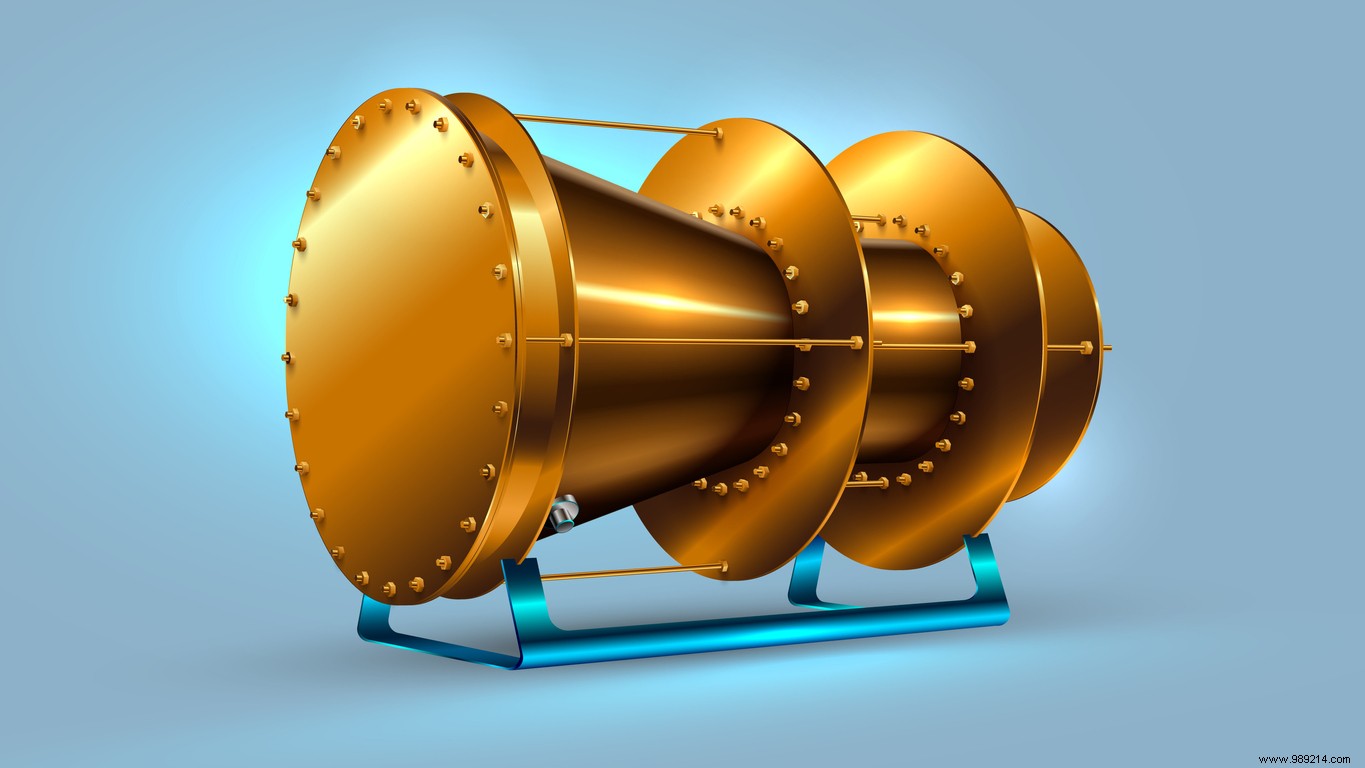
EmDrive advocates claim thrust arises from radiation pressure amplification within resonant waveguides, where microwaves bounce inside a specially shaped chamber. They argue it aligns with Newton's Second Law while seemingly defying the Third.
Critics counter that it violates fundamental physics laws, attributing observed effects to vibrations rather than true thrust. Past experiments yielded inconsistent results, typically just millinewtons of force.
A recent study from Dresden University of Technology in Germany provides conclusive evidence: the EmDrive simply does not produce thrust. Researchers detected no propulsion across a broad frequency range, including resonant modes, attributing anomalies to thermal heating from input power.
