Before the James Webb Space Telescope (JWST) can observe the universe's earliest stars, galaxies, and nearby exoplanets, it must first endure launch and a complex deployment sequence in deep space en route to its Lagrange L2 observation post.
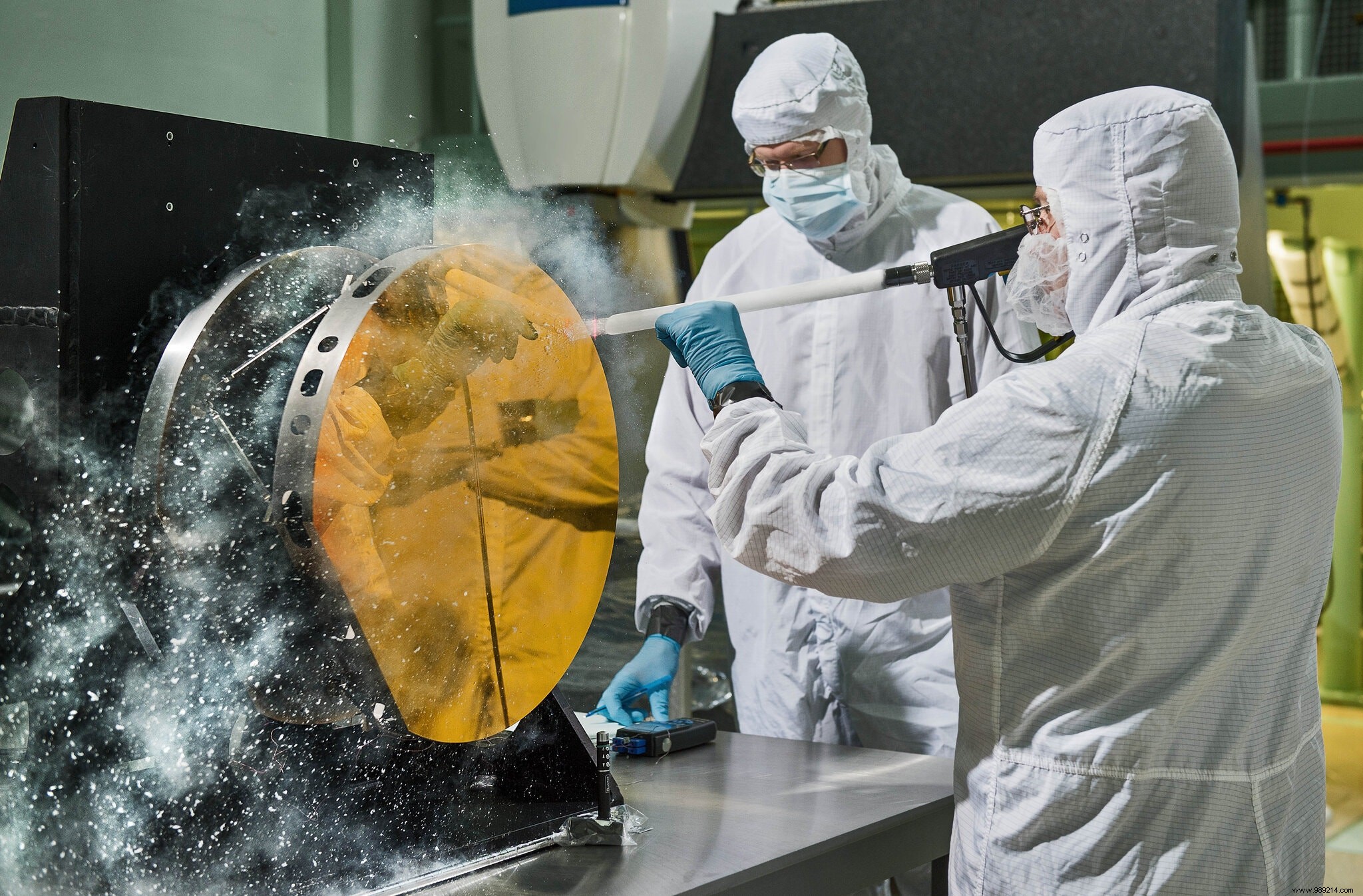
Engineering teams recently completed rigorous long-duration testing at Northrop Grumman's facilities to confirm the observatory's resilience during launch. Now, preparations are underway for transport to French Guiana, including transit through the Panama Canal. NASA has scheduled liftoff for December 18.
As the most advanced space telescope ever built, JWST's infrared capabilities—building on Spitzer's legacy—will penetrate dense cosmic dust clouds, revealing stellar nurseries, forming protoplanets, and the faint light from the universe's first stars and galaxies post-Big Bang.
In essence, JWST has the potential to reshape our understanding of cosmic history—provided all goes perfectly.
If launch proceeds smoothly on December 18 aboard an Ariane 5 rocket, JWST will head eastward over the Atlantic. After about 10,400 kilometers, it separates from the upper stage, marking the start of its most challenging phase.
The $10 billion observatory must reach Lagrange Point 2 (L2), over 1.5 million kilometers from Earth, where Earth and Sun gravities balance for a stable vantage point.
Moments after separation, the solar array deploys for power— a critical first step. Around 12 hours post-launch, thrusters fine-tune the trajectory.
By day three, the sunshield unfurls: five tennis-court-sized polyimide layers to shield infrared sensors, requiring ultra-low temperatures for deep-space observations. Over three days, ~150 mechanisms activate, involving roughly 7,000 parts.
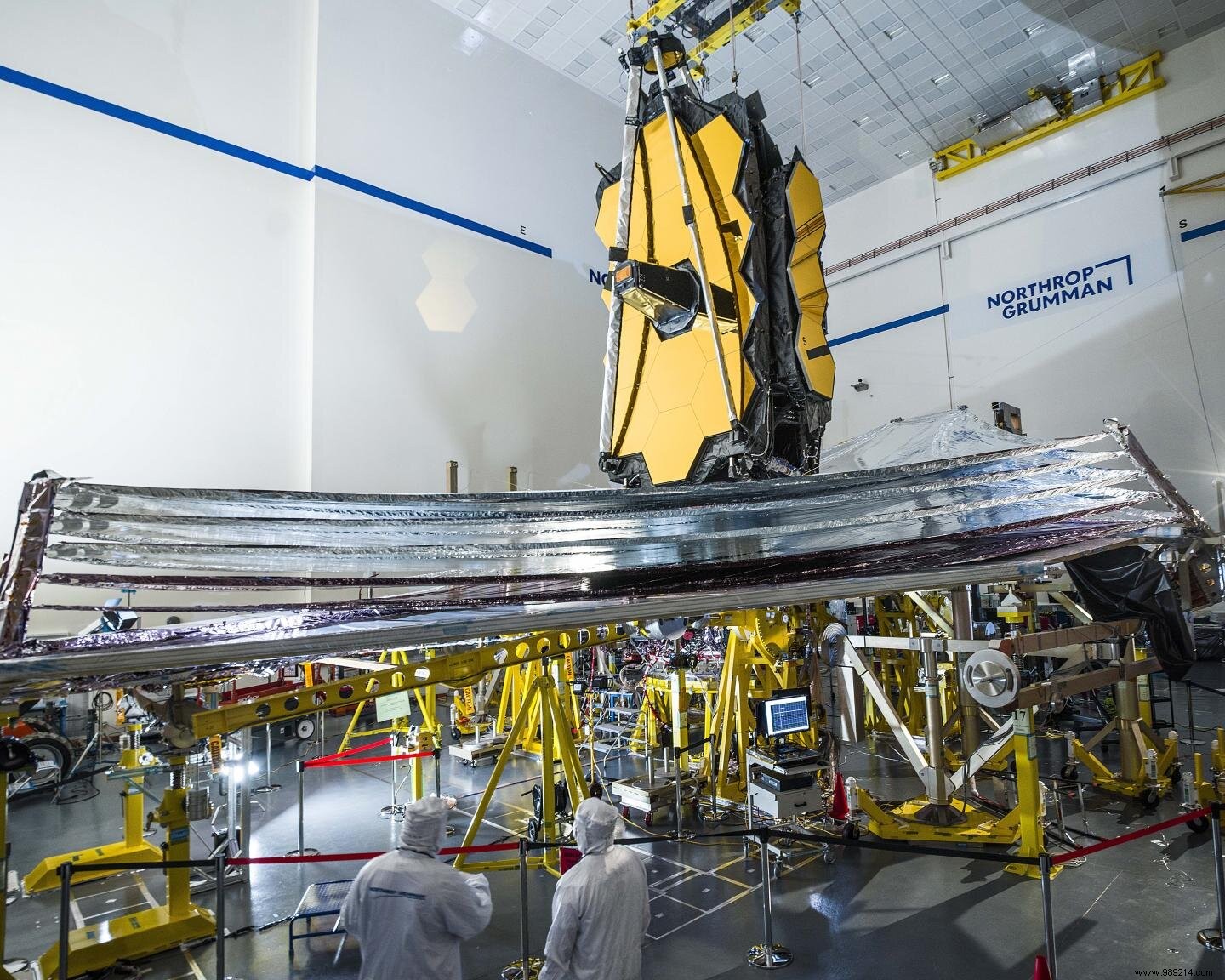
On day six, the secondary mirror extends on three arms. Day seven sees the 6.5-meter primary mirror—18 gold-coated beryllium hexagons—aligned to micrometer precision via actuators.
One month after launch, JWST arrives at L2, capping one of the riskiest observatory missions ever. "It's like an orchestra concert with hundreds playing different instruments," says Heidi Hammel, vice president of the Association of Universities for Research in Astronomy, to Scientific American. "All must be ready, practiced—and then we play the music."
This performance can't afford a single wrong note.
