The Moon's vast resources are drawing intense interest from nations and private companies alike. As a space policy researcher, I assess the real risks of conflict—and why international rules are urgently needed to prevent escalation.
In late October 2020, NASA and Intuitive Machines announced plans for a 2022 ice-mining mission to the Moon's south pole, part of the Artemis program aiming to land astronauts in 2024 and establish a permanent base. Water ice isn't the only prize: strategic skylights in polar areas provide near-constant sunlight, ideal for solar power installations.
As philosopher Tony Milligan of King's College London noted in a December 9, 2020, The Conversation article, water ice in shadowed craters and skylights are scarce, clustered in polar regions. This scarcity could spark rivalries among spacefaring nations and firms.
China eyes the south pole by 2024 after Chang'e 5's successful sample return. Russia plans landings at Boguslavsky Crater (2021) and Aitken Basin (2023). India's 2019 Chandrayaan-2 attempt ended in a crash.
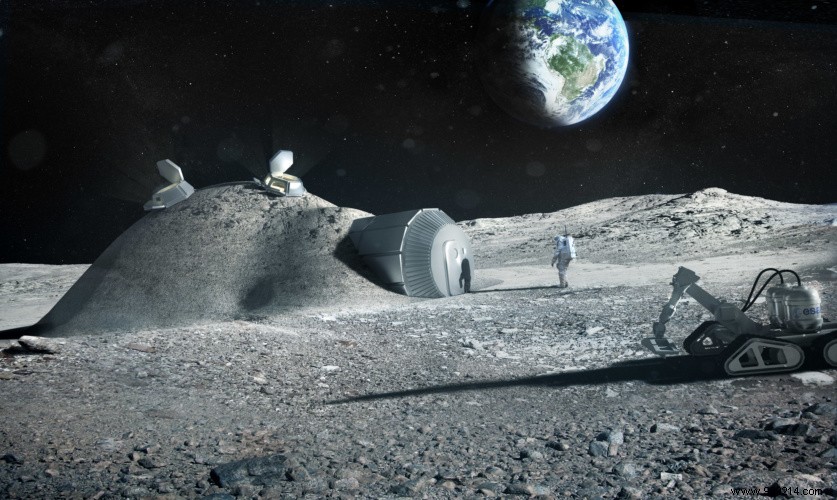
Beyond water and skylights, regolith (lunar soil) holds promise. The European Space Agency (ESA) and Metalysis are developing tech to extract oxygen from it, while ESA explores 3D-printing habitats for a lunar base.
Regolith abounds everywhere, but rarer minerals don't: thorium and uranium for nuclear power concentrate in 34 zones under 80 km wide. Iron from asteroid impacts spans about 20 zones, 30-300 km across. Helium-3, key for fusion energy, is limited to just 8 zones under 50 km wide.
The 1967 Outer Space Treaty ignores private entities. The 1979 Moon Agreement is seen as overly restrictive, and the Artemis Accords favor the U.S. As Milligan argues, major powers must negotiate equitable resource sharing—perhaps modeled on the International Space Station (ISS)—before tensions boil over.
