The China Academy of Launch Vehicle Technology has unveiled a concept for a suborbital spacecraft designed to transport passengers anywhere on Earth in under an hour— strikingly similar to SpaceX's Starship.
This weekend, China marked its sixth National Space Day in Nanjing, the capital of Jiangsu province. Highlights included public displays of lunar samples from the Chang'e-5 mission and the announcement of the name for its first Mars rover, set to land in mid-May. Among the innovations showcased, one project stands out for its ambition.
At the booth of the China Academy of Launch Vehicle Technology—the leading developer of China's state rockets—experts revealed concepts for suborbital vehicles aimed at revolutionizing global human transport with unprecedented speed.
Several aerospace leaders are advancing commercial suborbital flights. SpaceX's Starship, initially designed for lunar and Mars missions with massive payloads, is also poised for point-to-point Earth travel, carrying cargo and passengers efficiently.
Elon Musk first proposed this in 2017, promoting suborbital hops between city spaceports. A promotional video highlighted a 39-minute New York-to-Shanghai flight, enabling travel "anywhere on Earth in less than an hour."
Early plans involved both Starship and its Super Heavy booster. By 2019, SpaceX shifted to Starship alone for these routes, potentially adding two to four Raptor engines for sufficient thrust.
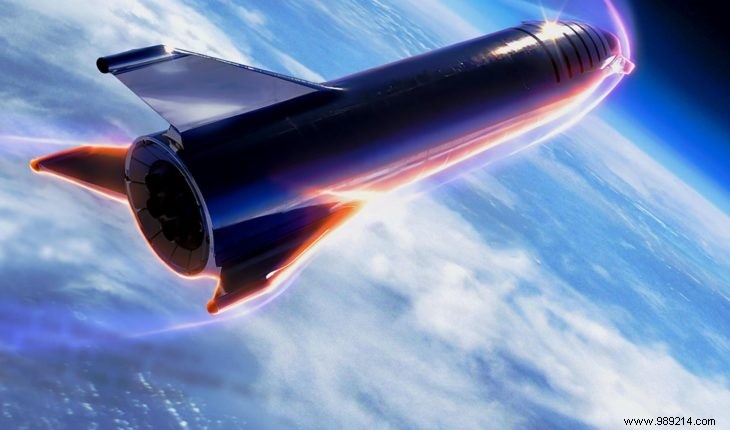
China's Academy appears to have drawn direct inspiration from SpaceX. A promotional video, shared on Weibo, showcases two suborbital vehicle concepts slated for development in the coming decade.
As the images illustrate, the primary design mirrors Starship in both form and function. A secondary concept features horizontal propulsion via an electromagnetic catapult.
These align with China's roadmap: suborbital cargo delivery worldwide by 2035, followed by passenger services from 2045.
This isn't China's first nod to SpaceX innovations. A spy ship monitored Falcon 1's 2006 debut splashdown. In 2019, the Long March 2C tested "grid fins" akin to Falcon 9's for atmospheric reentry guidance. China is also pursuing maritime landings for its Long March 8 rocket, emulating Falcon 9 boosters.
